
Written By Shubham Arora
Published By: Shubham Arora | Published: Jul 08, 2026, 04:39 PM (IST)
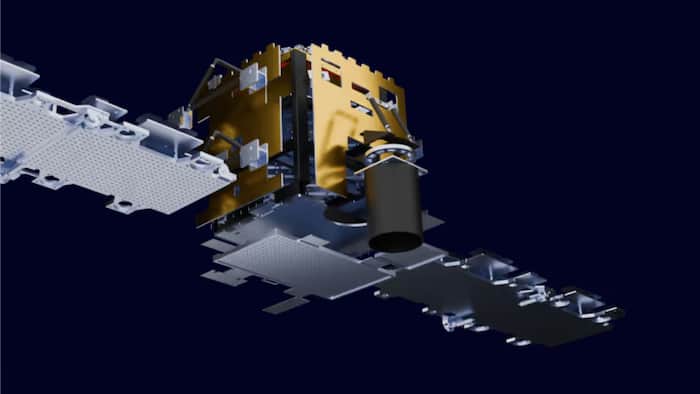
 GalaxEye's Mission Drishti satellite lost communication after an intense geomagnetic solar storm during its early days in orbit. (Image: GalaxEye)


Written By Shubham Arora
India’s private space sector has suffered a setback after Bengaluru-based startup GalaxEye lost communications with its Mission Drishti satellite. The company said the spacecraft experienced an anomaly during its early days in orbit following an intense geomagnetic solar storm. While engineers are still trying to restore contact, GalaxEye has said the chances of recovering the satellite are currently low.  Also Read: India's FIRST private orbital rocket set to launch this month: All about Vikram-1
Mission Drishti was launched on May 3, 2026, aboard a SpaceX rideshare mission. It was introduced as the world’s first OptoSAR satellite, combining optical imaging with Synthetic Aperture Radar (SAR) in a single spacecraft. The technology was designed to capture high-resolution images even through cloud cover and in low-light conditions, making it useful for Earth observation applications. Also Read: Elon Musk’s SpaceX loses over $600 billion in just 3 Days after record IPO: Here’s what happened
The mission had also received attention from Prime Minister Narendra Modi, SpaceX CEO Elon Musk, government agencies and several industry leaders, highlighting the growing role of India’s private space companies. Also Read: What is Cursor? The AI coding tool SpaceX is spending $60 billion on
According to GalaxEye, the satellite successfully established communication with ground stations soon after launch and completed a significant part of its Launch and Early Orbit Phase (LEOP). During this period, the company verified several important spacecraft systems, including deployment, attitude control, onboard computing, communication systems and mission operations from its Bengaluru-based Mission Control Centre.
The issue surfaced during the final stage of LEOP after an extreme geomagnetic solar storm. GalaxEye said its initial investigation suggests that radiation generated during the space weather event may have affected a critical onboard subsystem. Communication with the satellite first became intermittent before contact was eventually lost altogether.
The company added that recovery efforts are still underway, but restoring communication appears unlikely at this stage.
Even though the mission has run into trouble, GalaxEye says Mission Drishti was able to complete several important engineering milestones before the anomaly occurred. The satellite remained operational for several weeks after launch and helped validate multiple spacecraft technologies along with the company’s in-house mission operations capabilities.
The startup also said the mission strengthened its engineering processes, operational workflows and ground infrastructure required for future satellite missions. It believes the experience gained during the mission will help improve the design and reliability of its next generation of spacecraft.
Speaking about the development, GalaxEye Founder and CEO Suyash Singh said the mission represents years of work by the company’s engineering team. He added that although the satellite experienced an anomaly after the extreme space weather event, it generated valuable technical insights that will directly contribute to future missions.
The incident has also brought attention to the impact that space weather can have on satellites operating in orbit. Strong geomagnetic storms can expose spacecraft to higher levels of radiation, which may interfere with onboard electronics if adequate protection is not available.
Reports also noted that independent space trackers had observed signs of the satellite tumbling in orbit during May, even before GalaxEye confirmed the communication loss.

Going forward, the company plans to redesign parts of its future spacecraft using the lessons from Mission Drishti. It also intends to bring a larger share of satellite manufacturing, component sourcing and system integration in-house to improve quality control and overall mission reliability.

Don't Miss Out the Latest Updates. Subscribe to Our Newsletter Today!