Written By Divya
Published by Divya| Published: Jun 23, 2026, 01:20 PM (IST)| Edited: Jun 23, 2026, 01:43 PM IST

 Redmi Turbo 5 (2)


 Pros
Pros Cons
Cons
Written By Divya
Sometimes a new smartphone isn’t completely new; we all know that! Sometimes smartphone brands give an old phone a new identity, sometimes it’s a different name for another market, and sometimes it’s almost the same phone with subtle changes. The latest Redmi Turbo 5 falls into the third category.  Also Read: POCO M8 Power, POCO X8 could launch in India soon; expected to rebrand Redmi Note 17 series
If the phone looks familiar, that’s because it probably is! The Redmi Turbo 5 seems to be a rebranded version of the Poco X8 Pro, which was launched a couple of months back in India. The new Redmi Turbo 5 carries most of the same hardware while packing a bigger 7,540mAh battery. Apart from that, the rest of the package remains almost unchanged. Also Read: 7 best phones under Rs 40,000 you can buy right now
Well, that’s not necessarily a bad thing. The Poco X8 Pro was already a capable smartphone, and Xiaomi seems confident enough in that formula to bring it back with a Redmi badge. But in a market where competition is getting stronger every month, is a bigger battery enough reason to consider the Redmi Turbo 5? I’ve been using the phone for over a week, and here’s what stood out.
| Specification | Details |
|---|---|
| Display | 6.59-inch 1.5K AMOLED display, 120Hz refresh rate, 3,500 nits peak brightness |
| Thickness & Weight | 8.2mm, 204g |
| Battery & Charging | 7,540mAh battery, 100W HyperCharge |
| Chipset | MediaTek Dimensity 8500-Ultra |
| Operating System | Android 16-based HyperOS 3 |
| Rear Cameras | 50MP (main) + 8MP (ultrawide) |
| Selfie Camera | 20MP |
| IP Rating | IP66, IP68, IP69, IP69K |
| Price | Rs 37,999 (8GB RAM + 256GB storage) |
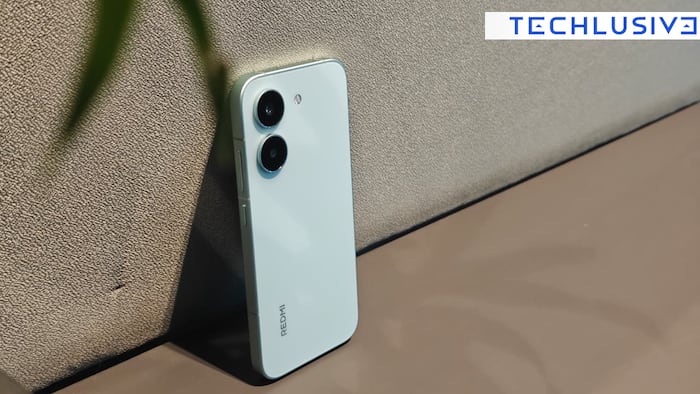
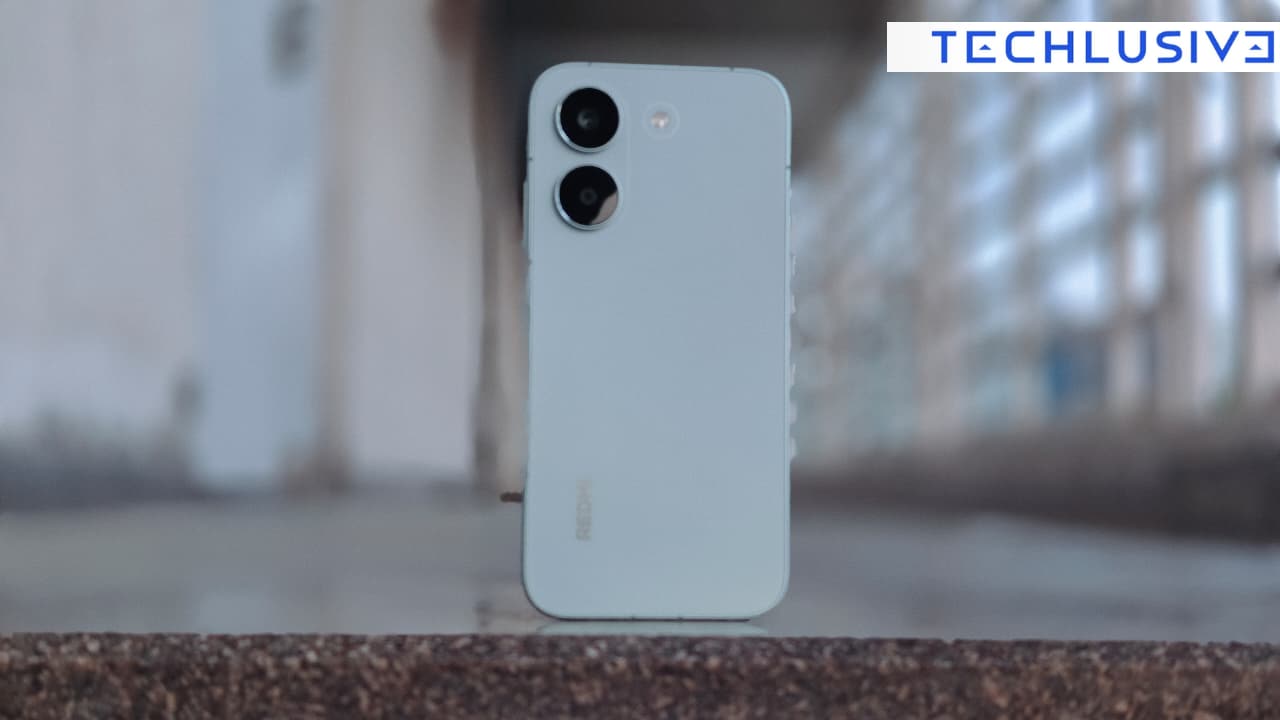
The Redmi Turbo 5 look more-or-less like the Poco X8 Pro at first glance, sans that camera module and branding. Honestly, it doesn’t need to experiment too. The Redmi Turbo 5 has flat edges, rounded corners and a minimalistic design at the back – makes it look subtly premium.
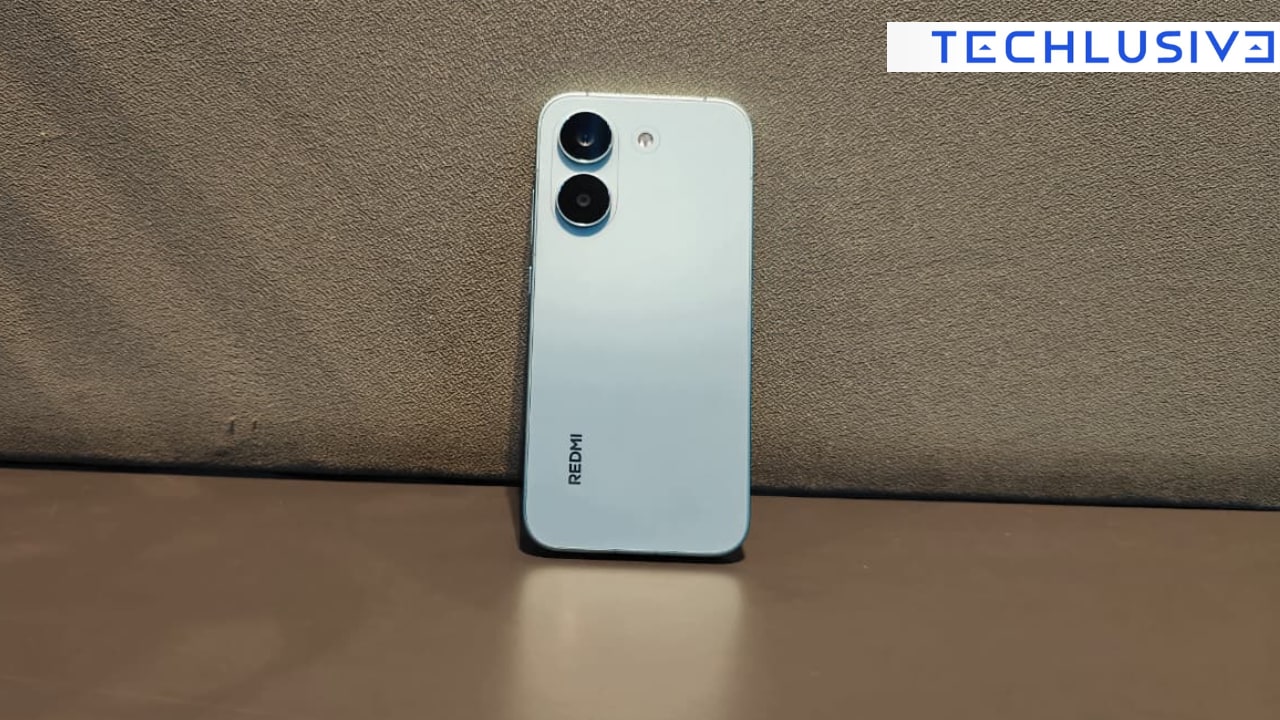
What stands out more is its build quality. It has opted for an aluminium frame paired with a glass panel at the back, which gives a premium in-hand feel. The good part is that despite housing a massive 7,540mAh battery, the Redmi Turbo 5 remains surprisingly manageable at 204g. Well, that’s not exactly lightweight, but the weight distribution is what makes it feel comfortable for extended use. Plus, durability is something to be praised here as the Turbo 5 comes with IP66, IP68, IP69, and IP69K ratings, which is something you don’t often see in this segment. This means, whether it’s dust, accidental splashes, or even high-pressure water exposure, the phone feels well-equipped to handle everyday mishaps.
And what deserves a special mention is the LED lighting around the camera rings. We have seen this obviously in the Poco X8 Pro and a couple of other devices in the past, but the customisation for these lights is what makes it useful. The LED light can glow for notifications, incoming calls, music, and even gaming effects. In my experience, it felt more like an aesthetic element than a really useful addition. Unless the phone is lying face down on a desk, chances are you won’t notice them much.
The Redmi Turbo 5 features a 6.59-inch AMOLED display with a 1.5K resolution and up to 120Hz refresh rate. It also supports HDR10+, Dolby Vision, and a claimed peak brightness of 3,500 nits. In daily usage, the display is easily one of the highlights of the phone. The slim bezels around the screen also add to the overall viewing experience. Watching HDR-supported content on YouTube and OTT platforms feels enjoyable, with good contrast and vibrant highlights. Even under direct sunlight, I rarely struggled to read messages or navigate through apps.
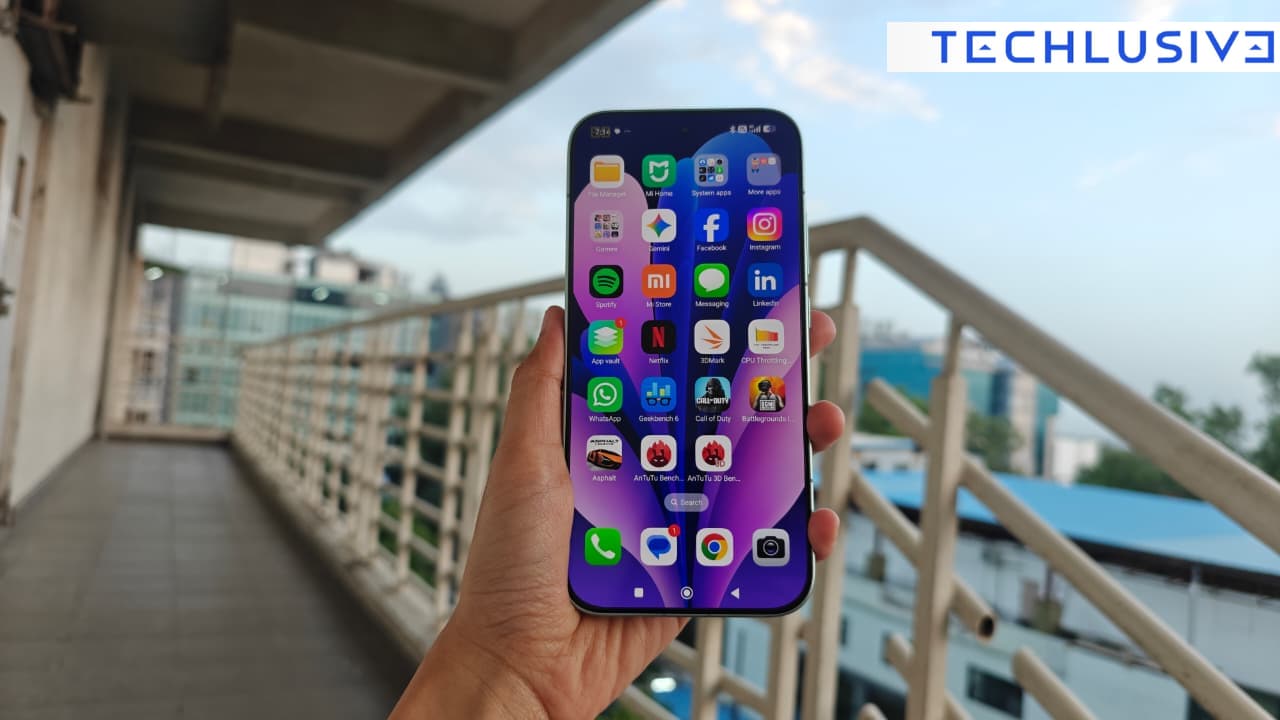
The 120Hz refresh rate keeps animations and scrolling smooth. Several apps still default to lower refresh rates unless manually adjusted through the settings. For security, the Redmi Turbo 5 comes with an in-display fingerprint sensor. It is quick and reliable, but the placement feels slightly lower than I would have liked. Thankfully, the relatively compact size of the phone means it never becomes a major issue.
One thing which I found odd is the Always-On Display implementation. Technically, the feature exists, but it only stays active briefly instead of remaining permanently visible. Considering the phone packs an AMOLED panel and a massive battery, it feels like an unnecessary limitation.
The Redmi Turbo 5 is powered by the MediaTek Dimensity 8500 Ultra chipset, and honestly, performance is one area where the phone rarely gives you a reason to complain. Whether it was switching between apps, scrolling through social media, binge-watching videos, or handling multiple tasks at once, the experience remained smooth throughout my usage. I didn’t notice any major lag or stutters, which is exactly what you’d expect from a smartphone in this segment.
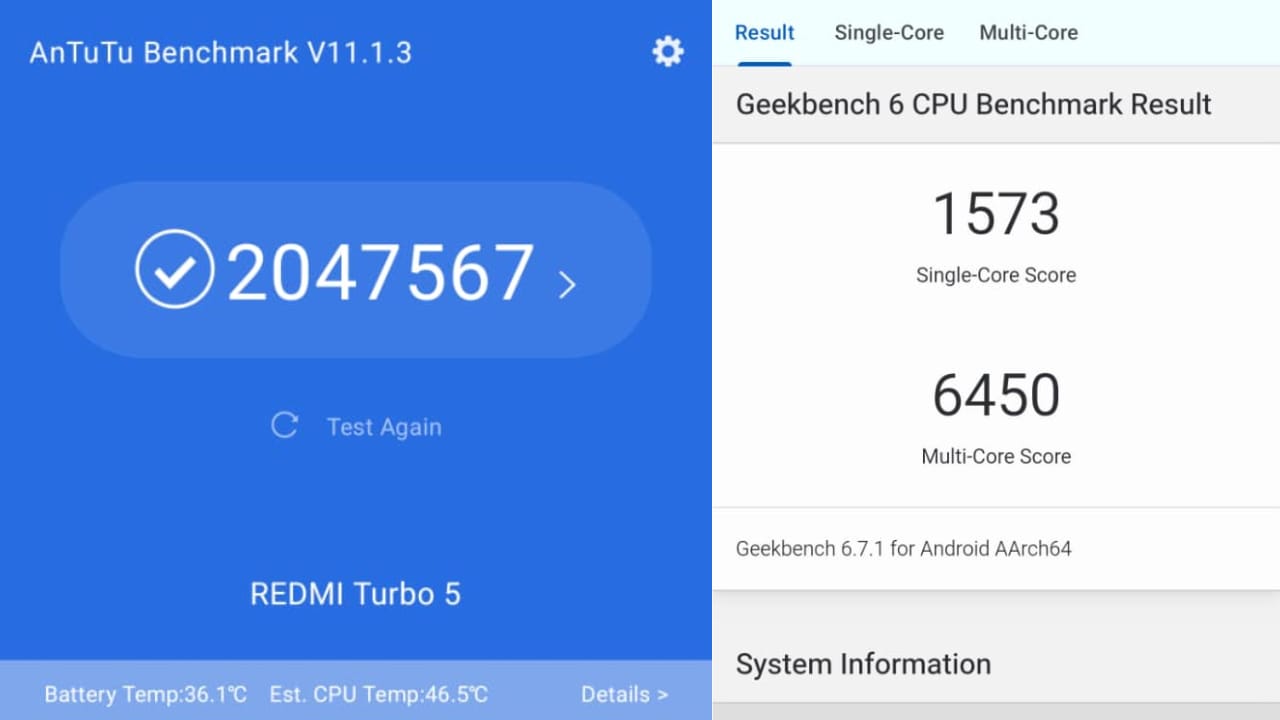
The benchmark numbers support that as well. The Redmi Turbo 5 scored 1573 in Geekbench 6 single-core, 6450 in multi-core, while AnTuTu crossed the 2 million mark with a score of 20,47,567.
Gaming is another area where the Redmi Turbo 5 doesn’t disappoint. One thing that I genuinely liked is how many games and apps support the 120Hz refresh rate. Famous titles like BGMI, Call of Duty: Mobile, and Asphalt Legends all felt smooth and responsive during my testing. The touch response is quick, frame drops are minimal, and the overall gaming experience remains enjoyable.
That said, thermal management could have been slightly better. After around 20-25 minutes of gaming, I could feel the phone warming up around the camera module. Well, it never became uncomfortable to hold.
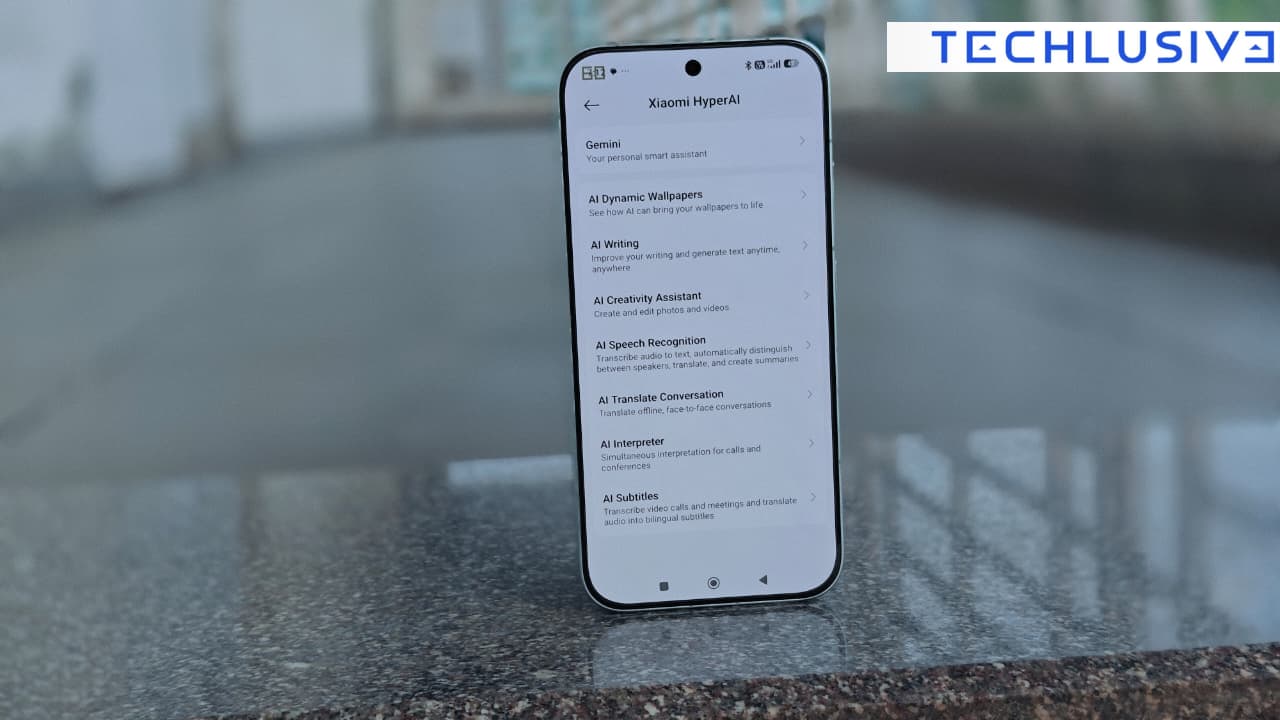
Software, however, is where the Redmi Turbo 5 starts feeling very… Xiaomi. The phone runs HyperOS 3 based on Android 16, and the overall experience is smooth with fluid animations, lock screen customisations, useful multitasking features, and Xiaomi’s growing ecosystem integration. You also get a bunch of AI-powered tools for writing, translation, transcription, image editing, and more.
But then comes the part Xiaomi still refuses to fix completely. The number of pre-installed apps on the phone is simply unnecessary. From third-party apps to games and Xiaomi’s own services, the Redmi Turbo 5 comes loaded with things that most users probably never asked for. Thankfully, many of them can be removed, but for a phone priced at Rs 37,999, I expected a cleaner out-of-the-box experience.
Still, once you spend some time removing the extra apps and setting things up according to your preference, HyperOS 3 becomes much easier to live with.
The cameras are probably one area where the Redmi Turbo 5 will remind you again and again… “hey, I am still a mid-range smartphone!” It features a 50MP primary camera paired with an 8MP ultrawide camera, while selfies are handled by a 20MP front camera.
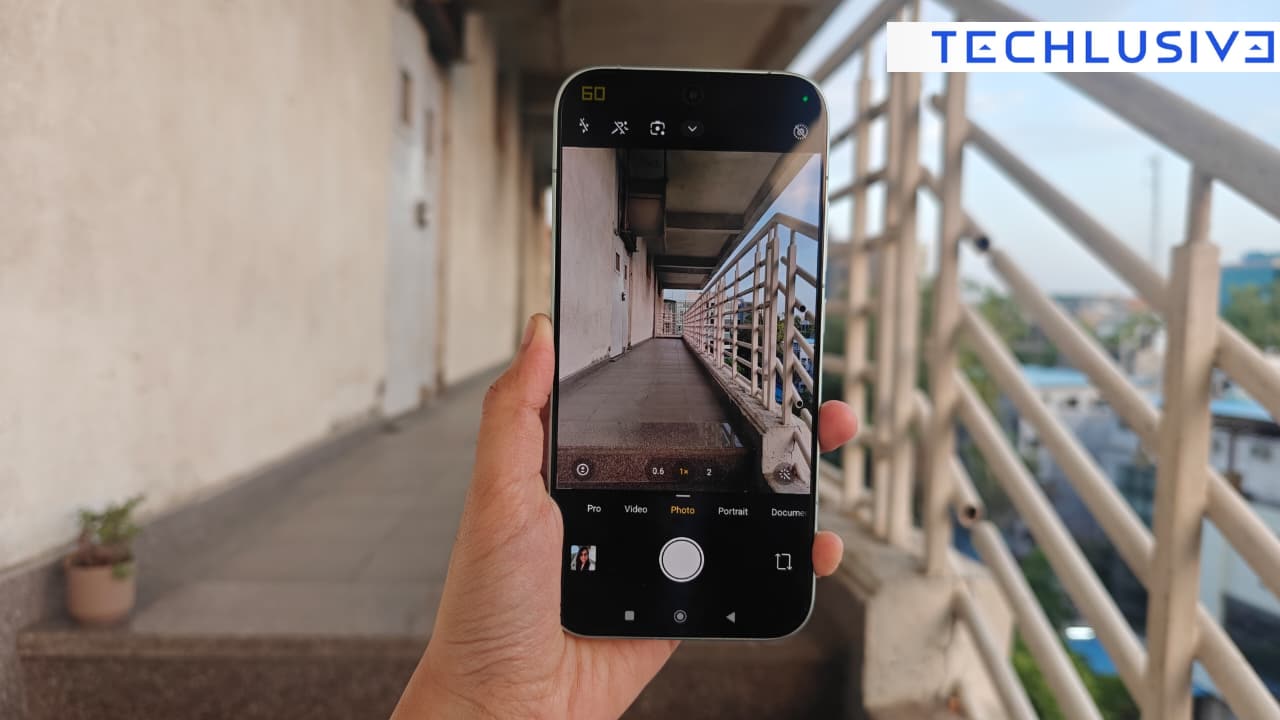
The main camera does most of the work in the daylight. It captures photos with good details, decent dynamic range and punchy colours. Yes, those slightly saturated colours are something to expect here, which are good to share on social media, obviously. The 2x digital zoom is more than enough to capture a subject with respectable details and colour consistency.
But what remains an issue is the portrait shots and selfies. Edge detection is mostly accurate, and the subject separation works well in most cases. However, the background blur can occasionally look a little artificial, especially in complex scenes. But the skin tone is usually different in most cases. And the selfie camera makes me question if the phone is even from 2026? Most of the selfies look washed out, the skin tone seems processed and the colours seem way too far beyond their original shade. This is something which I really questioned about a smartphone worth Rs 37,999 in 2026!















Talking about the ultrawide camera, the colour tuning is fine, but the details are noticeably low. In good lighting, the images are still manageable, but as soon as the light drops, the limitations of the 8MP sensor become quite evident.
When it comes to low-light photography, the Redmi Turbo 5 manages to retain a good amount of detail while keeping noise under control. But just like many Xiaomi phones, it tends to brighten the scene more than necessary.
The battery is probably the biggest reason why the Redmi Turbo 5 feels different from the Poco X8 Pro! Xiaomi has upgraded the battery capacity to a massive 7,540mAh unit, and the difference is noticeable in daily usage. During my usage with casual browsing, social media scrolling, some photo sessions and gaming, the Redmi Turbo 5 lasted more than a day without the need for a charger. Even on relatively heavy days, I rarely felt the need to reach for the charger before bedtime.
A quick 30-minute gaming session drained around 6-7 percent battery, while an hour of video streaming consumed roughly 4-5 percent. But if you’re expecting two-day battery life consistently with your usual usage, that will be hard to get,
Quick charging makes up for it, as the Redmi Turbo 5 supports 100W HyperCharge and comes bundled with the charger in the box. Despite the huge battery, the phone can go from low battery to full charge in under an hour.
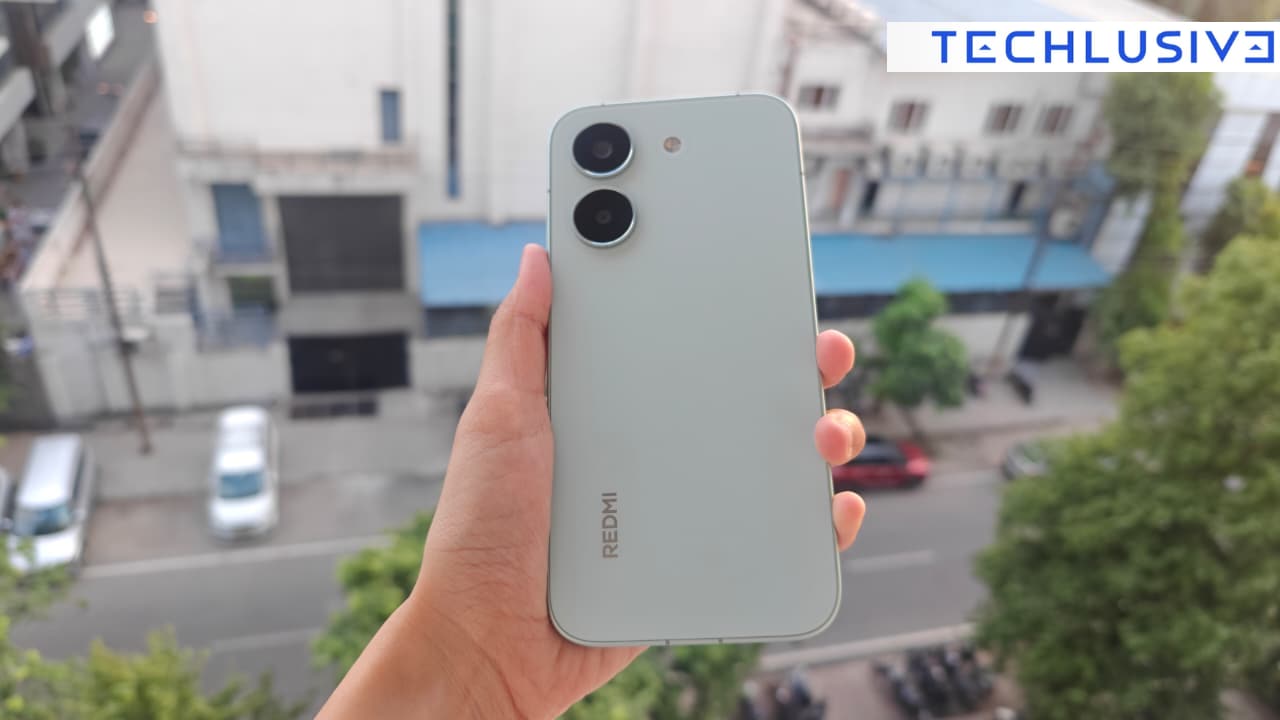
The Redmi Turbo 5 doesn’t try to bring anything new to the table which you haven’t seen before! But that’s the whole point. It takes an already launched Poco X8 Pro and simply adds a bigger battery to it. Result? A smartphone with longer battery life, good display, powerful performance and a flagship-level durability.
But cameras are something which continues to feel average for the price, and the OS brings more bloatware than it should. Which means, the bigger battery and Redmi branding alone may not be enough to justify the higher asking price for everyone.
The Redmi Turbo 5 is easy to recommend if battery life, performance, and premium-looking design are your top priority. Otherwise, there’s a strong argument for looking at its sibling, the Poco X8 Pro at Rs 34,999.

Don't Miss Out the Latest Updates. Subscribe to Our Newsletter Today!