Written By Divya
Edited By: Divya | Published By: Divya | Published: Mar 03, 2026, 09:29 PM (IST)
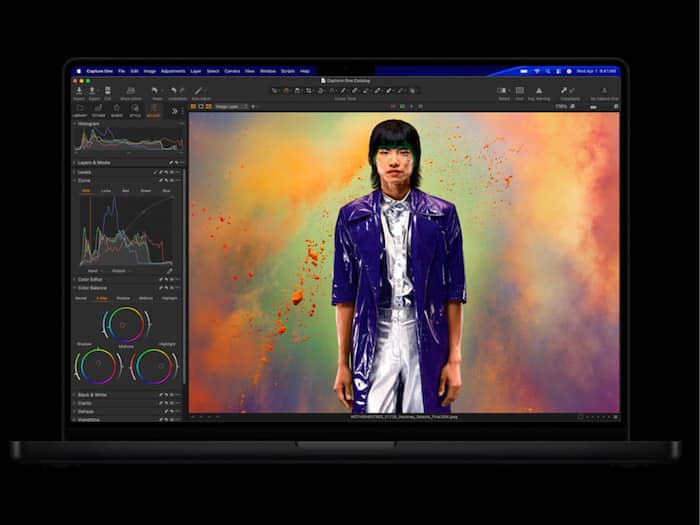
 MacBook Pro Gets M5 Pro, M5 Max: Faster AI, Bigger Storage, Wi-Fi 7


Written By Divya
Apple’s latest MacBook Pro lineup with the new M5 Pro and M5 Max chips is here, and this one is clearly about performance, especially AI performance. The 14-inch and 16-inch MacBook Pro models now come with what Apple calls its fastest CPU core yet, along with a redesigned GPU that includes a Neural Accelerator inside each core.  Also Read: iPhone 18 Pro, OLED iPad mini production begins as Samsung prepares displays for Apple’s future lineup
On paper, Apple claims up to 4x faster AI performance compared to the previous generation, and up to 8x faster performance compared to M1 models. Here is everything – from specs, features to price and availability that you must know. Also Read: Apple hikes MacBook, iPad prices in India; some models cost up to Rs 1 lakh more: Check here
The new MacBook Pro continues in 14-inch and 16-inch sizes and retains the familiar design in Space Black and Silver. Also Read: HP OmniBook Ultra Review: A Premium AI Laptop That Gets Most Things Right
It now offers:
Storage also gets a bump. The M5 Pro model now starts with 1TB storage, while the M5 Max version starts at 2TB. Apple says SSD speeds are up to 2x faster, reaching up to 14.5GB/s, which should help with 4K and 8K video workflows. Memory goes up to 64GB unified memory on M5 Pro and up to 128GB on M5 Max, with significantly higher memory bandwidth.
Note that pre-orders begin March 4, and availability starts March 11, including in India. Here’s the India pricing:
Education pricing is slightly lower across all variants.
The real story is the chip architecture. M5 Pro and M5 Max use Apple’s new Fusion Architecture, combining two dies into a single system on a chip. The CPU now goes up to 18 cores, including 6 “super cores” and 12 performance cores designed for multithreaded workloads.
The GPU now includes a Neural Accelerator inside each core, which is Apple’s big AI push. This helps in faster LLM processing, quicker AI image generation, and smoother AI-powered video and design tools, all running locally on the device.

Graphics performance is also claimed to be up to 50% faster than the previous generation, with ray tracing improvements for gaming and rendering.

Don't Miss Out the Latest Updates. Subscribe to Our Newsletter Today!