
Written By Shubham Arora
Published By: Shubham Arora | Published: Jul 15, 2026, 03:15 PM (IST)

 Samsung's Flex Titanium display technology is designed to make future Galaxy foldables thinner, stronger and more durable.


Written By Shubham Arora
Samsung has taken the wraps off a new display technology called Flex Titanium, which will be making its way to the company’s next Galaxy foldable phones. The upgrade is aimed at improving some of the biggest pain points users have pointed out over the years, including the visible crease, the overall thickness of the phone, and long-term durability.  Also Read: Samsung Galaxy Unpacked 2026: Entire Galaxy Z Fold 8, Flip 8 and Watch lineup revealed
The company shared details of the technology ahead of its upcoming Galaxy Unpacked event on July 22, where the next generation of Galaxy foldables will be unveiled. According to Samsung, Flex Titanium is the result of seven generations of foldable display development and brings changes to the display structure rather than just the hinge. Also Read: Samsung Galaxy Z Fold 8, Z Fold 8 Ultra: 5 things to know before Galaxy Unpacked
Samsung has replaced the older structure with two titanium-based layers — a titanium-alloy film placed below the OLED panel and a flexible titanium plate underneath the display module. According to the company, both work together to make the display stronger without making the phone bulkier. Also Read: Samsung Galaxy Z Fold 8 Ultra prices leak ahead of July 22 launch: Here's what we know
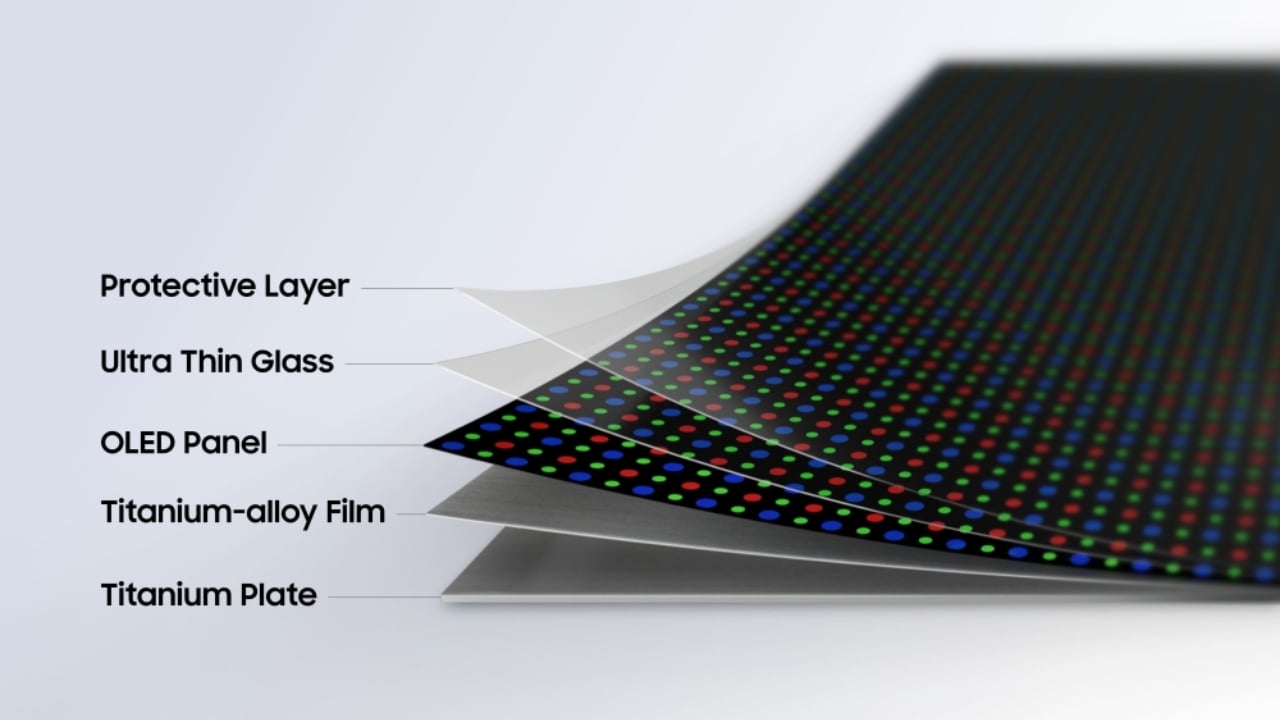
The company says both components work together to improve the display’s strength while allowing it to bend repeatedly without adding unnecessary thickness. Titanium was chosen because it offers a balance between strength and flexibility, although Samsung admits it was difficult to integrate into a foldable display due to the material’s natural stiffness.
According to Samsung, the titanium-alloy film is around one-third the thickness of a human hair and offers nearly 20 times greater mechanical stiffness than the polymer film used in some earlier designs.
Samsung says the titanium plate underneath the display has also been redesigned. It now uses advanced hole-processing technology to reduce air gaps between the display module and the supporting plate. This creates tighter bonding between the layers while keeping enough flexibility for repeated folding and unfolding.
Samsung says the new design offers better support to the display when the phone is unfolded. That, in turn, helps the screen stay flatter and makes the crease less noticeable during everyday use.
The company has also combined the new structure with a high-resolution display architecture and updated organic materials. According to the company, this combination improves power efficiency while maintaining display quality.
Samsung says Flex Titanium is not a standalone upgrade but part of the work it has been doing across multiple generations of Galaxy foldables. The company says user feedback played an important role in shaping the new design, with many users asking for a thinner foldable phone without compromising durability or display quality.
Samsung has confirmed that Flex Titanium will make its debut with its upcoming Galaxy foldable smartphones, with more details expected during Galaxy Unpacked.

Apart from the new display technology, reports also suggest Samsung could introduce a new foldable form factor at the event. While the company has not officially confirmed what it is, the teaser carrying the tagline “A New Shape Unfolds” has fuelled speculation about another addition to the Galaxy foldable lineup.

Don't Miss Out the Latest Updates. Subscribe to Our Newsletter Today!