Written By Deepti Ratnam
Published By: Deepti Ratnam | Published: Jul 15, 2026, 08:57 AM (IST)
 Google I/O Connect India 2026: Google strengthens India's AI ecosystem with education and healthcare initiatives


Written By Deepti Ratnam
Google kicked off its developer conference, the I/O Connect India 2026 , bringing company’s latest innovation, technologies, AI tools, cloud services, and developer platforms to the forefront. The tech giant has announced set of artificial intelligence initiatives in India. These projects will cover advanced AI training program along with Gemini-powered teaching assistant in schools. Besides this, the company has also expanded healthcare partnerships in the country. The announcements were made with an aim to strengthen India’s AI ecosystem so that it can evolve talent development, healthcare, multilingual AI, digital infrastructure, and education in India.  Also Read: Gemini Omni to AI-powered Search: Everything Google announced at I/O 2026
One of the biggest announcements are being made by Google’s DeepMind division to introduce AI Research Foundation (AIRF) in India. This is a free AI training program in order to help students, developers, and researchers to build advanced AI skills. Also Read: Wear OS 7 announced with live updates, better battery and new widgets: Know what Google announced
The program will cover 56 hours curriculum, including topics such as, AI research methodologies, machine learning, and large language models (LLMs). Those who will complete the program will receive Google Cloud Skill Badges along with professional certificates.
The program is witnessing more than 38,000 learners globally. In India, the Indian Institute of Science (IISc), Bengaluru is integrating this curriculum into its academics. On top of this, NASSCOM will lso make it available via its Future Skills Prime platform so that it can reach to the wider audience and learners.
According to Google, the rollout of the program is supported by the Google.org AI opportunity fund. This will be applicable to Asia-Pacific countries. The AVPN will be working alongside local partners to expand the access of AI education.
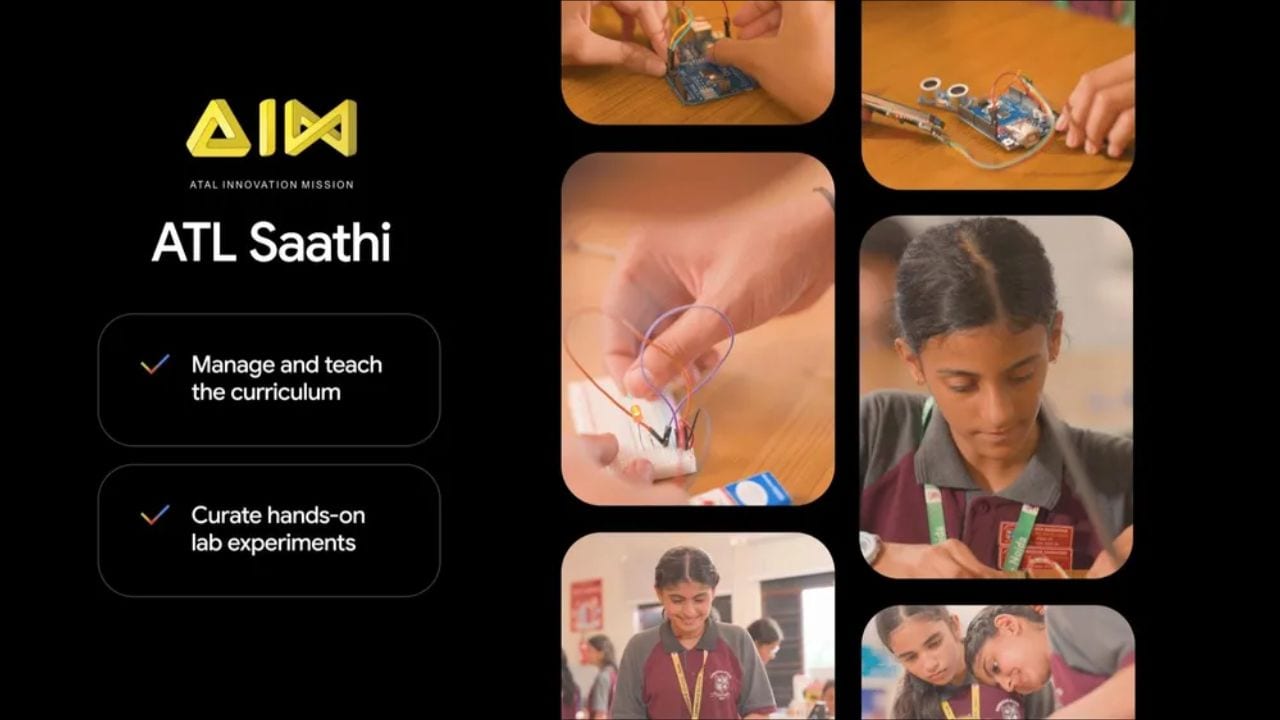
Google has also been scaling up its association with the Atal Innovation Mission with the introduction of desktop web application, ATL Saathi to help teachers to run Atal Tinkering Labs.
With the help of Gemini, the platform helps teachers plan lessons, develop classroom activities and select practical experiments to stimulate students to become problem solvers and innovators.
Initially, the application would be released in 100 schools this year and would be made available in almost 10,000 Atal tinkering labs in India in the future.
It fits in with an overarching goal of making AI-powered learning tools available to classrooms and lifting the burden on teachers of increasingly technology-heavy curriculum.
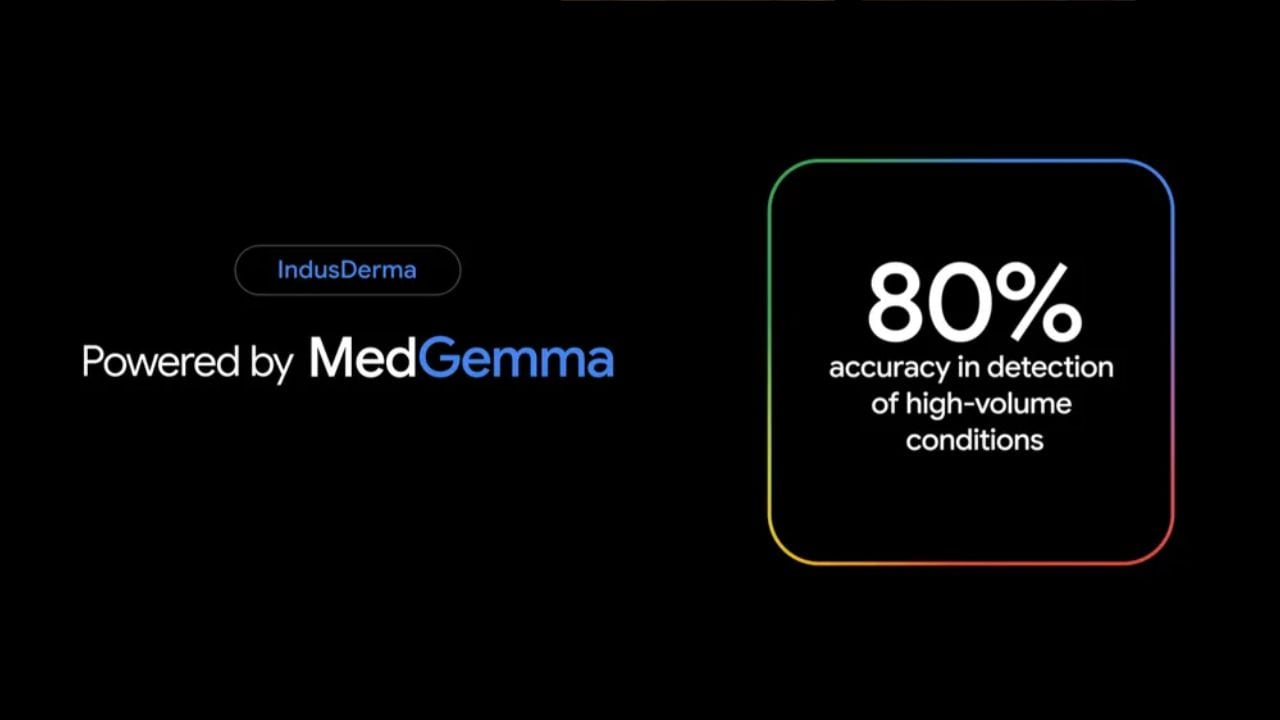
Google has announced that the All India Institute of Medical Sciences (AIIMS) has joined the ranks of using Google’s open-source MedGemma models to create AI solutions customized for India’s healthcare sector.
After successful application in dermatology and outpatient triaging, researchers are developing AI algorithms to assist in leprosy and sexual and reproductive health diagnosis and management both with medical images and text inputs.
AIIMS also intends to provide access to India’s developer community to such specialised clinical AI models, which will allow researchers and startups to create healthcare applications that meet India’s specific needs.
Google, in an independent statement, also indicated its open AI models are helping build India’s digital public health infrastructure. The National Health Authority (NHA) has included Gemma 4 and Google’s Medical Data Toolkit in the development of Aarogya Setu 2.0, the country’s next generation public health record application.
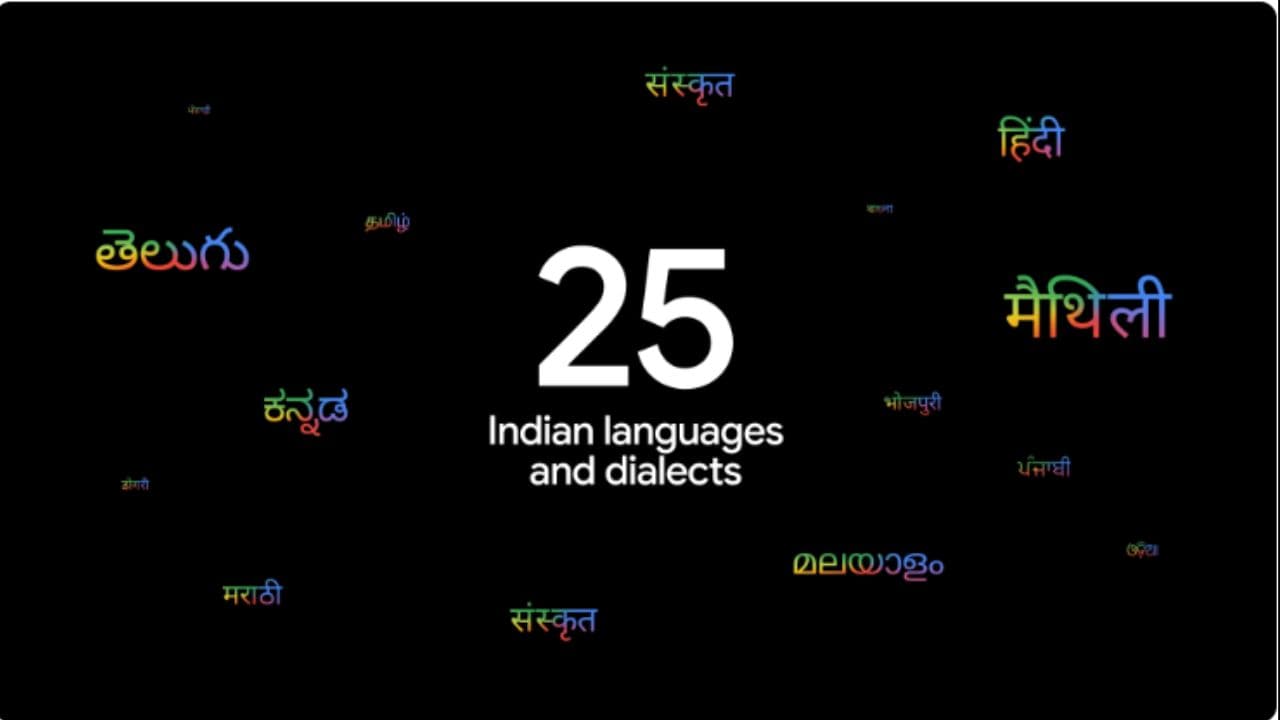
Google is expanding the language capabilities of Google’s Gemini Live AI with the ability to understand more than English.Google is broadening the language abilities of Google’s new Gemini Live AI, beyond just English.
The conversational AI platform now enables voice and text interaction in over 25 Indian languages and dialects, such as Sanskrit, Bhojpuri and Maithili, so that users can communicate in their preferred language in a natural manner.
The tech giant has also announced open-sourced speech and image data sets in 109 Indic languages as a part of its long-standing research partnership with IISc Bengaluru, for Project Vaani. It is hoped that these datasets will aid in creating more accessible and diverse AI systems that cater to the linguistic diversity of India.
Google offers new AI deployment capabilities for businesses and government organizations to meet data residency and regulatory needs.
From within its data centres, Google Distributed Cloud enables Indian enterprises to launch Gemini, keeping sensitive prompts, model outputs and AI workloads within their own environments.
The offering is especially targeted at regulated industries like banking, healthcare, telecommunications and government, where a compliance to data governance regulations is a significant factor, the company said.
Google has also announced that it will launch Gemini 3.5 Flash to Indian enterprises and start-ups via the Gemini Enterprise Agent Platform and the Gemini Enterprise application, with in-country machine learning processing commitments as well.
Google’s announcement for expanding India’s AI education showcases that how AI models are expanding toward a practical adoption across public services, education, and healthcare technologies.

Google’s investments in AI education means its supports open research along with strengthen public sector collaborations. On top of this, the company is also improving access to AI in Indian languages as the competition intensifies among global technology companies. Indian is one of the major emerging significant markets where digital infrastructure is taking the centre stage. Hence, AI applications are expected to shape the next phase of growth in the country.

Don't Miss Out the Latest Updates. Subscribe to Our Newsletter Today!