Written By Deepti Ratnam
Published By: Deepti Ratnam | Published: Jun 16, 2026, 10:47 AM (IST)
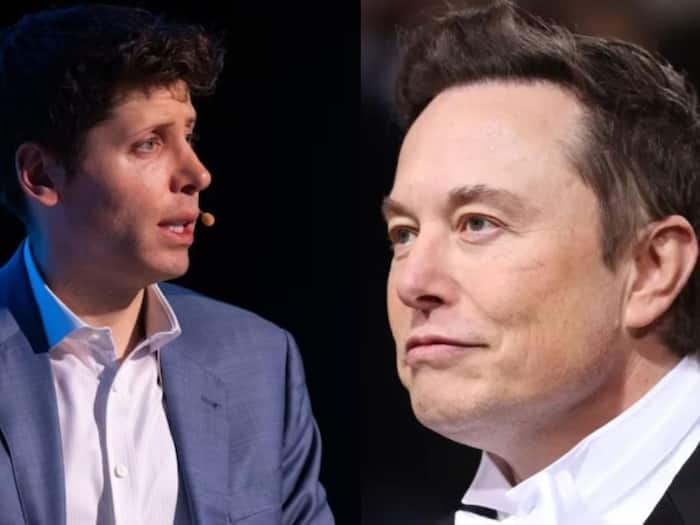
 Judge dismisses Elon Musk's xAI lawsuit against OpenAI over trade secrets claims


Written By Deepti Ratnam
Things are not getting easy for Elon Musk as he has suffered another loss in his ongoing battle with OpenAI. A US Federal judge has dismissed lawsuit filed by xAI CEO. Musk accused OpenAI of obtaining confidential information related to the Grok chatbot. However, he suffered the second courtroom defeat against OpenAI and its CEO Sam Altman. It also intensifies the long running dispute between the AI rival firms.  Also Read: Sam Altman vs Elon Musk: AI rivals clash on X after Apple's OpenAI lawsuit
As per reports, Judge Rita Lin of the US District Court in San Francisco ruled against xAI as the tech giant failed to provide enough evidence to support its allegations against OpenAI. Elon Musk accused OpenAI tha the company improperly gained access to trade secrets through a former engineer. Nevertheless, the court ultimately dismissed the lawsuit with prejudice. It means that xAI cannot bring the same claims once again. Also Read: Elon Musk loses OpenAI lawsuit against Sam Altman after jury says he waited too long to sue
Musk’s lawsuit was centered around allegations that OpenAI obtained confidential information. The detail was majorly linked to the xAI’s Grok chatbot via its former engineer Xuechen Li. Elo’s company claimed that OpenAI might have gained access to proprietary information while attempting to recruit Li. Also Read: Elon Musk vs Sam Altman battle keeps getting bigger after latest OpenAI court disclosures
However, the court ruling find that xAI did not provide sufficient evidence against OpenAI. The lawsuit did not submit that OpenAI encouraged the disclosure of confidential information or knowingly received trade secrets. The judge concluded that there was no proof against OpenAI, and hence, no employees were aware of any alleged sharing of any data.
Hence, the lack of evidence resulted into the loss of Elon Musk’s company. In legal terms, it means that
Because of the lack of evidence, the judge dismissed the case with prejudice. In legal terms, this means the lawsuit cannot be refiled in the future based on the same claims.
Elon Musk’s xAI’s allegations against OpenAI was related to that the AI company sought access to confidential information connected to Grok, the chatbot developed by Musk’s AI startup. The tech giant argued that OpenAI had discussions involving former engineer Xuechen Li may have exposed sensitive details about Grok’s development plans and technology.
The revised complaint apparently concerned a presentation Li had given in connection with recruiting conversations. xAI reports that OpenAI expressed an interest in information related to a version of the chatbot called Grok 4, which was released in 2025.
The court nonetheless ruled that xAI had not proven that OpenAI obtained or used any of its protected trade secrets. The lawsuit would be barred from going to court if there was no evidence of misconduct.
However, according to Judge Rita Lin, the case would be a pointless exercise given that xAI’s amended complaint still does not provide a meritorious legal claim against OpenAI.
No evidence that OpenAI asked the information to be kept confidential or that it was aware of proprietary information. Consequently, judge ruled the claims were not enough to establish a trade secret claim.
The ruling will be a major legal triumph for OpenAI and will alleviate one of several lawsuits stemming from the newfound competition between the two AI firms.
OpenAI responded favorably to the decision and restated its argument that there was no merit to the case from the outset.
The company’s release after the ruling stated the case was “groundless” and asserted it had never been able to access any confidential information related to xAI. OpenAI also stated that Xuechen Li was not an employee of the company and there was no wrongdoing regarding the recruitment discussions.
The company has long stated that Musk’s lawsuits are a cover for a broader effort to go after OpenAI, as the competition in the AI sector increases.
Grok, the AI chatbot developed by xAI, is shown to be a rival to OpenAI’s ChatGPT. Information about Grok’s development could have been shared during interactions with former engineer Xuechen Li, the lawsuit alleged.
xAI said it was concerned about potential trade secret infringement as OpenAI used the information for Grok-related purposes. The court, however, ruled that it had no evidence of OpenAI having received confidential information or used it to secure a competitive edge.
The decision is significant because it illustrates the difficulties that technology firms may encounter when trying to establish a violation of a trade secret, especially in a business where talent often is moved between competing companies.
The latest decision is just one of many that are building up between Musk and OpenAI. Musk was one of the first investors and co-founders of OpenAI, which he left several years ago. He has been chiding the company repeatedly for straying from its original, non-profit mission since then.
In the past year, Musk has filed several lawsuits against OpenAI and CEO Sam Altman. He has said that the company has only been interested in business interests, rather than those that it first intended. OpenAI has vehemently denied the charges and backed up its business approach.
The trade secrets case has now been settled, but the feud between the two has carried on, as both are pushing to create more and more of an AI system.
The case against OpenAI has been dropped, but xAI is still taking legal action against Xuechen Li. The former engineer has said he did nothing wrong.
The decision is seen by OpenAI as opening the door to a broader range of legal opportunities as it continues to expand its AI products and services and fortify its market standing. The move is another blow for Musk and xAI in their ongoing attempt to take down OpenAI in the law courts.

With the competition from big tech giants increasing, legal conflicts over IP, trade secrets and business practices are expected to be a significant issue in the AI industry. This latest court decision, however, emphasizes the importance that allegations must be backed up by strong supporting evidence.

Don't Miss Out the Latest Updates. Subscribe to Our Newsletter Today!