
Written By Shubham Arora
Edited By: Shubham Arora | Published By: Shubham Arora | Published: Jun 03, 2026, 02:25 PM (IST)

 WhatsApp is developing a Scam Alert feature that could warn users about suspicious messages before they respond.


Written By Shubham Arora
WhatsApp is working on a new feature that may help users spot suspicious messages before replying to them. Called Scam Alert, the feature is currently being developed for Android and is expected to warn users when a message from an unknown contact looks suspicious.  Also Read: WhatsApp starts rolling out username reservations ahead of global launch
What makes the feature interesting is that it is said to work entirely on the user’s device, meaning messages remain protected by WhatsApp’s end-to-end encryption. Also Read: Apple Smart Glasses may not launch before 2027
According to details shared by feature tracker WABetaInfo, WhatsApp is testing a system that can analyse messages from unknown senders and identify patterns commonly associated with scams. Also Read: How to send photos without losing quality on WhatsApp
If the app believes a message looks suspicious, users may see a warning banner inside the chat. The alert is expected to display a message such as “This may be a scam”, giving users an extra warning before they continue the conversation.
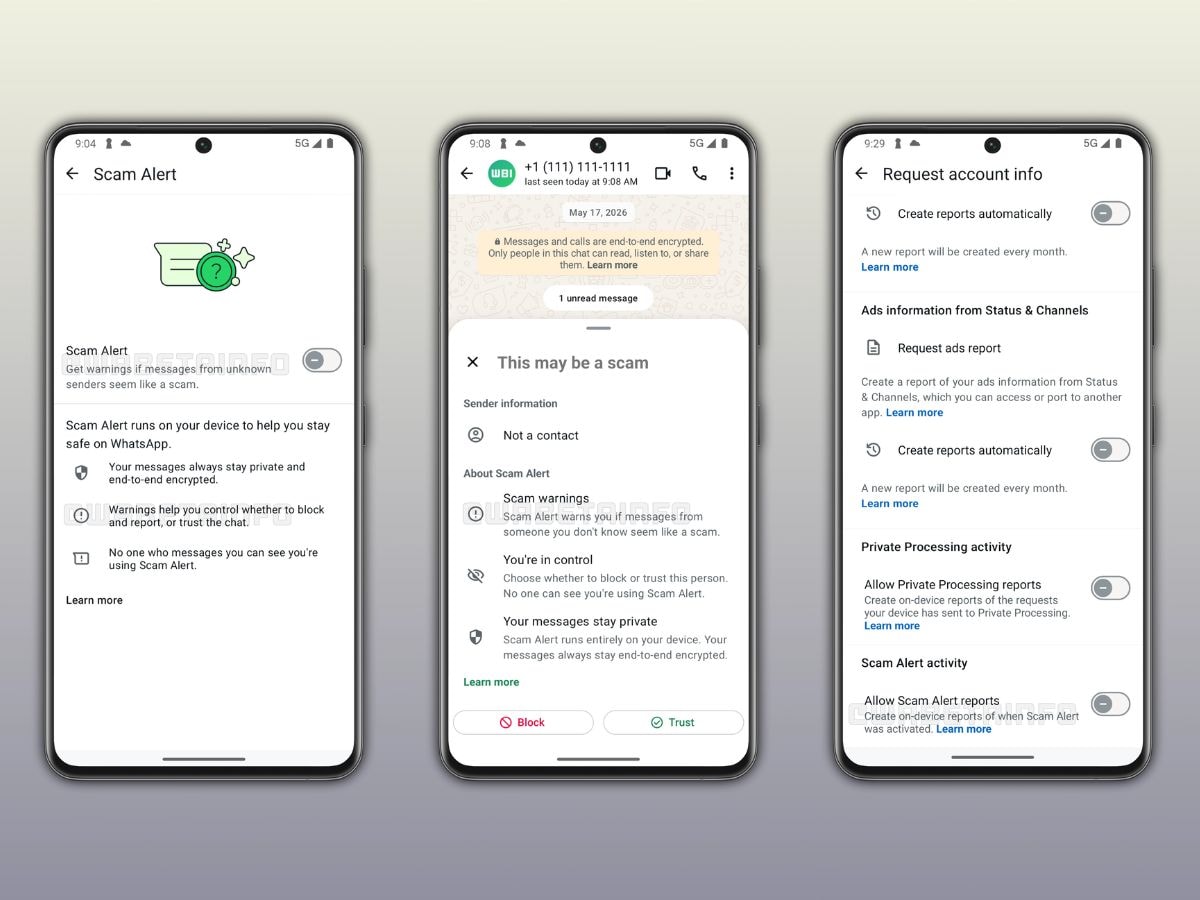
Image credit: WABetaInfo
The feature is not designed to automatically block anyone. Instead, WhatsApp is expected to leave the final decision to the user. People will reportedly be able to either block and report the contact or continue chatting if they believe the message is genuine.
It could help in cases where scammers use messages related to jobs, deliveries, investments, or account verification requests to trick users into sharing information or clicking links.
One of the notable aspects of the feature is that it is said to work directly on the device. According to reports, messages are not sent to external servers as part of the detection process.
The company already follows a similar approach with its voice transcript feature, where voice notes are converted into text on the phone itself rather than being processed elsewhere. The company is reportedly following the same privacy-focused model for Scam Alert as well.
Because the analysis happens locally, WhatsApp and its parent company Meta would not be able to read users’ messages during the scam detection process. The feature is also expected to run quietly in the background, without informing the sender whether Scam Alert is enabled.
The report suggests that Scam Alert will be disabled by default. Users who want the extra protection will likely need to turn it on manually through WhatsApp settings.
WhatsApp is also said to be working on a transparency section that could show when the feature was triggered. These logs would reportedly remain stored on the device itself rather than being shared externally.
If no suspicious messages are detected during a selected period, the report may simply show that no scam-related alerts were generated. If a warning is triggered, users would be able to review when it happened.

At the moment, Scam Alert remains under development and is not available to beta testers yet. WhatsApp has not announced a rollout timeline, but the feature is expected to arrive in a future Android update before eventually reaching stable users.

Don't Miss Out the Latest Updates. Subscribe to Our Newsletter Today!