
Written By Shubham Arora
Published By: Shubham Arora | Published: Jun 09, 2026, 10:10 PM (IST)
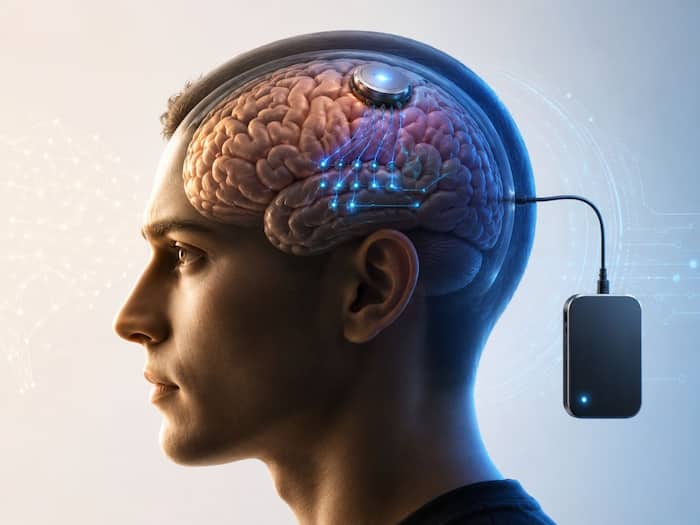
 China's NEO brain-computer interface has received commercial approval for use in paralysis patients. (AI-generated image)


Written By Shubham Arora
China has approved what is being described as the world’s first commercially cleared invasive brain-computer interface (BCI), marking a major step in the race to develop brain-chip technology. The device, called NEO, has been developed by Chinese company Neuracle Technology in partnership with Tsinghua University.  Also Read: Meta launches Pocket AI app that lets users create mini games with text prompts
The approval puts China ahead of Elon Musk’s Neuralink in terms of commercial deployment. While Neuralink is still testing its implant in human trials, NEO has already received approval for commercial use in China. The device is meant for people aged between 18 and 60 who have paralysis in all four limbs due to spinal cord injuries but still retain some movement in their arms. Also Read: Analog partners with MEIL to bring Physical Intelligence technology to India
NEO has been developed to help people regain some movement by turning brain signals into digital commands. Unlike Neuralink’s N1 implant, which requires electrodes to be inserted into the brain’s cortex, NEO takes a less invasive route. Also Read: OpenAI's first hardware device is coming on July 15; here's what it is
The implant itself is about the size of a coin. It places eight sensors on the dura mater, the protective layer covering the brain. The sensors pick up signals generated by the brain and send them to a connected computer system. Those signals are then translated into commands that can be used to operate assistive tools such as a robotic glove.
Because the device does not go deep into the brain tissue, researchers believe it may lower some of the risks associated with brain implants, including bleeding, tissue damage, and scarring over time. Reports suggest the less invasive design may also have helped NEO move through China’s regulatory process faster than competing technologies.
The device has already been tested in clinical trials involving dozens of patients. One of the most widely discussed cases is that of Dong Hui, a 39-year-old man from China’s Henan province who was paralysed from the neck down following a car accident.
One of the patients who received the implant was Dong Hui, a 39-year-old man who was paralysed from the neck down following a car accident. According to MIT Technology Review, he underwent the procedure as part of a clinical trial in 2024 and spent the following months in rehabilitation. Nearly a year later, he was reportedly able to hold a pen and write his name again, something he had not done since the accident.
China is also moving quickly to bring the technology into wider use. Reports suggest NEO has already been assigned a code within the country’s health insurance system, which could help make the device more accessible in the future.
The development also highlights how quickly the competition in brain-computer interface technology is moving. While Neuralink is focused on implants that sit directly inside brain tissue, NEO has been designed to avoid going that deep into the brain.
Some researchers believe this could make the technology easier to deploy while lowering certain medical risks.

Beyond NEO, Chinese companies are also exploring the combination of brain-computer interfaces and artificial intelligence. Shanghai-based NeuroXess has reportedly demonstrated early trials where a patient used thought alone to move a computer cursor and operate household devices. The company is also working on technology that can decode Mandarin speech signals in real time, which could eventually help people who have lost the ability to speak communicate more easily.

Don't Miss Out the Latest Updates. Subscribe to Our Newsletter Today!