
Written By Shubham Arora
Published By: Shubham Arora | Published: Jan 23, 2026, 05:52 PM (IST)


Written By Shubham Arora
As temperatures continue to rise across large parts of the world, air-conditioners are becoming a basic need rather than a comfort. More homes, offices, and public spaces are adding cooling systems every year. According to global energy estimates, demand for cooling is expected to grow sharply in the coming decades. The problem is that most air-conditioners today still rely on the same basic technology that has been around for more than a hundred years.
Most air-conditioners use compressor-based systems that circulate chemical refrigerants. These refrigerants help move heat out of indoor spaces, but they also come with downsides. Many commonly used refrigerant gases are strong greenhouse gases. Even small leaks can have an impact on the environment.
Leaks are not rare. Over time, pipes loosen, seals wear out, and efficiency drops. As refrigerant levels fall, the system draws more electricity to deliver the same level of cooling. This matters because cooling already makes up a large share of global electricity use, especially during peak summer months.
Compressors themselves are another issue. They have moving parts, generate noise, and are among the components most likely to fail over time. Repairs and replacements add to long-term costs for users.
This is where compressor-free cooling comes in. Instead of depending on gases to move heat, these systems use solid materials to transfer it. Heat is shifted using electrical currents and the properties of those materials, without any refrigerant involved.
Since there are no gases and no compressors, the risk of leaks is removed entirely. There are also fewer mechanical parts, which reduces wear and maintenance. In theory, this also means quieter operation and longer system life.
Compressor-free cooling is not new. Versions of it have existed for decades but were mostly used in specialised areas like spacecraft, medical equipment, or portable coolers. The main reason it stayed there was efficiency. That said, conventional air-conditioners still have an advantage when it comes to cooling larger spaces efficiently. They are better suited for heavy-duty cooling, at least for now.
Cost is still a problem. These systems use specialised materials, and making them isn’t cheap right now, especially when they’re built in small numbers.
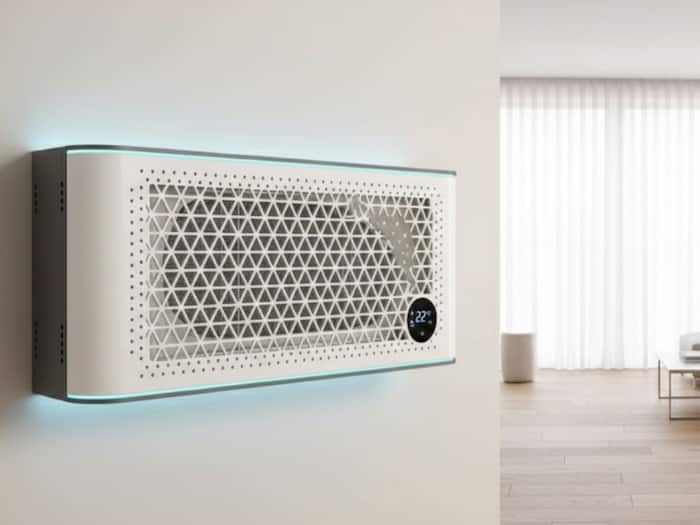
At the same time, some companies are moving away from the idea of one big central unit. Instead, they’re working on smaller cooling units meant for individual rooms, which can be added or grouped together depending on how much cooling is needed. This allows cooling to be used more precisely, rather than running a single system for an entire building.
Early real-world trials show that such systems can work in homes, though they currently cost more than conventional ACs. Developers believe costs will come down as production scales up.

For now, compressor-free air-conditioning remains a work in progress, but it shows how cooling technology may slowly start moving away from refrigerants and heavy mechanical systems.

Don't Miss Out the Latest Updates. Subscribe to Our Newsletter Today!