
Written By Shubham Arora
Published By: Shubham Arora | Published: Jun 11, 2026, 11:34 AM (IST)
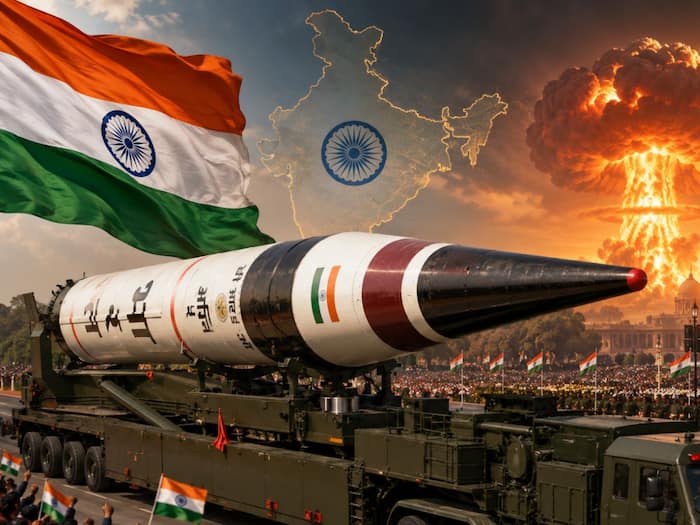
 India's nuclear arsenal is estimated at 190 warheads, with 12 reportedly deployed for the first time, according to SIPRI 2026. (AI-generated image)


Written By Shubham Arora
A new SIPRI report suggests India now has a small number of nuclear warheads deployed during peacetime, something that had not been reported in previous assessments. According to the SIPRI Yearbook 2026, India is estimated to have 12 deployed nuclear warheads for the first time. Compared to Russia, the US, and China, India’s numbers remain considerably lower. Even so, the latest assessment points to a change in how a small part of the arsenal may now be positioned.  Also Read: BGMI 4.5 update to bring Naruto-themed maps, Kurama Boss Battle, Ninja abilities and collectibles
SIPRI estimates that India’s nuclear stockpile now stands at around 190 warheads, up from 180 last year. Of these, 12 are now classified as deployed, while the remaining 178 are believed to be stored. This is the first time SIPRI has categorised any part of India’s arsenal as operationally deployed rather than entirely stockpiled. Also Read: OPPO Reno 16, Reno 16c go on sale in India: Price, specifications and offers
Traditionally, India has been understood to keep its nuclear warheads and delivery systems separate during peacetime. This approach has been part of the country’s long-standing nuclear strategy. Also Read: BGMI 4.5 update to add Ferrari cars, new themed events, exclusive in-game rewards
However, SIPRI says recent developments suggest that India may be moving towards keeping a small number of warheads mated with launch systems or positioned with operational forces. The report points to canisterised missile systems and sea-based deterrence patrols as indicators of this shift.
SIPRI also noted that India may have started deploying a limited number of nuclear warheads on a nuclear-powered ballistic missile submarine, commonly known as an SSBN.
India’s nuclear deterrent is based on what is known as a nuclear triad. This means the country can deliver nuclear weapons through aircraft, land-based missiles, and submarines.
The sea-based component has received considerable attention in recent years. India has operationalised two nuclear-powered ballistic missile submarines, INS Arighaat and INS Aridaman. Both submarines can carry nuclear-capable ballistic missiles and are built for long patrols underwater.
Military experts generally consider submarines to be the most survivable part of a nuclear force because they are difficult to detect and can provide a second-strike capability if a country comes under attack.
India continues to maintain its No First Use policy, under which nuclear weapons are intended for retaliation following a nuclear strike.
While India’s arsenal has expanded slightly, it remains much smaller than those of several other nuclear-armed nations.
| Country | Total Nuclear Warheads | Deployed Warheads |
|---|---|---|
| United States | 3,700 | 1,770 |
| Russia | 4,400 | 1,796 |
| United Kingdom | 225 | 120 |
| France | 290 | 280 |
| China | 620 | 34 |
| India | 190 | 12 |
| Pakistan | 170 | NIL |
| North Korea | 60 | NIL |
| Israel | 90 | NIL |
According to SIPRI, Russia and the United States together account for around 83 per cent of all military stockpiled nuclear warheads globally. China currently possesses around 620 nuclear warheads and is expanding its arsenal faster than any other country, according to the report.
SIPRI estimates that the world had approximately 12,187 nuclear warheads in January 2026. Around 9,745 of these were available for potential military use.
Of those, roughly 4,012 warheads were deployed with missiles and aircraft, while between 2,100 and 2,200 remained on high operational alert, mainly in Russia and the United States.

The report also noted that all nine nuclear-armed countries — the United States, Russia, the United Kingdom, France, China, India, Pakistan, North Korea, and Israel — continued modernisation programs during 2025 and introduced new nuclear-capable systems. SIPRI says most nuclear-armed countries continued to modernise their arsenals during 2025 and introduced new nuclear-capable systems.

Don't Miss Out the Latest Updates. Subscribe to Our Newsletter Today!