Written By Deepti Ratnam
Published By: Deepti Ratnam | Published: May 27, 2026, 10:23 AM (IST)
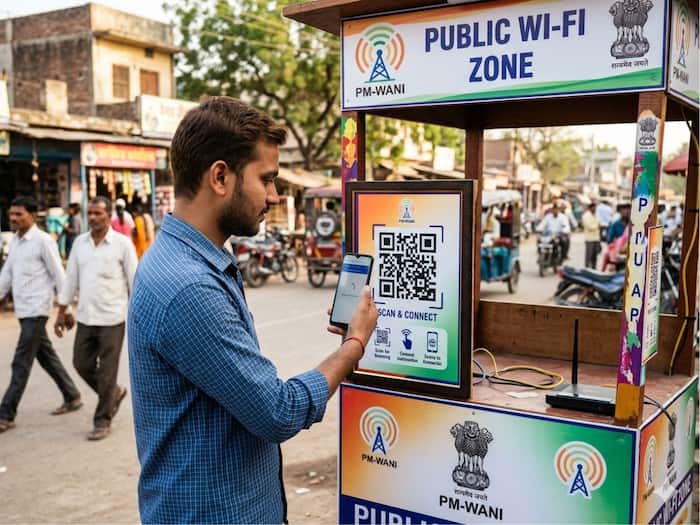
 New PM-WANI rules aim to improve affordability and ease of internet access


Written By Deepti Ratnam
The Government of India has announced new set of rules, focused on citizen reforms under the Department of Telecommunications PM-WANI. Under this reform system, the public Wi-Fi will be made to access easier, faster, and convenient for users. The latest changes is introduced with an aim to improve digital connectivity along with expanding affordable internet access. The government brings these reforms under the broader Digital India initiative.
According to the official post from the Ministry of Communication, these reforms include several improvements in QR code-based authentication for secondary devices and laptops. Additionally, there will also be flexible short-term duration internet plans. Besides this, the government is also standardizing hotspot names for easier public Wi-Fi identifications.
All these measures are introduced under Department of Telecommunications circular issued on 22 May. The government has instructed all stakeholders operating under the PM-WANI ecosystem. They have been asked to implement the updated guidelines within 8 weeks. This means the new features are expected to become operational by July 2026 across India.
One of the biggest highlights announced under the revised framework is the introduction of QR code based authentication. This is coming for laptops and other secondary devices. Once the features and systems are introduced, users will be able to connect their laptops to PM-WANI hotspots just by scanning a QR code. This can be done through an authenticated smartphone application.
According to the government, the feature is designed to reduce the login hassle and improve convenience for users. Also, it will also have a maintained secure internet access. So, rather than repeatedly entering the login details or OTP’s, you can easily and simply authenticate your devices for faster connectivity.
This reform is said to be beneficial for students, travelers, remote workers, and professionals who frequently uses public Wi-Fi networks. These users rely on public Wi-Fi networks at airports, cafes, railway station, malls, and other public areas.
The Department of Telecommunication also advised hotspots operators to bring sachet-style internet plans. These plans must be valid for shorter durations like 15,30, or 60 minutes. These plans will be beneficial for internet users who only require temporary internet access for a short period of time.
This move will not improve the affordability for commuters, but will also provide a system for occasional users who may not need long-duration internet packages. The flexible pricing system will help increase hotspot usage along with improving revenue opportunities for operators.
The short term plans are mostly helpful at transit hubs, public areas, crowded places, shopping malls, public areas where users can get quick internet access. It will be helpful during ticket booking, online payment, checking emails, and navigation.
Another huge change with the new PM-WANI guidelines is the standardisation of hotspot names/SSIDs. Now, the public Wi-Fi networks, under PM-WANI, will follow a uniform naming convention, which will make users more aware of the identity of the genuine and trusted Wi-Fi hotspots.
It’s being done to remove the confusion of random hotspot names and to build trust in public Wi-Fi services, the government says. Standardized naming can also assist users in not connecting to bogus and dubious networks.

The reforms are part of the government’s larger initiative to bolster India’s digital public infrastructure and provide affordable internet access to all. The availability of public Wi-Fi is now being regarded as one of the key digital services that students, travellers, small businesses and professionals will need on a daily basis.

Don't Miss Out the Latest Updates. Subscribe to Our Newsletter Today!