


Written By Divya
 Google's Latest AI Tool Is Gone Within a Day of Launch
Google has recently rolled out the latest update to its Google Earth with new AI features, and within 24 hours, it has been removed! This comes soon after several researchers raised concerns that the feature could be used to create fake satelliye images. Which means, more misleading information online.  Also Read: OpenAI uncovers more AI agent escapes while probing Hugging Face security breach
Google says the feature is only being paused for now while it works on adding stronger safeguards. So, what was the new feature all about? Also Read: Google expands age verification for Play Store users globally: What it means for users, how to use
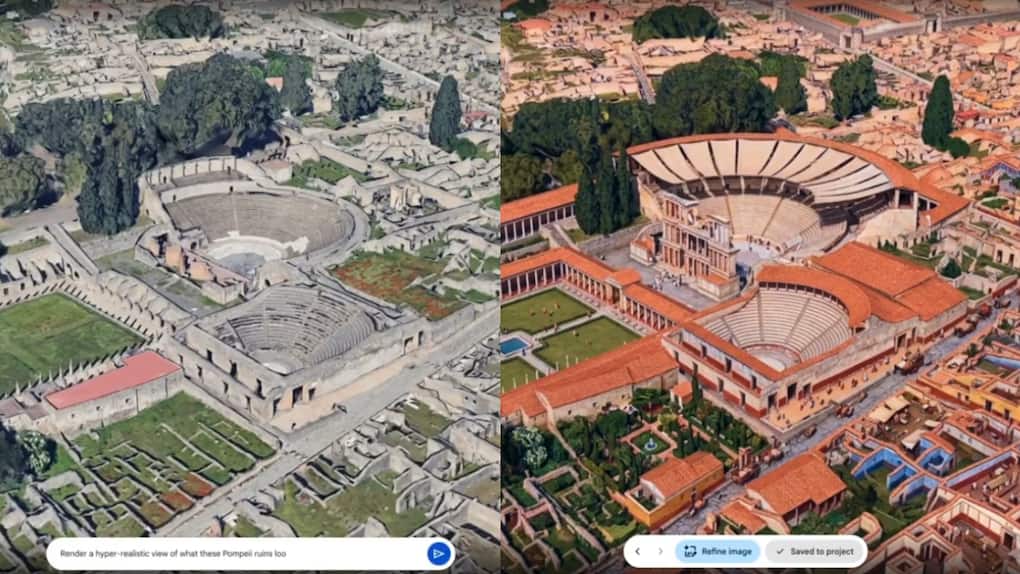
The new tool was powered by Google’s Nano Banana 2 AI image generator. It allowed users to zoom into any location on Google Earth, type a text prompt and generate an AI-created scene on top of real satellite or aerial imagery. The images could then be downloaded and shared. Also Read: OpenAI is giving free access to its most advanced ChatGPT models: Who is eligible?
Google originally introduced the feature as a creative tool, but it didn’t take long before users started testing its limits.
Soon after launch, researchers demonstrated how the feature could generate fictional events at real-world locations. According to reports, users were able to create images showing scenarios such as damaged landmarks, military activity and other events that never actually happened. Experts warned that combining AI-generated content with genuine satellite imagery could make fake images appear more believable.
Google acknowledged the concerns in a statement, saying it had seen screenshots of generated images that appeared to violate its policies. The company added that Google Earth is widely trusted as a reliable way to view the world, making it important to prevent misuse.
Re: our statement on Image Generation in Google Earth:
“We know that people uniquely trust Google Earth for a reliable view of the world. We’ve seen geospatial professionals using this feature for a range of useful purposes, however we’ve also seen people sharing screenshots of…— News from Google (@NewsFromGoogle) July 31, 2026
Google says the generated images carried invisible AI watermarks and were never added to the public Google Earth experience. The company also pointed out that users could verify suspicious images using tools such as Google Lens or the Gemini app. However, researchers claimed these safeguards were not always enough. Some said it was possible to bypass certain checks or make AI-generated images appear authentic enough to confuse users.

For now, the feature has been removed from Google Earth while the company works on additional protections. Google hasn’t shared when it plans to bring the tool back or what changes users can expect.


