Written By Divya
Published By: Divya | Published: Jan 25, 2026, 02:03 PM (IST)
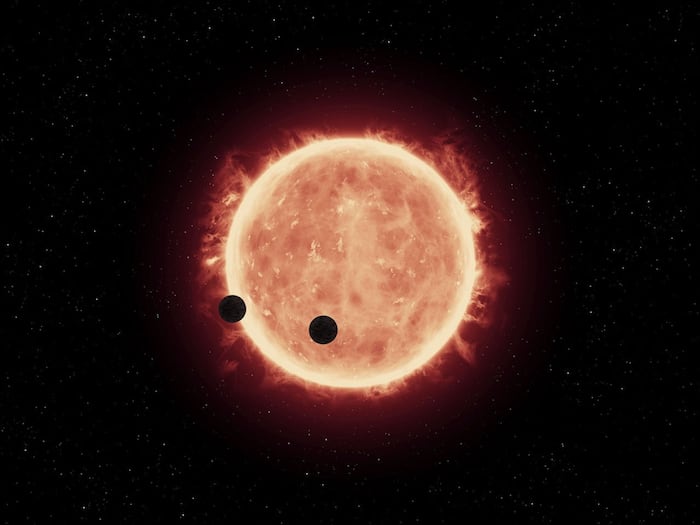
 NASA’s ExoMiner++ AI Begins Scanning TESS Data for New Nearby Worlds (Image credits: NASA)


Written By Divya
Finding planets outside our solar system is no longer about dramatic discoveries or lucky sightings. It’s slow, data-heavy work, where the real challenge is spotting tiny patterns hidden inside an ocean of numbers. That’s exactly where NASA’s AI tool, ExoMiner++, comes into the picture. NASA has now begun using ExoMiner++ to scan data from the Transiting Exoplanet Survey Satellite (TESS). And based on early results, this AI-led approach could make the search for nearby, Earth-like planets far quicker and far more efficient than before.  Also Read: India AI Impact Summit 2026: Infosys teams up with Anthropic for enterprise AI agents
ExoMiner++ is a deep-learning system built by NASA to hunt for exoplanets buried inside telescope data. Instead of scientists manually checking thousands of light signals, the AI looks for small dips in a star’s brightness, the kind that happen when a planet passes in front of it. Also Read: India AI Impact Summit Day 2: Schedule, timings, speakers and key sessions today
The tricky part is that not every dip means a planet. Space is noisy. Binary stars, stellar activity, and background interference can all create similar signals. ExoMiner++ is trained to tell the difference, filtering out false alarms and keeping only the signals that actually look planet-like. Also Read: Inside India AI Impact Summit 2026: PM Modi to global CEOs - what happened on day 1
ExoMiner++ studies light curves collected by TESS, learning from both older Kepler data and newer TESS observations. Each signal it analyses is assigned a confidence score, helping researchers decide which candidates deserve closer attention.
In its first large-scale scan of TESS data, the AI flagged close to 7,000 potential planet candidates. None of these are confirmed discoveries yet, but they dramatically narrow the search, pointing astronomers toward the most promising places to look next.
This isn’t ExoMiner’s first success story. An earlier version of the AI helped confirm 370 exoplanets using Kepler data back in 2021. The updated “++” version expands that capability to TESS, which focuses on bright, nearby stars, ideal targets for future study. NASA plans to refine the system further and use similar AI tools for upcoming missions, including the Nancy Grace Roman Space Telescope.

It must be noted that ExoMiner++ is open-source, meaning researchers around the world can access and improve it. With more data on the way and smarter tools to process it, the search for nearby Earth-like planets is moving from slow discovery to steady momentum.

Don't Miss Out the Latest Updates. Subscribe to Our Newsletter Today!