Written By Divya
Published By: Divya | Published: May 14, 2026, 01:51 PM (IST)
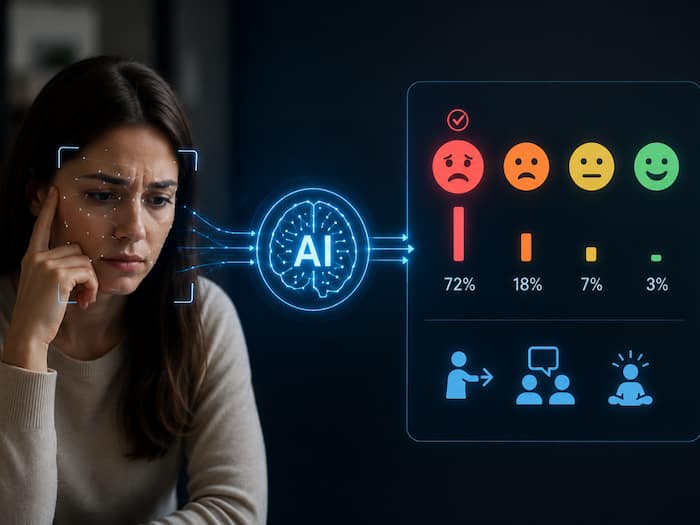
 Meta’s New AI Vision Goes Beyond Chatbots Into Brain Prediction (Image: AI generated)


Written By Divya
AI race horizons are expanding beyond the early chatbots, image generation, coding tools and even cybersecurity. Now, AI giants are moving towards understanding the human brain itself. As per the comments made by Meta’s chief AI officer, Alexandr Wang, during a Core Memory podcast, the company is working on AI systems which can predict how human brains react to things like videos, images, and audio. Basically, consider AI predicting your emotions.  Also Read: Google AI Mode introduces more connected apps: YouTube Music, Canva, and Instacart
If this turns out to be true in reality, this will change the whole narrative of AI. So, what exactly is Meta building? Also Read: WhatsApp is rolling out iPhone Mic Mode controls; Here's what changes during calls
During the podcast, Wang revealed that Meta is working on “foundation models for brain predictions,” which are basically AI systems trained to study patterns in brain activity and predict human responses. Also Read: iPhone users in China to finally get Apple Intelligence; Here's why it was delayed
More interestingly, the discussion revealed “zero-shot generalisation,” which could reportedly predict how someone’s brain may react to content, even without any prior information about the individual. That will be a big step ahead from how and what AI can do today.
Right now, the exciting recommendation systems work on your browsing history, likes, searches, or activity, we all know that! But if the brain-prediction AI model suggests a future where AI will no longer need the behavioural data to predict reactions.
Interestingly, this comes at a time when several AI leaders are discussing a future where AI tools may predict user needs before people even ask. The tech giants who are working on AI assistants believe the future system may understand your habits, workflows, preferences and routines, which will ultimately help AI to automate the tasks on its own.
That surely sounds futuristic tech, but it also raises several questions, especially about privacy. Well, I believe privacy is already a myth in this AI era, but that’s still debatable. After the emergence of AI, which can understand behaviour, emotions, reactions, and intentions at a deeper level, will it be any longer a question of debate… or absolute truth?
However, researchers and companies argue that these technologies could eventually help in healthcare, accessibility tools, assistive communication systems, and neurological research. So the debate is not entirely black-and-white.

For now, Meta’s research still feels experimental. But one thing is clear, AI companies are trying to move closer to understanding human thinking itself.

Don't Miss Out the Latest Updates. Subscribe to Our Newsletter Today!