Written By Deepti Ratnam
Published By: Deepti Ratnam | Published: Jun 03, 2026, 10:00 AM (IST)
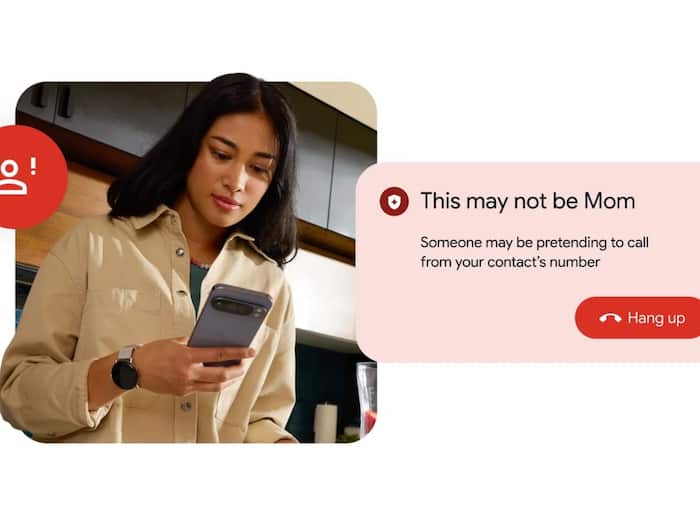
 AI voice scams are getting harder to spot, and Google has a new solution


Written By Deepti Ratnam
In a move to save Android users from one of the rising cyber threats called AI-powered Impersonation scams, Google has announced an innovative feature called Fake Call Detection. The technology can detect and alert customers that a caller could be pretending to be calling from someone they know by using deepfake technology.
The new protection will be rolled out worldwide via a new update to the Phone by Google app for Android 12 and later. The feature will start rolling out first to Google’s Pixel smartphones and then to other Android devices.
In the last few years, smartphone scams have evolved considerably. Phishing is the new trend for scammers, aiming to trick people into disclosing their personal information by mimicking a familiar phone number.
With the latest called ID spoofing, criminals are impersonating a familiar person, family member, friend, employer, or someone from a financial institution on call.
They then pair this with the AI generated voice cloning technology that is able to replicate a person’s voice quite closely.
This can cause victims to receive a phone call that seems to be from a familiar person and hear a voice that is very similar to the person they know. These are some of the methods scammers use to instill a sense of urgency like stating that there’s an emergency, asking for money or sensitive information.
These elaborated frauds are becoming harder for people to detect for themselves.
Google is calling the feature a digital verification system that operates in the background while the phone is in use, during a call.
If two people are using Phone by Google, one person calls the other, the caller device sends a silent confirmation signal to ensure that the call is actually being made to the other person’s device. This takes place automatically (without user intervention).
The system is also based on Rich Communication Services (RCS) technology and the process is end-to-end encrypted, ensuring privacy.
The expected verification signal will not appear if the scammer tries to disguise a contact’s phone number. Google’s system can then determine if it’s the real device with the contact making the call.
If the verification is unsuccessful, Android may show a warning message and remind the user that the caller might be someone they know, and encourage them to proceed with caution or hang up.
The feature is particularly focused on a new type of scam, called deep fake impersonation scams.
With the increase of publicly accessible AI tools, cybercriminals are now able to create highly realistic voice clones from brief snippets of audio. The availability of publicly accessed AI tools means that criminals can now use these devices to create realistic voice clones from brief snippets of audio.
Security experts have already warned users about these AI-generated voices claiming to be realistic enough to pass for real people’s voices.
To make things easier for Android users, Google brought the new feature so that it can identify the calling device instead of just the voice or caller ID.
According to the tech giant, the technology can help users prevent becoming targets of scammers posing as relatives, employers, government officials or trusted contacts.
Google states that the Fake Call Detection feature will be rolled out worldwide this month to Android 12 and later.
The feature will come first to Pixel smartphones and then to other Android-powered phones that use the Phone by Google app as their default phone app.
People who have another dialer app for their phones can get Phone by Google from the Play Store and make it the default phone app to use for protection.
Google said it has also confirmed that the feature has been turned on by default but users will be able to turn it off within the app settings.
In addition to Fake Call Detection, Google revealed a number of features on the Android platform.

Google Photos is getting a new feature for wardrobe called a “clothing tag finder” which will enable users to see what types of clothes are stored in their photo library, and even explore this feature virtually. This functionality will be rolled to the participating countries of the United States, India, and Brazil.

Don't Miss Out the Latest Updates. Subscribe to Our Newsletter Today!