Written By Divya
Edited By: Divya | Published By: Divya | Published: May 28, 2026, 01:21 PM (IST)
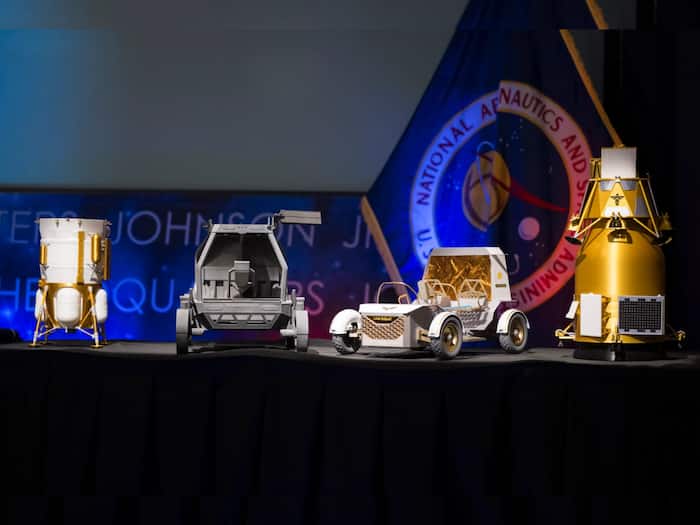
 NASA Reveals New Moon Base Rovers, Landers and Lunar Mission Plans (Image Credits: NASA)


Written By Divya
NASA is no longer talking about the Moon as just a place astronauts visit for a few days. The space agency now seems focused on building something much larger – a long-term lunar presence that could eventually function more like a small city on another world. During a major Moon Base update event in Washington, NASA has revealed details about upcoming rover contracts, cargo landers, robotic drone missions, and the broader roadmap for sustained operations near the Moon’s South Pole.  Also Read: Meet NASA's Artemis III crew: The astronauts preparing for the next Moon mission
And honestly, the scale of the project is starting to feel much more real now. Also Read: NASA astronauts may soon wear Prada on Moon missions
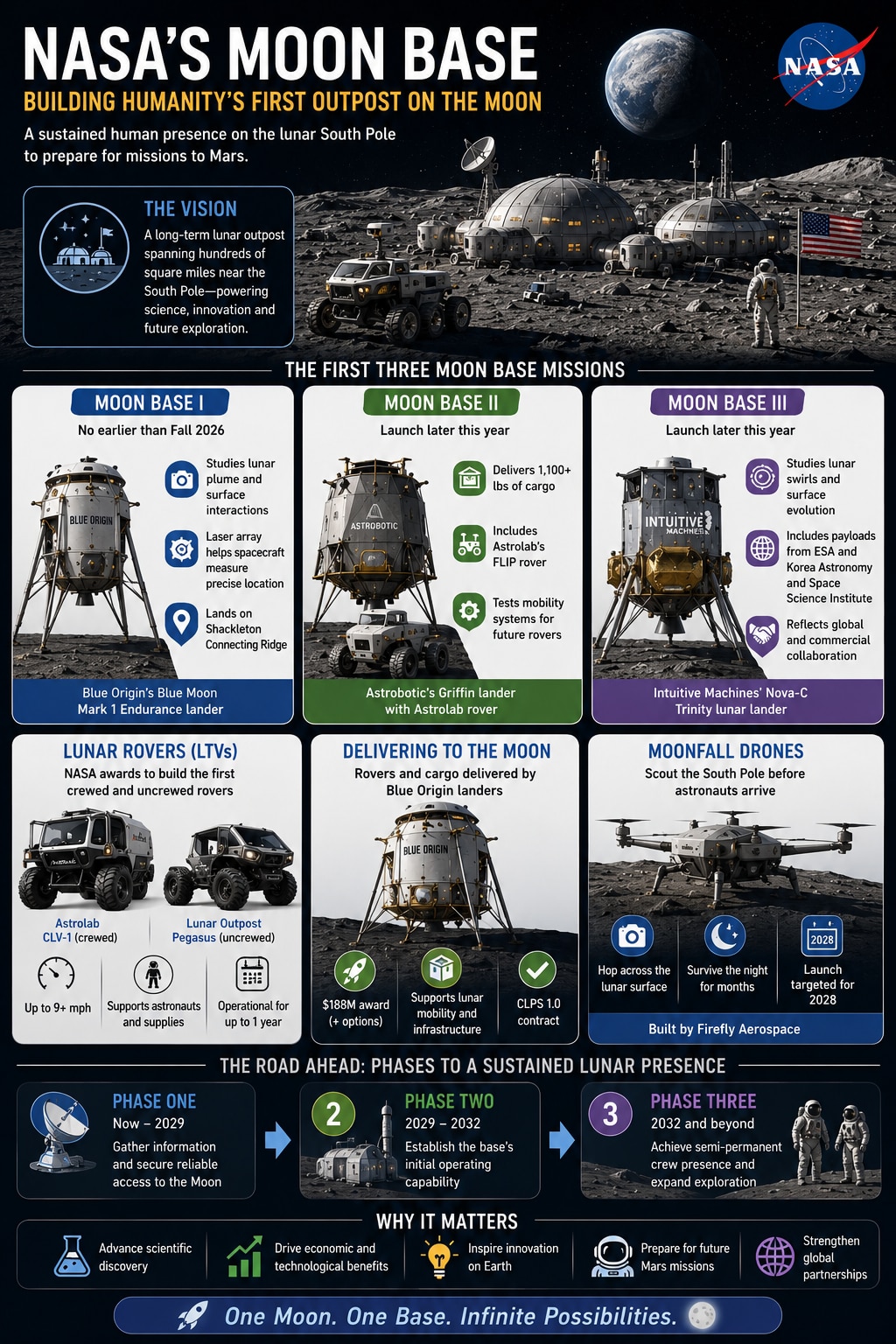
One of the biggest announcements was around lunar terrain vehicles (LTVs) – the next-generation Moon rovers astronauts will eventually use during Artemis missions. NASA awarded contracts worth over $200 million each to companies, including Astrolab and Lunar Outpost to build the first batch of Moon rovers. Also Read: NASA's Hubble captures Galaxy M88 with a black hole 100 million times the Sun's mass
The new rovers are expected to carry astronauts and cargo, operate autonomously without crew, be remotely controlled from Earth, travel across difficult lunar terrain, and help prepare landing sites before astronauts arrive. NASA wants at least one rover operational near the lunar South Pole before Artemis astronauts land there later this decade.
NASA also revealed the first set of Moon Base missions that will help build infrastructure before long-term human stays begin. One mission, planned no earlier than 2026, will use Blue Origin’s Blue Moon lander to deliver scientific payloads and test landing technologies near the South Pole.
Another mission will send more than 1,100 pounds of cargo to the lunar surface using Astrobotic’s Griffin lander along with a robotic rover designed for terrain exploration. NASA is also preparing additional robotic science missions focused on studying unusual lunar surface formations known as “lunar swirls.”
One of the more interesting updates involved something called MoonFall. NASA plans to send small hopping drones to the Moon in 2028. These robotic drones will independently jump across the lunar surface, capturing high-resolution images and scouting difficult terrain near potential astronaut landing zones.
The South Pole has become one of NASA’s biggest targets because scientists believe the region may contain frozen water trapped inside permanently shadowed craters.
That matters because water could eventually help support:
NASA officials also hinted that the Moon Base may eventually stretch across large areas rather than existing as one compact structure.
While the Moon Base itself sounds exciting, NASA continues to frame it as preparation for something bigger – Mars. NASA wants astronauts to learn how to survive in harsh off-world environments before attempting long-duration human missions deeper into space.

For now, NASA says the Moon Base will develop in phases over the next decade, beginning with robotic systems, followed by infrastructure building, and eventually semi-permanent human presence.

Don't Miss Out the Latest Updates. Subscribe to Our Newsletter Today!