Written By Shubham Arora


Written By Shubham Arora
Edited by Shubham Arora |Published: Jul 03, 2026, 07:55 PM (IST)
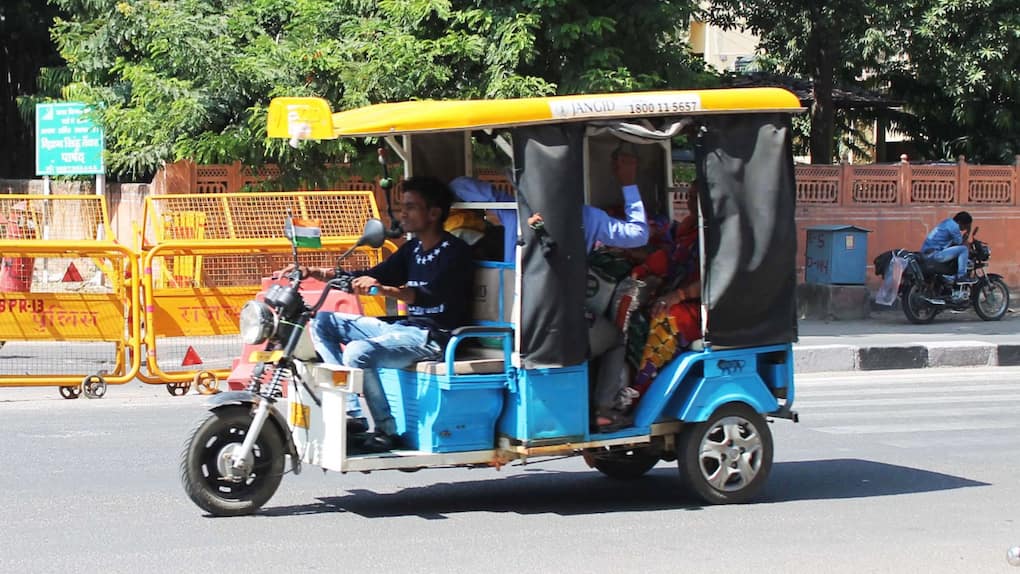
 The government has ordered action against BAT-BMS, Epoch Li-ion and Lossigy following reports of Bluetooth-enabled e-rickshaw shutdowns. (Image: Unsplash)
The Centre has issued removal orders for BAT-BMS, Epoch Li-ion and Lossigy following reports of their alleged misuse. Despite the government’s action, these apps continued to be listed on app stores at the time of writing. The action comes after several videos surfaced online showing battery-operated vehicles suddenly stopping after someone nearby connected to their batteries through Bluetooth.
MeitY Secretary S. Krishnan said the government had initiated action against the apps and would engage with app stores to prevent potentially harmful applications from being available. Government sources also said removal orders had been issued.
BAT-BMS, Epoch Li-ion and Lossigy are battery management applications designed to monitor lithium-ion batteries. They are commonly used to check details such as battery voltage, temperature and current. These apps also allow certain battery functions to be controlled remotely over Bluetooth.
According to government officials, the problem arose because many low-cost e-rickshaws use Bluetooth-enabled Battery Management Systems (BMS) with very little security. In several cases, these systems reportedly do not require a password or any authentication before establishing a connection.
That means if someone is within Bluetooth range, they can connect to a compatible battery, switch off its discharge function and bring the vehicle to a halt. The driver can only resume the journey after the battery is turned back on through the same app.
The issue gained attention after multiple videos on social media showed people connecting to nearby e-rickshaws and remotely disabling them as a prank. While the videos were shared as entertainment, the impact on drivers has been far more serious.
For many e-rickshaw drivers, even a few hours without their vehicle means losing that day’s income. Since most of them have no idea why the battery suddenly stops working, they often end up pushing the vehicle to a nearby mechanic or asking others for help before finding out what actually happened.
One such case was shared by social media influencer Amaan Siddiqui while speaking to ANI. He said he came across an e-rickshaw driver whose vehicle had been lying stranded for hours after someone allegedly switched off the battery using the app. After connecting to the battery through the app, he was able to switch it back on. According to Siddiqui, the driver said he had lost around Rs 400 to Rs 500 in earnings that day and had rented the vehicle for work.
Officials believe the issue highlights a larger cybersecurity concern around connected electric vehicles. While these battery management apps were originally developed for monitoring compatible lithium-ion batteries, authorities say their remote-control features can be misused if the battery systems themselves do not have proper security checks.
Government sources said BAT-BMS, developed by Shenzhen Grenergy Technology in China, is intended to help users monitor battery health and manage supported batteries. However, in India, its features are believed to have been exploited because some Bluetooth-enabled Battery Management Systems do not include basic protections such as password verification.

The Delhi government has also asked its Transport Department to verify the claims around BAT-BMS and examine whether the app can remotely disable e-rickshaws through Bluetooth connectivity. Transport Minister Pankaj Singh said the department has been asked to investigate the matter, although no formal written complaint has been received so far.