Written By Divya
Published By: Divya | Published: Jan 29, 2026, 09:38 PM (IST)


Written By Divya
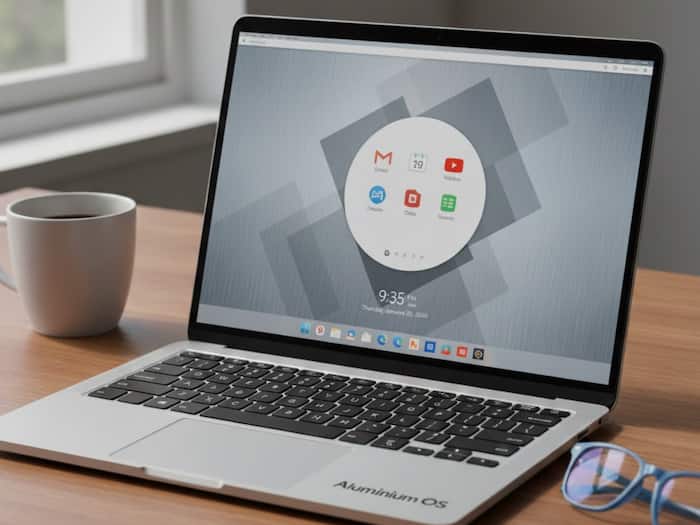
For years, ChromeOS has powered lightweight laptops. But it now looks like Google is quietly working on something bigger that could eventually take its place. A leaked internal build, spotted through a public bug report (shared by 9to5Google), gives us an early peek at what’s being called “Aluminium OS” (or ALOS internally).  Also Read: Google Play gets PC games section, trials for paid titles, and more
This isn’t an official announcement. But the footage suggests Google is testing a full desktop-style version of Android that could one day replace ChromeOS on Chromebooks. The leaked screen recording shows a laptop running this new system with two browser windows side by side. At a glance, it looks a lot like today’s ChromeOS. But look closer and you start spotting Android-style elements creeping in. Also Read: Gmail Tricks That Can Save You Time Every Day
There’s a taller status bar at the top with the time and date on the left, and Wi-Fi, battery, notifications and a Gemini shortcut on the right. The layout feels more like a stretched, desktop-friendly version of Android rather than the current ChromeOS shelf and tray setup.
At the bottom, there’s a centred start button and a taskbar that looks quite close to what Chromebook users already know. Window controls for minimise, maximise and close are placed exactly where you’d expect them on a desktop.
Under the hood, this leaked build is reportedly based on Android 16. That explains why parts of the interface feel similar to Android’s desktop mode that shows up when you connect some phones to external displays. The idea seems simple: instead of maintaining two separate platforms, Google could merge ChromeOS and Android into one desktop OS that runs Android apps natively while still handling traditional browser work.
Interestingly, Google appears to be testing this on existing Chromebook hardware, which hints that future transitions might not need entirely new machines.

What does it mean for you? If this project becomes a real product, Chromebooks could slowly evolve from “browser-first” devices into more flexible Android-powered desktops. For now, Aluminium OS is clearly early and experimental. But this leak suggests Google is seriously exploring an entirely new replacement of the ChromeOS.

Don't Miss Out the Latest Updates. Subscribe to Our Newsletter Today!