Written By Deepti Ratnam
Published By: Deepti Ratnam | Published: May 08, 2026, 03:27 PM (IST)
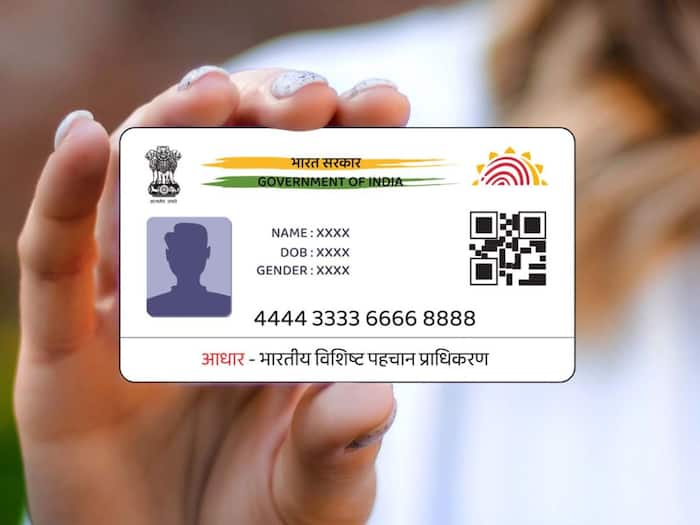
 Aadhaar Scam


Written By Deepti Ratnam
Aadhaar card is an important official document in India as it proves that you are a citizen of the country. It also helps in several kinds of verification process. Nevertheless, fake Aadhaar cards are becoming increasingly common in India. These cards are used especially for scams related to AIM cards, rentals, banking, online fraud, and job verification, and more. The common issue with fake Aadhaar cards is that it almost look identical to original ones, and hence it makes it difficult to identify fake documents through visual checking alone.  Also Read: How to add Email ID on Aadhaar Card using the Aadhaar App for FREE: Steps here
As Aadhaar card is one of the most widely used identity documents in the country, it is essential to understand how you can verify if an Aadhaar card is genuine or not. Fortunately, there are several ways through which you can check the authenticity of Aadhaar card without needing advanced technical knowledge. Also Read: These Aadhaar Card mistakes can create problems with bank KYC, how to check and fix
 Also Read: Aadhaar card update new rules May 2026 for name, address, and DOB corrections
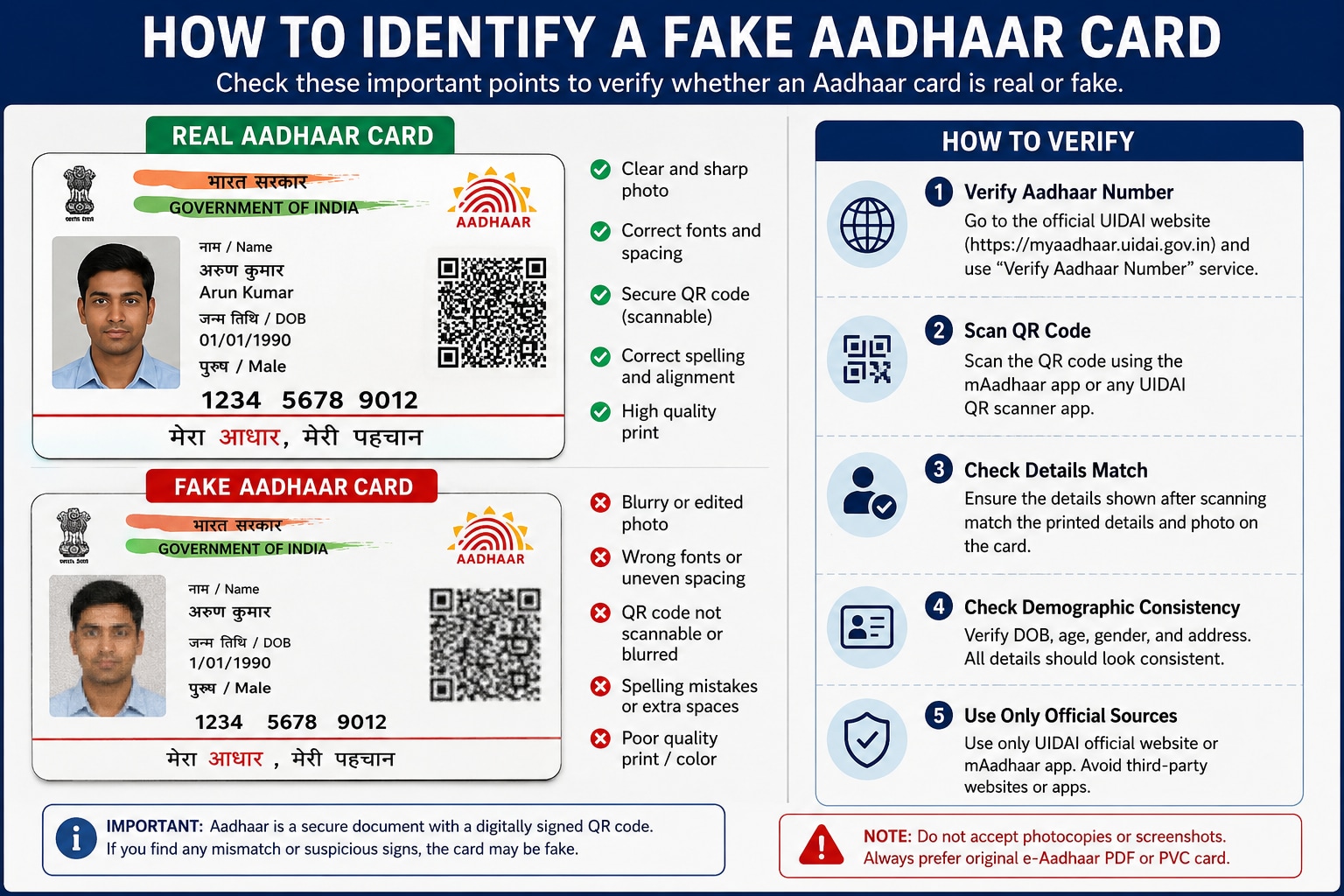
One of the common and easiest ways to check if an Aadhaar card is genuine or not is by verifying the Aadhaar number itself. A valid Aadhaar number is a unique 12-digit identification number issued by UIDAI. If the number is fake, invalid, or inactive, then the verification system will usually fail to recognize it.
If the Aadhaar number is genuine, then basic details linked to it, including gender, age band, and state become visible during verification. This will help you to confirm whether the Aadhaar really exists in the system or not.
Another modern way through which you can check the authenticity of Aadhaar card is the QR code. The Aadhaar card contain as secure QR code that stores digitally signed information.
The QR Code is the easiest and safest way to identify fake Aadhaar cards because the information inside it is encrypted and difficult to manipulate. Even if someone edits the printed photo or text on the card, the scanning will be difficult and scanning the QR code can also reveal the original stored details.
You can compare details after scanning the QR code. These details include:
If the information doesn’t match then the card may be fake or invalid or is inactive. It can sometimes be tampered too.
Another measure through which you can check the Aadhaar card details is noticing warning signs. While there are many fake Aadhaar cards that now appear realistic, but some physical signs can still indicate that it is either manipulated or edited.
Common warning signs include:
However, not every time you can depend on visual inspection and it cannot be usually considered reliable.
Digital verification can also help you as it is the safest way to confirm if Aadhaar is authentic or not.
There are several official Aadhaar-related mobile apps that allow users to sca QR codes and digitally verify Aadhaar information. For this you don’t have to rely only on ohotocopies or printed cards.
This will also reduce the risk of accepting edited paper copies. These copies may have been altered using image editing software but you can still identify them.
Fake Aadhaar cards are currently becoming an important issue in India. Our Aadhaar cards are linked to banking, travel, government systems, banking, and more. Fake Aadhaar cards are increasingly being used for identity fraud.
Here’s what scammers sometimes do:
You should always be careful while sharing your Aadhaar card details online or offline. There are some important precautions that you can take while suing your card. These include:
Can fake Aadhaar cards look real?
Yes
What is the safest way to verify Aadhaar?
Scanning the secure QR code
Can Aadhaar details be edited on printed copies?
Yes, scammers can edit printed copies
Is visual checking enough to identify fake Aadhaar cards?

No, visual checking alone is not fully reliable

Don't Miss Out the Latest Updates. Subscribe to Our Newsletter Today!