Written By Divya
Published By: Divya | Published: Feb 16, 2026, 03:50 PM (IST)


Written By Divya
India AI Impact Summit 2026 begins today at Bharat Mandapam, New Delhi. During the summit, S. Krishnan, Secretary at the Ministry of Electronics and Information Technology (MeitY) has confirmed that India is close to witnessing its first commercial-scale chip production.  Also Read: Transform quotes and trends with free AI video generator into viral clips
As quoted in an ANI report, Krishnan said, “Maybe by the end of this month we should see the inauguration of the first of the 10 approved of (semiconductor) projects. Micron would be starting production at their facility in India – that would be the first commercial-scale production of semiconductors in India.” Also Read: Wikipedia bans AI-written content, bot hits back with angry blog posts
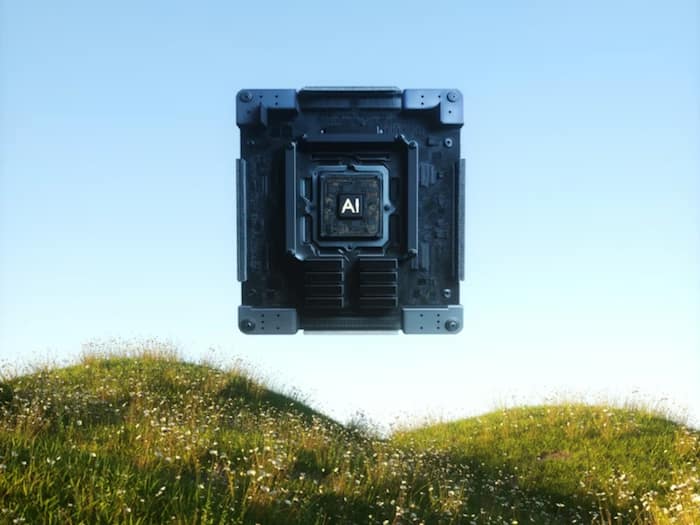
Among the projects cleared under the India Semiconductor Mission (ISM), US-based Micron Technology is expected to be in the spotlight. The company will manufacture high-bandwidth memory (HBM), a component that is increasingly important for advanced AI systems. “Eventually, they would be also working on high bandwidth memory, which is so important for AI,” Krishnan mentioned about this technology. With global demand for AI infrastructure rising, having local production could help India reduce dependence on imports. Also Read: Meta’s new Ray-Ban AI Glasses now support prescription lenses and new features
Krishnan mentioned that India has been building its hardware foundation for years. “Ever since the national policy on electronics in 2012…post-2014 we have significantly attempted to add to our hardware progress,” he said.
The government has already announced Semiconductor Mission 2.0 in the Union Budget, hinting at continued support for domestic manufacturing. One of the key goals under the next phase is designing AI-focused chips within the country. Krishnan added that these are not short-term moves, stressing the need for “a sovereign AI offering.”
Interestingly, India’s AI infrastructure strategy is taking a slightly different route. Instead of directly funding data centre construction, the government is focusing on making computers more accessible. As Krishnan mentioned, “India has prioritised subsidising access to AI compute rather than directly funding data centre creation.”

He also revealed that researchers, startups, students, and MSMEs can access AI compute at roughly Rs 65 per GPU hour, significantly lower than global pricing, which typically ranges between $2 and $3.

Don't Miss Out the Latest Updates. Subscribe to Our Newsletter Today!