
Written By Shubham Arora
Published By: Shubham Arora | Published: Feb 06, 2026, 02:41 PM (IST)


Written By Shubham Arora
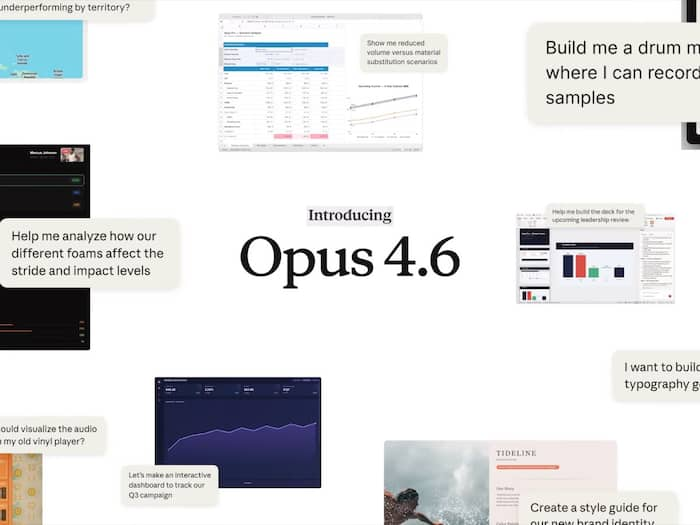
Anthropic has released an updated version of its flagship AI model, called Claude Opus 4.6. The model is now live and available to users across Anthropic’s platforms and partner cloud services. According to the company, the update focuses on improving how the model handles long and complex tasks, especially in areas like coding, research, and other knowledge-heavy work.  Also Read: Adobe brings AI assistant to Photoshop and new Firefly editing tools
Claude Opus 4.6 is the latest and most capable model in Anthropic’s Claude lineup, which also includes smaller models such as Sonnet and Haiku. Opus models are designed for heavier workloads where accuracy and sustained performance matter more than speed. Also Read: YouTube’s AI tool to detect deepfakes now available to journalists and government officials
In a newsroom post, Anthropic said Claude Opus 4.6 builds on the earlier Opus 4.5 release, addressing issues related to long conversations and large inputs. The company positions the model for professional use cases rather than casual chat. Also Read: Google’s Gemini Embedding 2 lets AI understand text, images and video together
One of the biggest changes is support for a much larger context window. In beta, Claude Opus 4.6 can process up to one million tokens, up from the 200,000-token limit in earlier Opus models. This allows it to work with very long documents, large codebases, or extended conversations without losing track of earlier information.
Anthropic has also added features such as context compaction, which summarises older parts of a task to keep things running smoothly over time. The update also introduces adaptive thinking, which allows the model to decide how much reasoning is needed based on the task. Developers can adjust effort controls as well, letting them choose between faster responses, lower costs, or more detailed outputs depending on their needs.
Anthropic says Claude Opus 4.6 shows noticeable improvements in software engineering tasks, including code review, debugging, and managing large repositories. It is also designed to handle long-running research, financial analysis, and document-heavy workflows more reliably.
According to Anthropic’s internal evaluations, shared in its announcement, the model performs strongly on benchmarks related to coding, reasoning, and agent-based tasks. The company also claims gains in areas such as computational biology and cybersecurity-related analysis.
Claude Opus 4.6 is available through the Claude website, mobile and desktop apps, the Anthropic API, and major cloud platforms. API pricing remains unchanged, starting at $5 per million input tokens and $25 per million output tokens, with higher costs for very large contexts.

Anthropic says it has also carried out extensive safety testing for this release and added new safeguards, particularly for sensitive tasks like cybersecurity work.

Don't Miss Out the Latest Updates. Subscribe to Our Newsletter Today!