
Written By Shubham Arora
Published By: Shubham Arora | Published: Feb 25, 2026, 09:19 PM (IST)
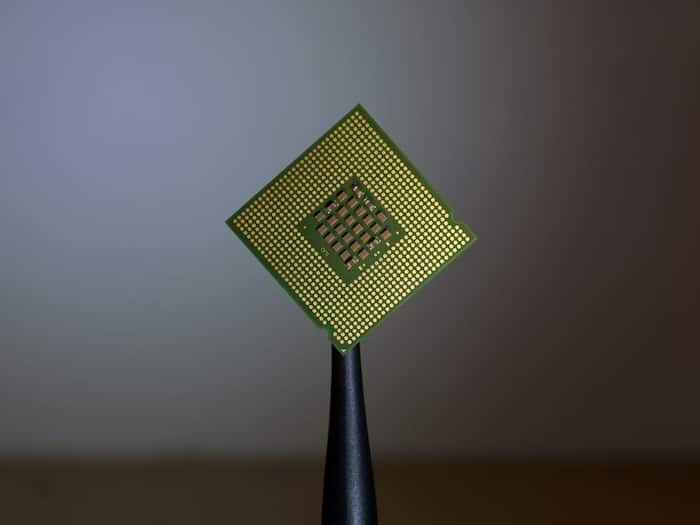
 HCL–Foxconn JV starts construction of chip facility in Greater Noida. (Image: Unsplash)


Written By Shubham Arora
India’s semiconductor push has taken another step forward. India Chip, a joint venture between HCL Group and Foxconn, has started work on its semiconductor facility near Jewar in Greater Noida.  Also Read: Qualcomm partners with Tata Electronics to manufacture automotive modules in India
The foundation stone for the project was recently laid by PM Narendra Modi, who attended the ceremony virtually. Uttar Pradesh Chief Minister Yogi Adityanath and Union IT Minister Ashwini Vaishnaw were also present at the event. Also Read: Global smartphone processors may see a dip in 2026, says Counterpoint
The plant, coming up along the Yamuna Expressway near Jewar, will function as an OSAT unit. OSAT stands for Outsourced Semiconductor Assembly and Test. In simple terms, the facility will assemble, package, and test chips before they are used in devices. Also Read: Foxconn Pulls Out over 300 Chinese Engineers From India Ahead of iPhone 17 Launch
The focus will be on display driver chips. These are the components that control screens in smartphones, televisions, laptops, and other electronics. At present, India depends entirely on imports for this category of chips.
Once operational, the factory is expected to process up to 20,000 chips per month. Reports say the target for full-scale operations in 2028.
The project involves an investment of around Rs 3,700 crore. India Chip is structured as a 60:40 joint venture between HCL Group and Foxconn.
As per details, the plant could meet nearly 25 percent of India’s domestic demand for display driver chips when fully operational. A portion of production, estimated at 20 to 30 percent, may also be exported to global markets.
The company expects the project to generate more than 3,500 direct and indirect jobs. Apart from the jobs, the plant could also benefit local suppliers, transport companies, and other small businesses operating around the area.
India has been pushing to reduce dependence on imported semiconductor components as electronics manufacturing expands, especially in mobile phones and consumer devices. Localising display driver chip assembly and testing is being seen as one step toward building a broader semiconductor ecosystem.

Construction has now begun, and the next few years will determine how quickly the facility moves toward its planned 2028 operational timeline.

Don't Miss Out the Latest Updates. Subscribe to Our Newsletter Today!