Written By Deepti Ratnam
Edited By: Deepti Ratnam | Published By: Deepti Ratnam | Published: May 06, 2026, 09:37 AM (IST)
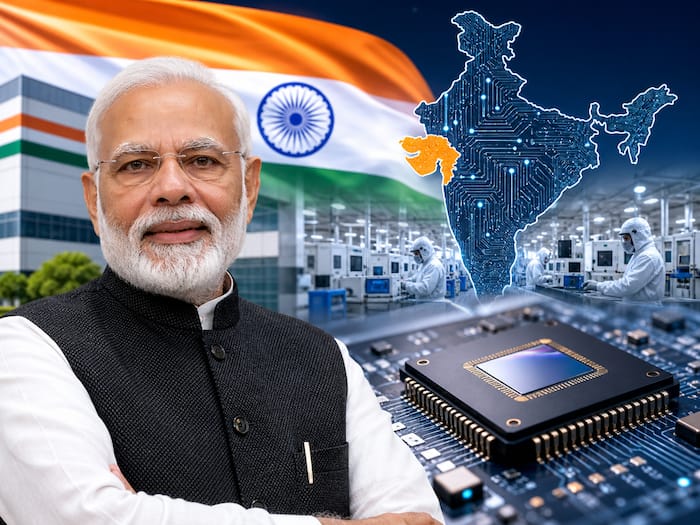
 India’s semiconductor dream: Govt clears big projects worth rs 3,900 crore


Written By Deepti Ratnam
India is slowly getting ahead in the global semiconductor space and the latest decision by the Indian government is proof of this. The Union Cabinet has approved two semiconductor projects in Gujarat. This adds momentum to the country’s long-term goal of reducing dependence on imports. These projects will not just serve as manufacturing units but they will also open doors to multiple jobs, support innovation, and strengthen India’s role in the global tech race.  Also Read: PM Modi inaugurates Rs 3,300 crore Kaynes Semiconductor plant in Gujarat: ALL details here
The Union Cabinet, led by Prime Minister Narendra Modi, has approved two new semiconductor projects in Gujarat. These projects are worth the investment of over Rs 3.900 crore. Both projects are expected to create more than 2,200 jobs for skilled workers. Also Read: Qualcomm’s 2nm chip tape-out highlights India’s expanding role in global semiconductor race
These two semiconductor projects come under the ‘India Semiconductor Mission,’ which aims to develop a strong foothold in semiconductor ecosystem in the country. With these additions, India has earned 12 approved semiconductor projects in the country, with a combined investment close to Rs 1.64 lakh crore. Also Read: DHRUV64 Launched: India’s First 64-Bit Microprocessor Aims To Cut Chip Imports
Cabinet’s approval of new projects under the India Semiconductor Mission is a part of our efforts towards making India a leader in the global semiconductor value chain, focussing on manufacturing, packaging and advanced materials. India’s advances in the world of semiconductors…
— Narendra Modi (@narendramodi) May 5, 2026
The first project will be developed by Crustal Matrix Limited in Dholera, Gujarat. The main focus of this facility will be manufacturing advanced display modules. These will include Mini and Micro-LED using Gallium Nitride. Notably, this type of display is used in modern devices as it delivers better brightness and efficiency without any strain on eyes.
This is an essential setup in India, considering its electronic manufacturing sector as it is first ever large scale commercial unit in this segment.
Talking about the second project, it will be setup by the Suchi Semicon Private Limited in Surat. This project will handle semiconductor assembly and testing, making it an OSAT facility. According to reports, it is expected to produce more than 1,000 million chips every year.
Under this project, the chipsets will be used in sectors like industrial systems, consumer devices, automotive, and power electronics. The demand in these sectors are growing quickly, hence, both of these projects will play an important role to enhance country’s growth in semiconductor ecosystem.
One of the key benefits of these projects is that it will generate employment in India, Together, both units are expected to produce over 2,200 direct jobs related to technical and skilled roles. It will build a stronger workforce.
Besides direct jobs, there will be some indirect employment opportunities in local business, logistics, and support services.
Currently, India relies so much on imported semiconductor parts. These new projects are included in a more extensive plan to alleviate that reliance. With the development of local manufacture and testing stations, the nation can enhance stability of the supply chain, and lower long-run costs.
The government is also ensuring that it concentrates on long term growth through supporting research, design and innovation in this sector.

Prime Minister Narendra Modi has put forward the significance of such initiatives in the Indian growth story. He said that these efforts will assist India to emerge as a major player in the global value chain of semiconductor manufacturing.
The main focus is building capacity in terms of manufacturing, packaging and high-tech materials. The idea behind this is to enhance technological self-reliance and innovation in industry.

Other than Gujarat, India has other states too that are emerging as a new setup for semiconductor projects. These include Assam, where Tata Electronics is setting up a semiconductor assembly and packaging units. Odisha has multiple projects in semiconductor. Punjab and Andhra Pradesh is also part of the semiconductor expansion plan. Uttar Pradesh has also entered the semiconductor space.

Don't Miss Out the Latest Updates. Subscribe to Our Newsletter Today!