Written By Divya
Edited By: Divya | Published By: Divya | Published: May 05, 2026, 02:05 PM (IST)
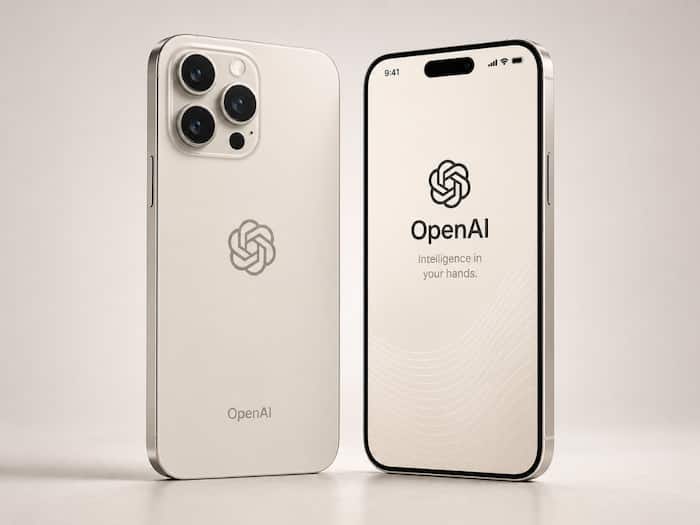
 This is not an actual image or idea behind the OpenAI smartphone. This AI-generated image just depicts a mere idea.


Written By Divya
Just a week ago, analyst Ming-Chi Kuo reported in a blog that OpenAI might be developing an AI phone. This came as the AI giant is said to be working with Qualcomm and MediaTek to bring an AI-first device. Now, Kuo has further revealed that OpenAI seems to be keeping its AI agent phone on the fast track. Interestingly, the mass production of the first AI phone by OpenAI is reported to be as early as the first half of 2027. “Potential drivers include supporting a year-end IPO narrative and intensifying competition in AI agent phones,” he added.  Also Read: Sam Altman vs Elon Musk: AI rivals clash on X after Apple's OpenAI lawsuit
So far, what we have understood about the OpenAI phone is that it could be a device based primarily on AI capabilities instead of classic smartphone features. But as we are moving forward, the phone appears to be clearer than just a concept. Also Read: Apple sues OpenAI over alleged trade secret theft linked to AI hardware plans
Ming-Chi Kuo has shed light on some of the key specifications of the rumoured OpenAI smartphone. As per the leak, the phone is expected to be powered by a customised version of the Dimensity 9600 chipset, which could be built on TSMC’s advanced N2P process sometime in the second half of 2026. Also Read: ChatGPT Work can create Docs, Slides and more on its own; Here's how it works
Talking about performance, the device may come with a dual-NPU setup, which basically means better handling of AI tasks. It is also tipped to feature LPDDR6 RAM and UFS 5.0 storage, which will eventually result in faster data processing to reduce slowdowns.
【Industry Check Update】OpenAI appears to be fast-tracking its first AI agent phone, with mass production targeted as early as 1H27. Potential drivers include supporting a year-end IPO narrative and intensifying competition in AI agent phones. MediaTek currently appears better… https://t.co/wtumZ4XgA7
— 郭明錤|Ming-Chi Kuo (@mingchikuo) May 5, 2026
Apart from these, features like pKVM and inline hashing are expected on the security side, which could add an extra layer of protection. Plus, one of the key highlights seems to be the camera processing. The ISP (image signal processor) is said to focus on improving HDR performance, which could help in better real-world visuals, especially in tricky lighting conditions.
Ming-Chi Kuo even revealed an expected timeline. He suggests that if the development stays on track, the shipment of the smartphone may reach 30 million units by 2027-28. However, we can’t rely on the timeline as it is based on speculations, and the final results will entirely be dependent on the pre-production, manufacturing and the final market availability.
For the last couple of years, OpenAI has focused on building AI that people actually use and ChatGPT is proof of that. But there’s a limit to how much you can do through apps alone. If the goal is to build a truly personal AI assistant, then controlling the hardware starts to make more sense.
Smartphones are already a big part of our daily lives, they track location, usage patterns, communication, and behaviour. That kind of real-time context is exactly what AI systems need to become more useful and proactive.

At the same time, there’s also a bigger play here. By building its own device, OpenAI can connect software, hardware, and subscriptions into one ecosystem — something most big tech companies are already doing.

Don't Miss Out the Latest Updates. Subscribe to Our Newsletter Today!