


Written By Divya
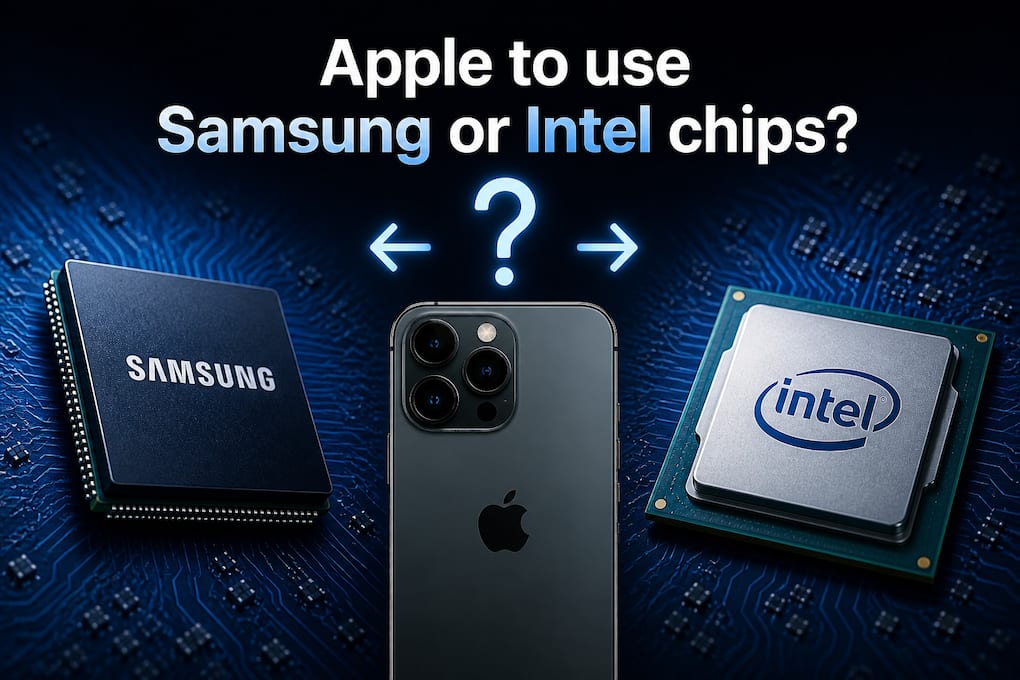
 Apple Explores New Chip Partners Beyond TSMC for Future iPhones (Image: AI Generated)
So far, Apple has relied on TSMC to manufacture chipsets for iPhones, iPads and even Macs. But it seems like even Apple is planning to change the dependency soon. As per a recent report by Bloomberg, Apple is now exploring different paths to manufacture a chipset, including Intel and Samsung. However, the discussions are still at an early stage.  Also Read: August 2026 smartphone launches: 5 phones worth waiting for
It must be noted that Apple designs its own processors, but manufacturing has been handled almost entirely by TSMC. That model has worked well so far, especially with advanced 3nm chips, which power the current iPhone 17 lineup. However, there is growing pressure on supply. Demand for the advanced chipsets, which are basically driven by AI and high-performance computing, has tightened availability. Apple CEO Tim Cook has also acknowledged that the company is facing some supply constraints. Also Read: Apple reportedly launching new upgrade programme for iPhone, iPad, Mac, and Apple Watch on July 28
That’s why exploring alternatives makes sense. Having more than one manufacturing partner could give Apple better flexibility and reduce risk. Also Read: Next iPad mini could become Apple's FIRST tablet to bring this
The report suggests that Apple has already held early discussions with Intel about using its foundry services. At the same time, Apple executives have also visited Samsung’s upcoming semiconductor facility in Texas. The idea here is not necessarily to replace TSMC, but to add another layer to the supply chain.
Both Intel and Samsung have been working to improve their advanced chip manufacturing capabilities, and a partnership with Apple would be a big win for either company. For Intel, especially, this could help strengthen its into contract chip manufacturing. For Samsung, it would be another step in closing the gap with TSMC in high-end chip production.
Another angle to this move could be geography. Apple has already started working with TSMC’s Arizona facility and plans to source chips from there in the future. By exploring Intel and Samsung’s US-based facilities, Apple could shift part of its production closer to home. This could help manage supply risks and align with broader efforts to boost domestic chip manufacturing.
Despite the interest, this transition won’t be easy. Apple has built its chip ecosystem around TSMC’s processes over the years. Matching the same level of performance, consistency and scale is not straightforward. That’s also why these talks are still exploratory. There are no confirmed deals yet, and Apple is expected to move cautiously before making any major shift.
If things move forward, future iPhones could have chips manufactured by more than one partner. That doesn’t change how Apple designs its processors, but it could change where and how they are made.

For now, TSMC remains central to Apple’s plans. But the idea of multiple partners shows that Apple is preparing for a more flexible and distributed supply chain going forward.


