Written By Divya
Published by Divya| Published: Mar 23, 2026, 04:05 PM (IST)| Edited: Mar 23, 2026, 04:29 PM IST
 Samsung Galaxy S26 Ultra (2)


 Pros
Pros Cons
Cons
Written By Divya
Samsung hasn’t just crawled with subtle improvements in its flagship phones over the years, but actually has built its reputation on bold moves. If you have followed Samsung long enough, you’d know its flagship devices were once all about taking risks. From early experiments with Palm, Windows Mobile, and the iPhone-rival Samsung Instinct to the very first S-series phone in 2010, Samsung made some strong decisions to build what we now call a flagship. And it took another shift with the S21 Ultra by supporting the S Pen, and later the S22 Ultra with a fully integrated stylus, giving the series a unique identity. Every phone defines why it is a “flagship” with a wow factor.  Also Read: Samsung Galaxy S26 series could get AirDrop support soon
Cut to 2026, the Samsung Galaxy S26 Ultra feels like a more refined and smarter upgrade over the predecessor Galaxy S25 Ultra (which followed a similar story!) In the past couple of years, the S-series phones have become an upgrade in terms of AI and user experience without dramatic changes. The Samsung Galaxy S26 Ultra seems to follow the exact footsteps. Also Read: Spider-Man’s phone choice sparks debate after Brand New Day trailer
A quick glance at the specifications will force you to say, “Oh, that’s exactly like S25 Ultra!” But here is a thing – it comes with a pinch of improvements, which you won’t notice immediately, but they’re useful in daily life. Also Read: Samsung Galaxy A57 and Galaxy A37 launch date in India confirmed: Check expected secs, design, more
And if we are talking about the Galaxy S26 Ultra, then its hero feature — the Privacy Display — simply can’t be ignored at all. And honestly, the first thing that I checked as soon as I unboxed it is the Privacy Display feature. So, is it just a gimmick or does it actually make sense in day-to-day life? To know, I put the Galaxy S26 Ultra to the review, and I believe, the phone is much more about just Privacy Display.
| Display | 6.9-inch AMOLED 2X, 120Hz, 2600 nits peak |
| Battery & Charging | 5000mAh; 60W wired |
| Storage |
256GB 12GB RAM | 512GB 12GB RAM | 1TB 16GB RAM |
| Processor | Snapdragon 8 Elite Gen 5 |
| Rear Camera | 200MP, 10MP (telephoto), 50MP (periscope telephoto), 50MP (ultrawide) |
| Front Camera | 12MP |
| Operating System | One UI 8.5 based on Android 16 |
| Colours | Cobalt Violet, Sky Blue, Black, White, Silver Shadow, Pink Gold |
| Price | Rs 1,39,999 |
Let’s begin with Privacy, I mean, display.
The Galaxy S26 Ultra features the usual and large 6.9-inch AMOLED 2X display with up to 120Hz refresh rate and 2600 nits peak brightness, protected by Corning Gorilla Armor 2 and gets DX anti-reflective coating, just the usual previous-gen things. The experience is top-notch, whether you are watching movies, scrolling on Instagram for reels and content or reading even under the sunlight, the brightness and colours are all apt for the rich experience.
What makes the whole difference here is the Privacy Display feature, which blocks the side-viewing simply to let you continue with your work without any fear. The good part, you can turn it off or on according to your need, based on the apps or even customise it for the notification bar. That means whether you get an OTP pop-up or some personal message, the Privacy Display feature will keep it hidden or simply black for the people beside you. During my Metro commute or any public space, the feature actually solved my phone privacy anxiety at least! For many, it may sound like a usual Rs 200 privacy glass addition on a premium phone, but the real magic is all about the customisation.
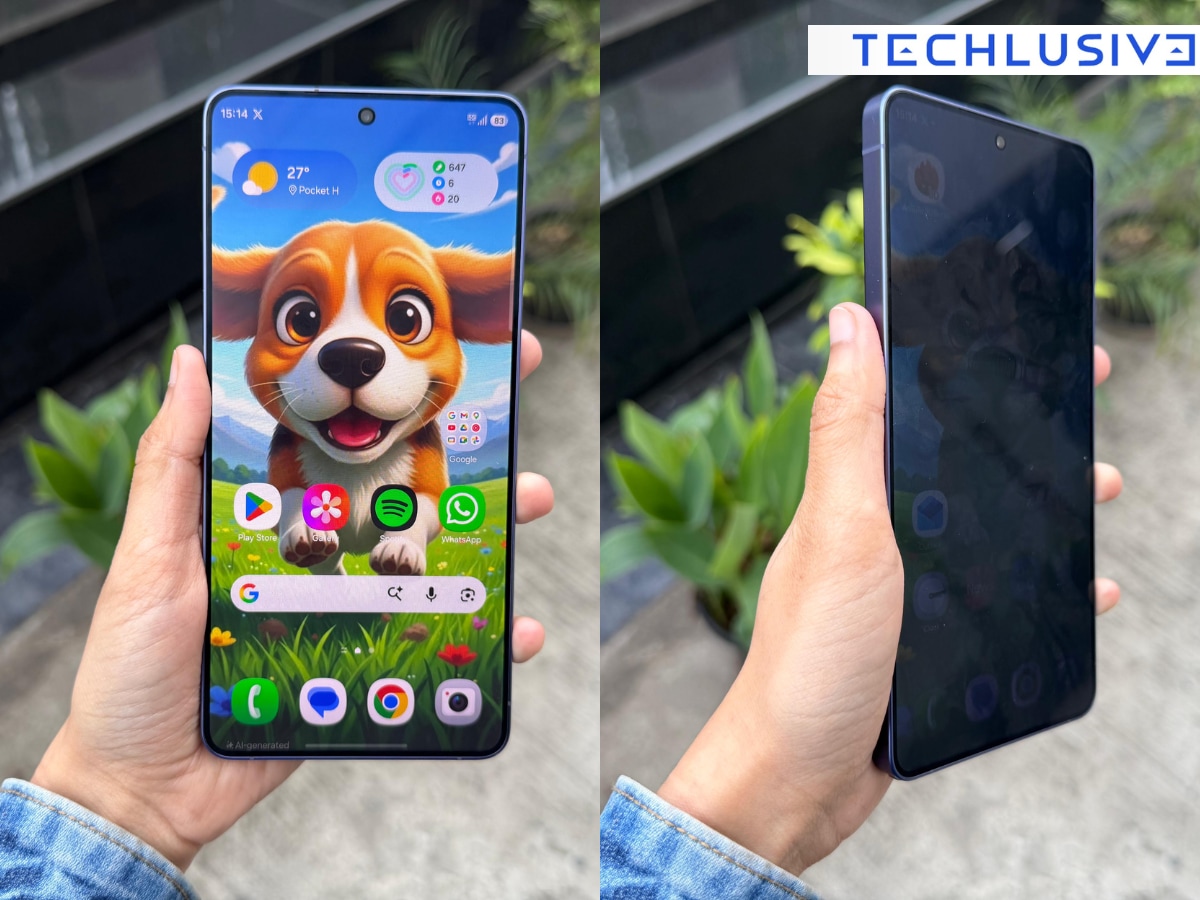
The Samsung Galaxy S26 Ultra blocks the side-viewing with the Privacy Display feature.
Just like you, I was also wondering how it works. So a quick search revealed that the S26 Ultra actually uses a hardware tech known as Flex Magic Pixel, which has two types of pixels – Wide to disperse light in all directions and Narrow to keep the light dispersion straight. So when the Privacy Display feature is on, the Wide pixels go inactive or to their minimal capacity. Results? The side-viewing becomes hazy or black. In real-life usage, the full Display Privacy feature doesn’t make the complete black from the side-viewing as shown in the advertisements by Samsung, but really blocks the visibility to make it almost impossible to understand what is going on. I observed that the feature works even better for the notifications with customised apps.
There is a trade-off, though! As soon as I switch on the Privacy Display, even for specific apps such as WhatsApp, Banking or Instagram, to let bystanders know what I am watching, the screen colours look completely washed out, holding it back from feeling truly premium! Having said that, the feature is truly exciting and even useful in many cases and something that I would actually like to witness in other Android phones, if the tech giants can make this alive as good as Samsung.
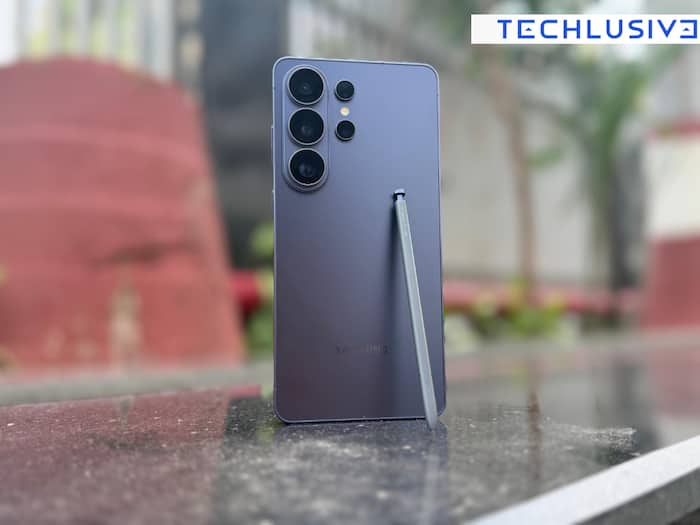
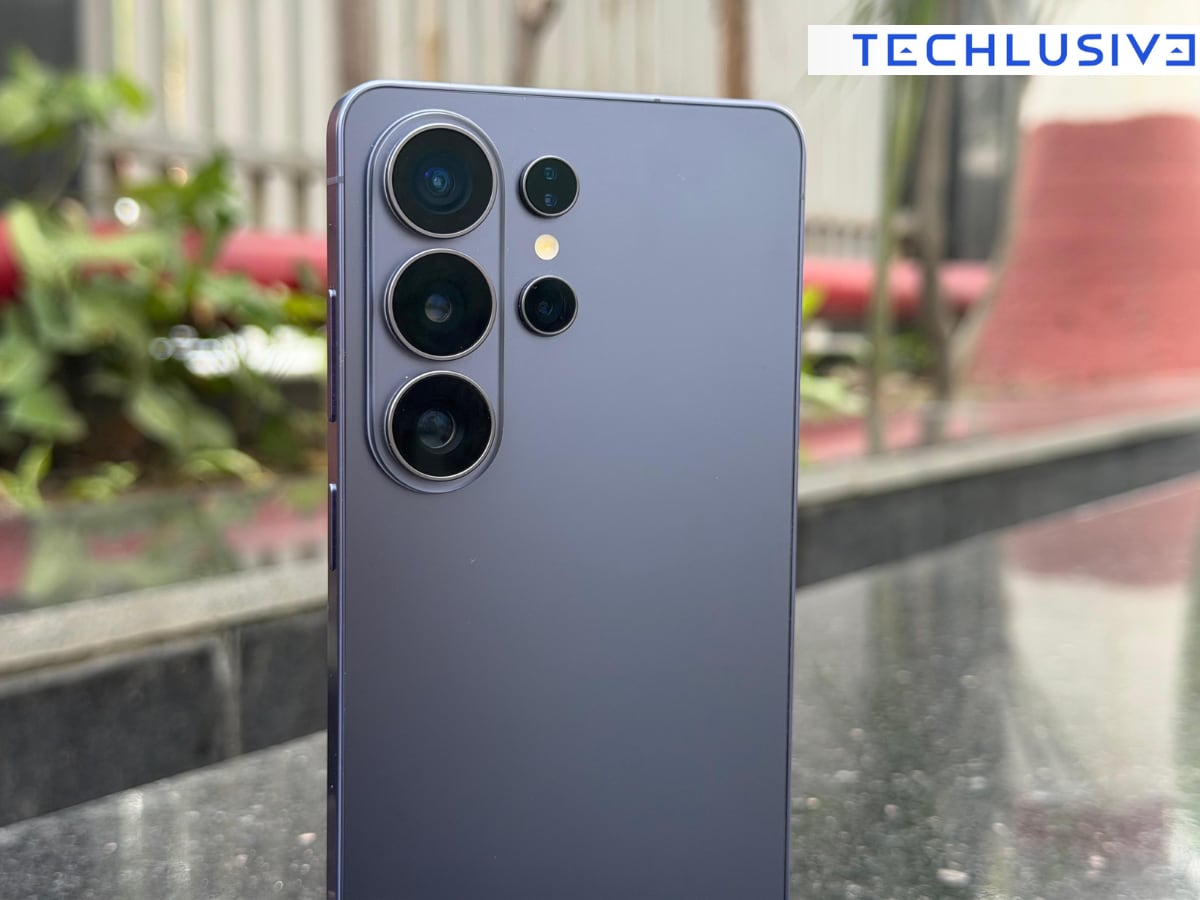
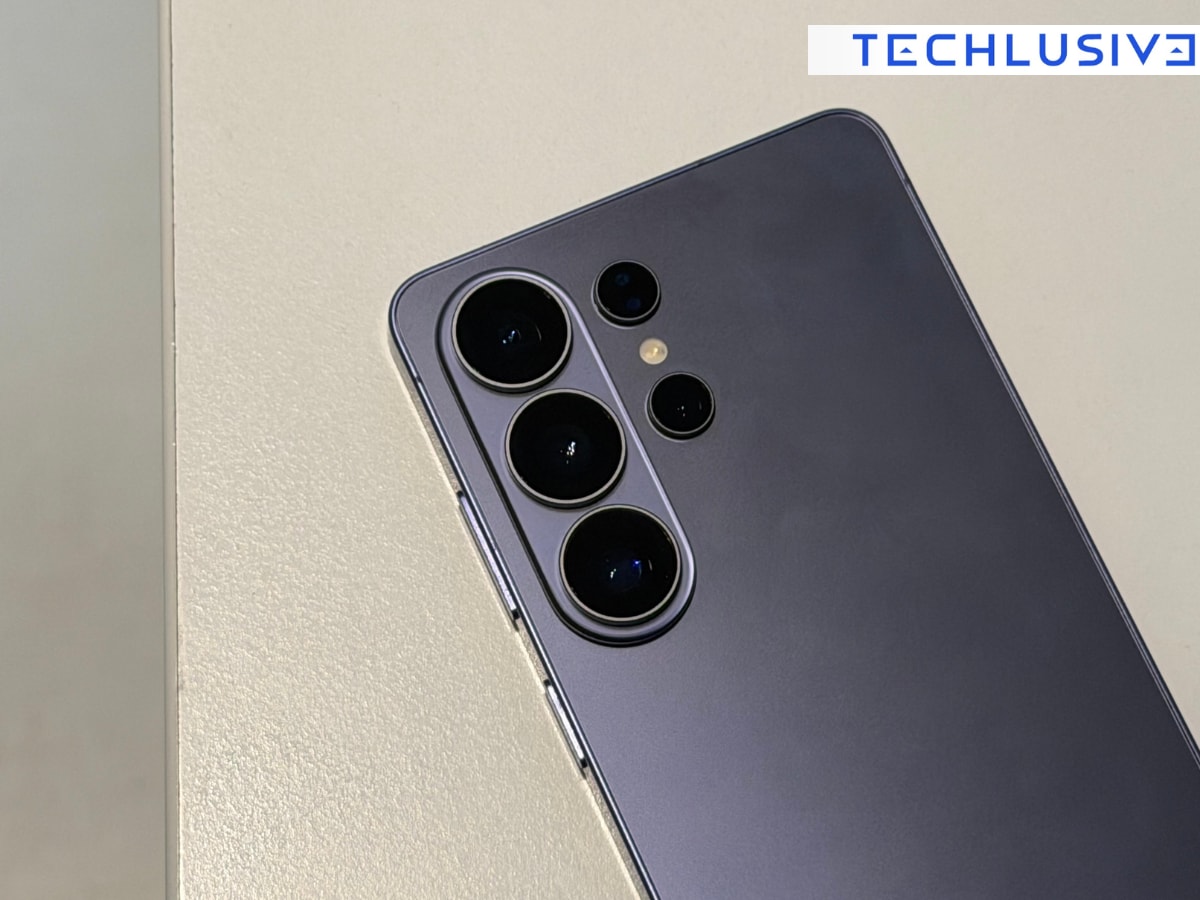
The Samsung Galaxy S26 Ultra follows a similar kind of design while holding the three lenses in a vertical module, which is what makes it different. But overall, it looks more or less similar to its previous avatars to me at first glance. The noticeable difference is about the slightly rounded corners, which also results in a better in-hand feel and comfort while using it for long hours. What else is different is the aluminium frame instead of the titanium, which slightly makes it lighter than before at 214g. Durability is another thing to mention, as it didn’t get any scratches even using it without a case for around 15 days. Fingerprints and smudges are also almost invisible with its matte look. Plus, the IP68 rating against dust and water made me relaxed.
The Galaxy S26 Ultra is powered by the latest Snapdragon 8 Elite Gen 5 chip, and honestly, the performance feels… usual. And I mean that in a good way. There were no slowdowns, no stutters, just a reliable experience throughout in day-to-day life. However, I noticed that the phone used to be slightly warm whenever I used the camera app for longer. Here, longer I mean 10-15 minutes. But besides that, the phone doesn’t really complain.
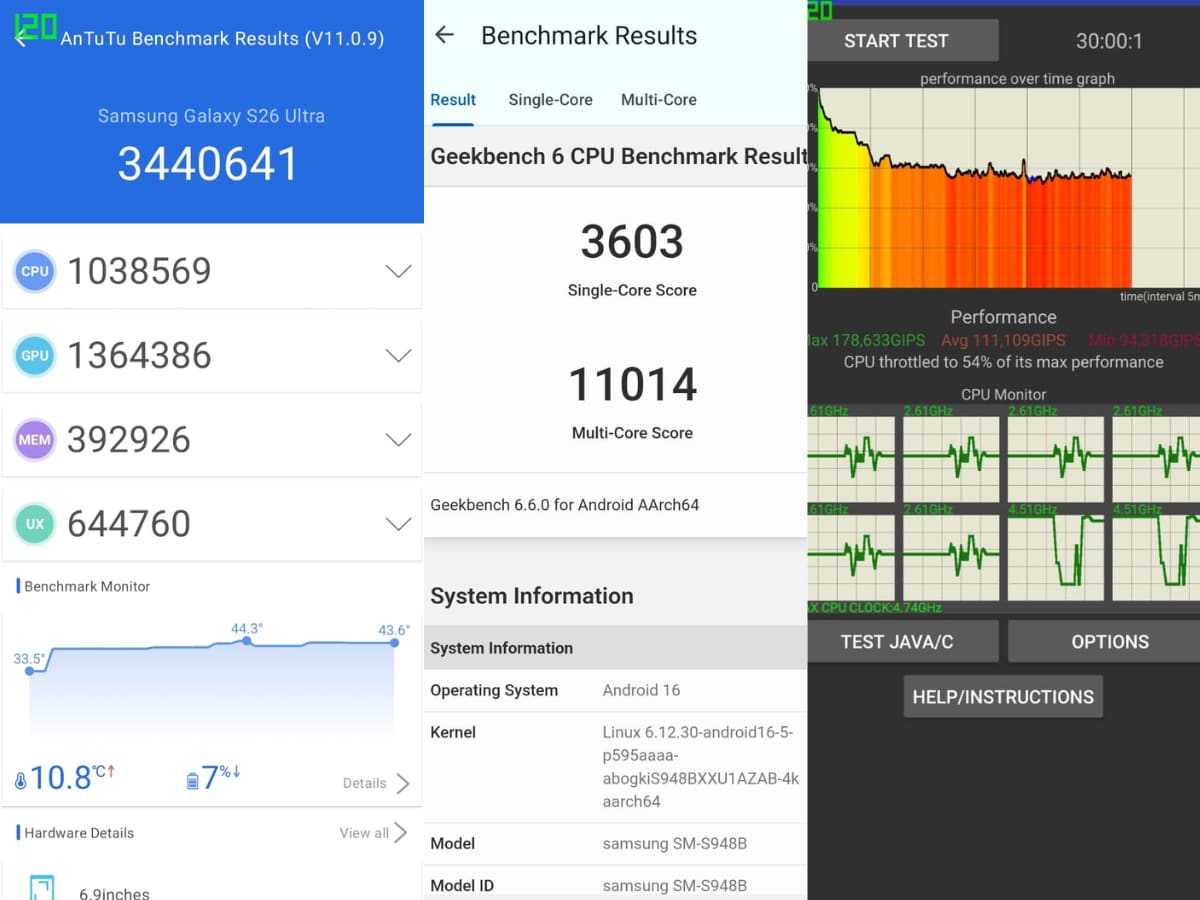
Gaming has been smooth too. I played BGMI, Call of Duty: Mobile, and Asphalt Legends at max settings, and the experience stayed stable for a good 30 minutes without noticeable heating or stutters. Benchmark scores support the experience too, as it scored 3603 in Geekbench single-core and 11014 in multi-core, while AnTuTu touched 34,40,641. In CPU throttling, it dropped to around 54%, which is almost what we have seen in other flagship phones. For a quick check, know that the Vivo X300 Pro scored slightly lower in Geekbench (3434 / 10254) and showed better stability at around 70% throttling, while phones like the iQOO 15 got the higher AnTuTu numbers (3,832,478) but dropped to 52% under stress. And honestly, that’s the thing. These numbers look impressive on paper, but in real-life usage, the difference is barely noticeable.
Apart from this, the S Pen continues to be one of those features that set the Ultra apart. You may not use it every day, but when you do, it’s genuinely fun. And I feel this is something which still makes it stand out in the Android space.
The Galaxy S26 Ultra runs on One UI 8.5 based on Android 16, and the overall experience feels smooth. It has a lot of room for customisation, whether it’s themes, widgets, or lock screen tweaks, and the animations feel smooth and consistent throughout. If you have used a Galaxy phone before, the UI will obviously feel familiar but upgraded enough to not feel boring. Honestly, one of the key reasons is the Artificial Intelligence.
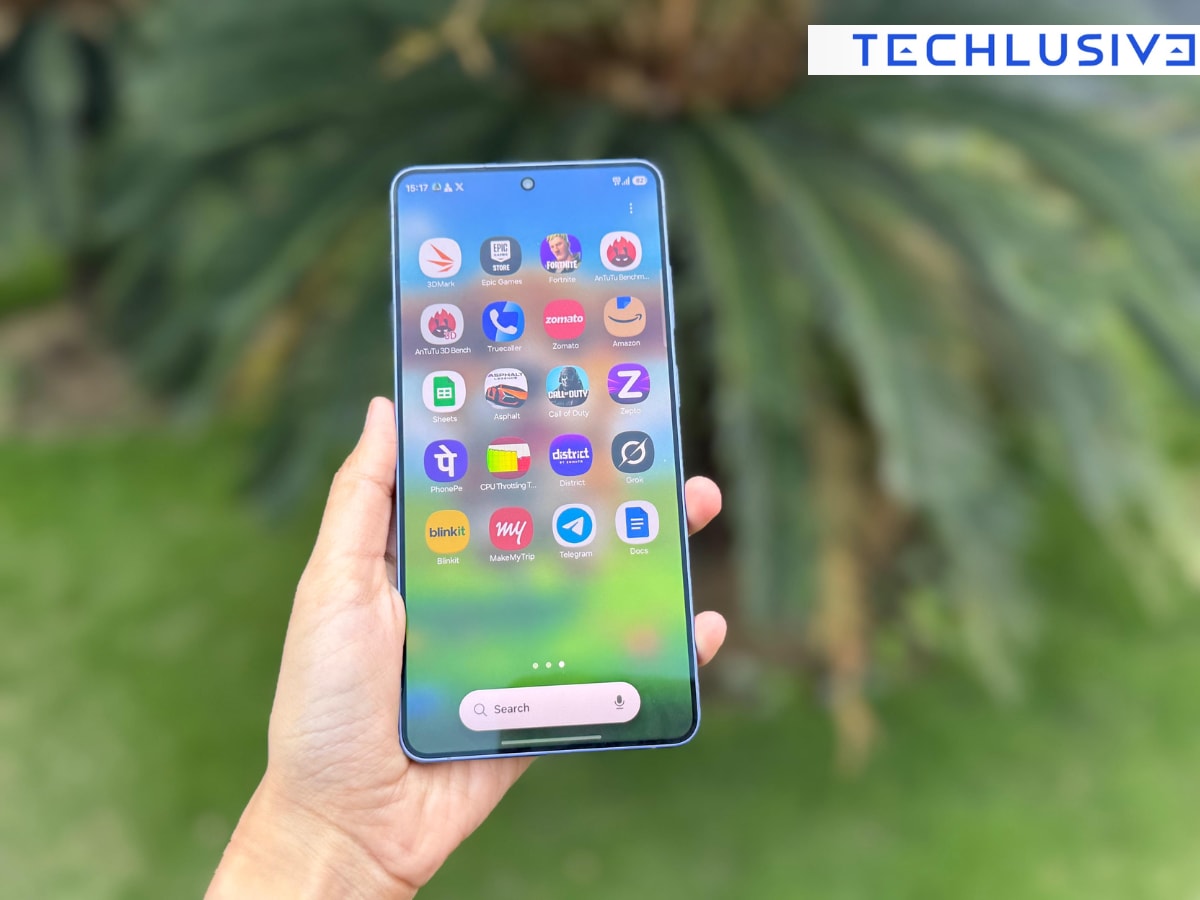
It feels like One UI exhales AI in every corner, whether it is about the core system, search, audio, cameras, and even calling. And some of them are actually useful. There is improved Circle to Search, which is still the most useful features, and now it can even recognise multiple objects at once.
Then there are the AI photo editing tools, which are helpful for quick fixes, but I did notice that they tend to reduce image quality after processing. Call Assist is another practical addition, it can screen calls and handle spam quite well, which is something you actually end up appreciating over time.
But not every AI feature here is worth your attention. Some are just there without being very useful.
On the specs side of the camera setup, the Galaxy S26 Ultra looks similar to the Galaxy S25 Ultra with a 200MP main, 10MP 3x telephoto, 50MP 5x periscope telephoto, and a 50MP ultrawide camera at the back. Well, the noticeable change is in terms of brighter apertures with the main and the 5x telephoto lenses. It results in better low-light shots with sharper, more depth and well detailed images.
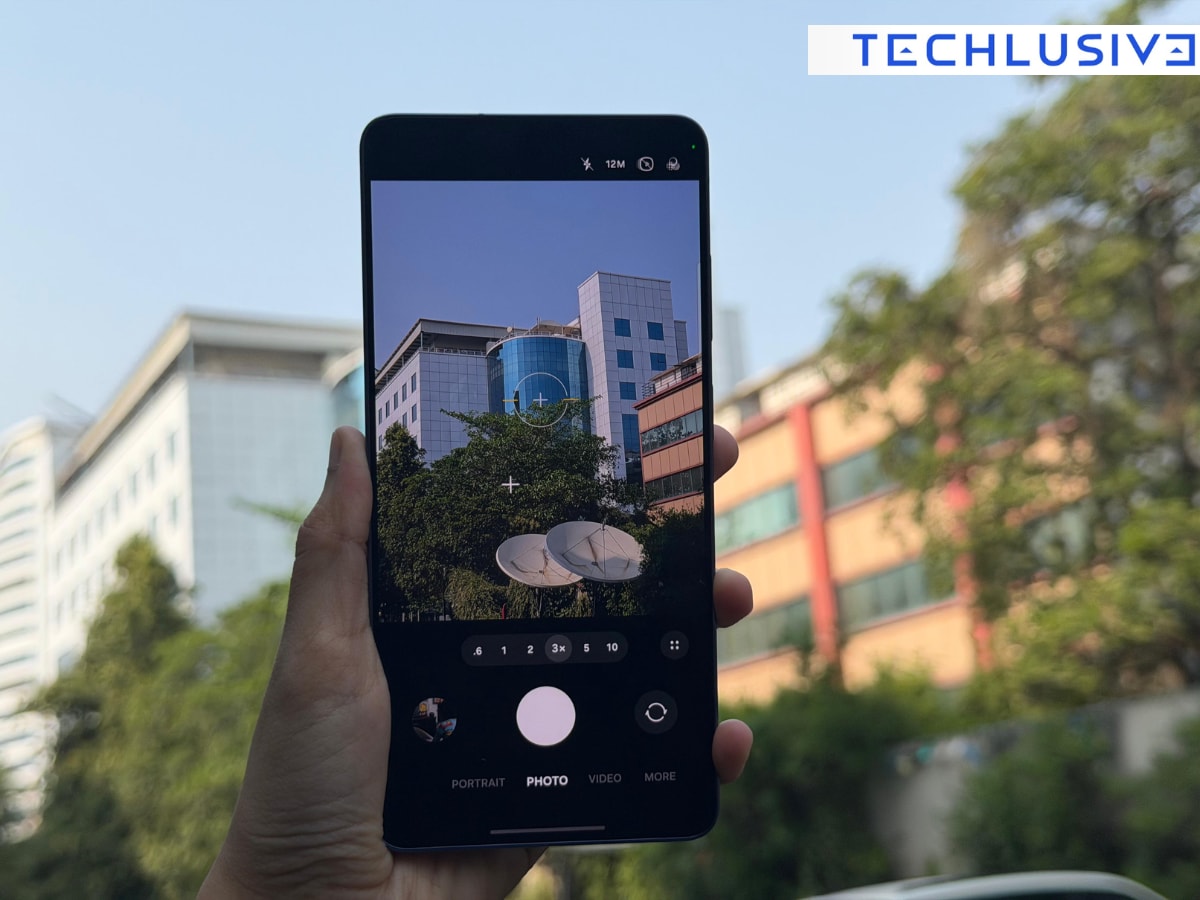
I tried clicking a bunch of photos in dim lighting, and while the results were mostly impressive, but I noticed that moving subjects can end up slightly blurry, even in daylight.

















The ultrawide continues to be reliable, but the 3x telephoto still feel as a weak point. Especially with that, I am holding myself to say for so long, even while writing this review, but I have to… “Ultra couldn’t beat Vivo X300 Pro in photography!” Especially with the telephoto and portrait shots.
However, video is something that is exciting and reliable. The latest Horizontal Lock is truly.. Impressive! It keeps the frame stable even when you tilt or rotate the phone, which turned out to be actually great. Even while walking or moving my hand rapidly, the footage looked so controlled.
The Samsung Galaxy S26 Ultra packs a 5,000mAh battery, which honestly feels more reliable than exciting, and that’s a good thing. In my usage, the phone comfortably lasted over a day and even stretched to a day and a half on some days, even after binge-watching YouTube, scrolling Instagram (more than I should), and constant texting. Charging is where there is a noticeable upgrade to 60W from the S25 Ultra’s 45W support. With 60W fast charging, the phone went from 0 to fully charged in around an hour. Wireless charging is there too, with 25W support.
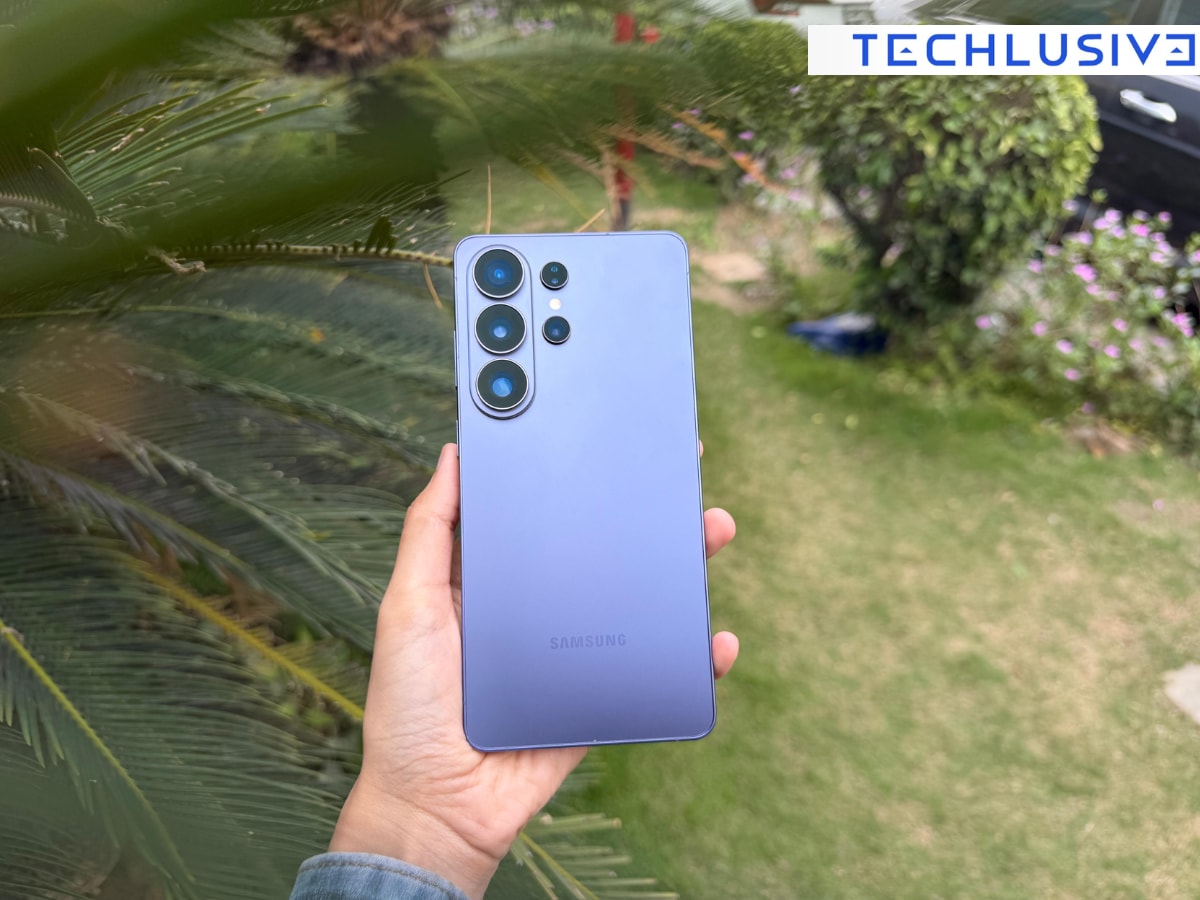
It seems like the Galaxy S26 Ultra doesn’t try to change the flagship formula, which is both its strength as well as weakness. It simply refines what already works while adding some important improvements. The Privacy Display stands out as a genuinely useful addition, while performance, battery, and software remain reliably strong. However, the camera, despite improvements, still has its limitations, especially with moving subjects, and AI features feel a mix of useful and unnecessary.
The S26 Ultra is easy to recommend, just not the most exciting choice in its segment. And if you are already using the Galaxy S25 Ultra, then the S26 Ultra may seem familiar.

Don't Miss Out the Latest Updates. Subscribe to Our Newsletter Today!