Written By Divya
Edited By: Divya | Published By: Divya | Published: Apr 27, 2026, 08:58 PM (IST)
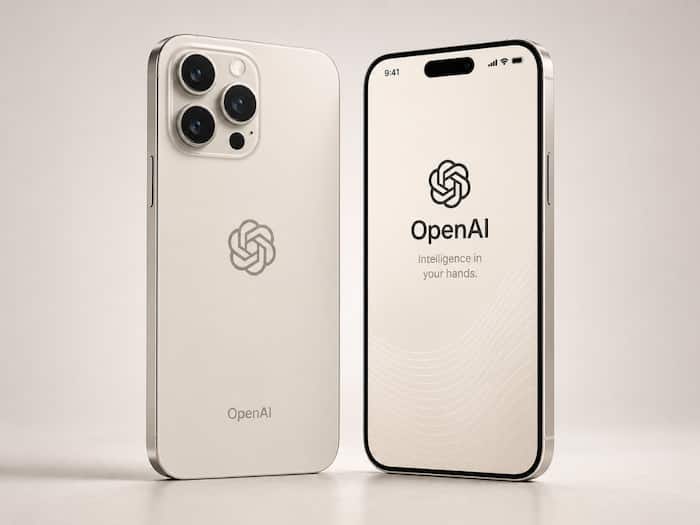
 This is not an actual image or idea behind the OpenAI smartphone. This AI-generated image just depicts a mere idea.


Written By Divya
For the last couple of years, OpenAI has been busy building AI that people actually use. And with ChatGPT, we all know where we stand in our day-to-day lives when it comes to usage. Now, what’s the next step for the AI giant? A latest leak by a well-renowned tipster, Ming-Chi Kuo, an analyst at TF International Securities, suggests that OpenAI might be thinking about something bigger – possibly a smartphone.  Also Read: Xiaomi could launch a pocket gimbal camera with Snapdragon 8-series chip: Here's what we know
But before you jump to conclusions, this isn’t as simple as it sounds. Where is it coming from? Kuo suggested in a post on X that OpenAI is working with chipmakers like Qualcomm and MediaTek to develop processors for an AI-first device. According to him, Chinese manufacturer Luxshare could handle design and production. Also Read: OpenAI confirms GPT-5.6 rollout after delay: Sol, Terra and Luna arrive Thursday
Now, another most important question – when can we expect these? Mass production is expected around 2028, he added. That means the AI phone isn’t far away if the leak is true. So, what kind of phone will it be? Also Read: Want more reach on LinkedIn? Try these 8 ChatGPT prompts
Here’s where things get a little confusing. Earlier reports suggested that Sam Altman is working with former Apple designer Jony Ive on a completely new kind of AI device, something that may not even look like a phone. In fact, Altman has previously hinted that this product could be a “third core device” alongside laptops and smartphones, not a replacement.
So while the supply chain signals point toward something phone-like, the product vision still feels… open.
Kuo’s reasoning actually makes a lot of sense. According to him, smartphones are still the most important personal device because they capture real-time context such as location, behaviour, habits, communication, and almost everything. And if OpenAI wants to build a true AI assistant (not just a chatbot), it needs deep integration with both hardware and software.
In simple terms, AI works better when it knows more about you and your phone is the best place for that. Not just that, there is a business angle too, as OpenAI could bundle subscriptions with hardware and build its own ecosystem.
If, OpenAI succeeds in bringing an entirely new AI phone to the smartphone space, which is filled with some major tech giants such as Apple, Samsung and more. At the same time, this also shows that even in the AI era, smartphones aren’t going anywhere. Plus, in the repetitive and boring smartphone era, the OpenAI phone might finally bring hope of a smartphone which will be something truly smarter!

So, is an OpenAI phone really happening? Right now, it’s too early to say yes. It feels more like OpenAI trying to figure out what the next personal device should be. And whether that ends up being a smartphone, a companion device, or something entirely new, that’s still unclear.

Don't Miss Out the Latest Updates. Subscribe to Our Newsletter Today!