Written By Deepti Ratnam
Edited By: Deepti Ratnam | Published By: Deepti Ratnam | Published: Jun 17, 2026, 12:57 PM (IST)

 Beyond Snapchat: Snap unveils AI-powered Specs smart glasses


Written By Deepti Ratnam
Snap, the parent company of Snapcat has introduced new smart glasses called Specs. It was introduced in a spatial AI event in Long Beach, California. The company entered in a smart wearable segment with Specs, which brings together augmented reality, on-device computing, and AI features together in a wearable form factor, challenging Meta Ray-Ban glasses.
The smart glasses are priced at $2,195, while the pre order will begin from 16 June, 2026, wherein buyers can claim $200 refundable deposit. Shipping is expected to begin in fall in the US, UK, and France.
At the heart of Snap’s Specs is a combination of artificial intelligence along with augmented reality. The smart glasses are designed in a way that it understands what users are seeing, and then responding to it via voice commands, and providing contextual information in real time.
Specs don’t work like traditional smart glasses, focusing mainly on notifications or media playback. These new smart glasses are aimed at acting as an intelligent companion, which is capable of seeing, understanding, and interacting with the world around user. According to Snap, these glasses are capable of processing information directly on the device, hence delivering more natural interactions by leveraging advanced AI models.
At the launch event, company envisioned scenarios where user can ask questions about object they see and provide navigation guidance without looking at a smartphone. Besides this, it also interact with digital content that is layered directly onto the real world.

Another much talked feature of Specs is spatial computing, a category attracting attention from technology enthusiasts and companies worldwide.
Specs is embedded with spatial computing that blends digital content with physical environments. This will allow users to interact with information in a more immersive way. So, rather than viewing through a phone screen, you can experience them with digital objects and information.
By launching Specs, Snap is trying to enter into the wearable market, however, the company is attempting to create a device that feels like a smartphone accessory along with new computing platform.
AI is becoming the hallmark of the newest wave of wearable gadgets and Snap is positioning AI as its core.
Specs leverages AI to identify objects, interpret context, and support users via speech interaction. The glasses will integrate computer vision with the generative AI features to deliver a more personalized and intuitive assistance.
The move is part of a wider trend across the industry, with companies seeking to embed AI into their physical products. In addition to the use of smartphone apps, tech companies are now looking at ways to integrate AI into the practical use of products that people wear every day.
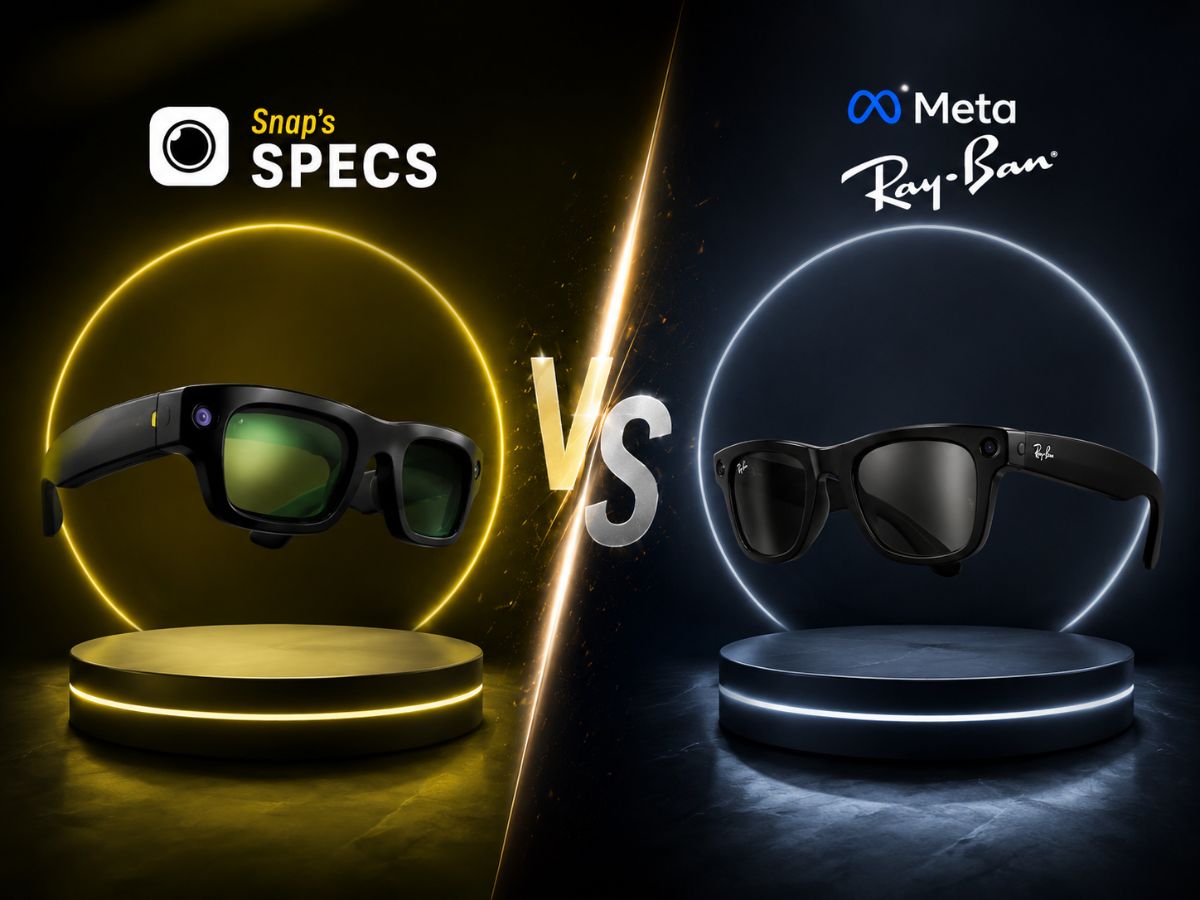
Snap’s Specs will join a fast growing smart glasses market in which several major tech firms are competing to set the standards for wearable computers of the future. Its major competitors are Meta’s Ray-Ban smart glasses, which are available in collaboration with EssilorLuxottica and are gaining traction due to their AI integration and content creation capabilities. Google will be another competitor to Snap as recently it demonstrated Android-powered smart glasses, and other companies like XREAL and Samsung Electronics are working on a smart glass solution.
Apple, however, is moving on with its “premium headset” approach to spatial computing, a market which may converge with cutting-edge AI glasses sometime down the road. With the use of AI as a key differentiator in wearable technology, Snap’s challenge will be to make the augmented reality combined with the intelligence and daily usability of Specs more compelling than the growing number of wearables in the market.
| Specification | Snap Specs | Meta Ray-Ban Smart Glasses | XREAL One |
| Product type | AR smart glasses with spatial computing | AI-powered smart glasses | AR smart glasses |
| Display | Transparent AR display | No built-in display | Sony Micro-OLED display |
| AI capabilities | Built-in AI with real-time scene understanding | Meta AI voice assistant | AI features via connected devices |
| Camera | Multiple cameras for AR and environmental tracking | 12MP camera | Limited camera functionality |
| Audio | Built-in speakers and microphones | Open-ear speakers and microphones | Built-in speakers |
| Navigation | AR overlays and contextual guidance | Voice-based assistance | AR navigation support |
| Content creation | AR experiences, AI interactions, immersive apps | Photos, videos, livestreaming | Media consumption and AR apps |
| Computing | On-device spatial computing | Smartphone-assisted processing | Dedicated AR processing |
| Ecosystem | Snapchat, Lens Studio, AR developers | Meta AI, Instagram, Facebook, WhatsApp | XREAL AR ecosystem |
| Target users | Developers, creators, early adopters | Mainstream consumers | AR enthusiasts and productivity users |
Over the years, Snap has referred to itself as a camera company, as opposed to just a social media company. Specs’ entry underscores the message and demonstrates the company’s intent to be a bigger player in personal computing’s future.
It’s unclear how fast consumers will embrace AI-enabled smart glasses, but Specs is one of Snap’s most definitive efforts to envision what the next generation of connected devices might look like.

As technology advances rapidly and artificial intelligence, augmented reality, and wearable computing merge, Snap is taking a risk that the tech of the future could be wearable—at least on the face.

Don't Miss Out the Latest Updates. Subscribe to Our Newsletter Today!