Written By Deepti Ratnam
Published By: Deepti Ratnam | Published: Apr 27, 2026, 10:51 AM (IST)
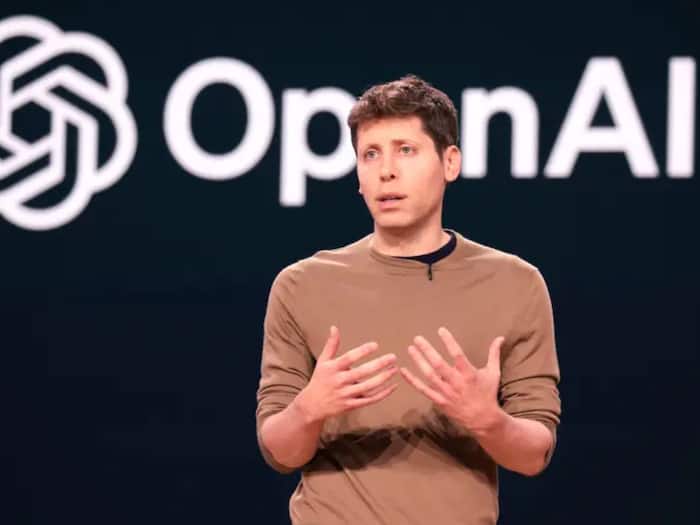
 Sam Altman highlights risks of AGI on global economy


Written By Deepti Ratnam
Artificial Intelligence is growing fast in current scenario. From studying to researching to applying in coding and developing, AI has taken the centre stage. New tools are launching every now and then by companies like OpenAI and Anthropic. While we think about AI and its usage, a new discussion has emerged even more strongly and is becoming more capable of handling advanced tasks. The discussion is taking place around AGI – the Artificial General Intelligence. In this regard, the CEO of OpenAI, Sam Altman has shared his views on what the future could look like with AGI.  Also Read: Elon Musk loses OpenAI lawsuit against Sam Altman after jury says he waited too long to sue
Sam Altman believes that in the coming years AGI will become the main focus as the technology is growing on a breakneck speed. He mentions that AGI may change how people work and how economy functions. His comment has raised serious questions about how jobs will survive, and deliver productivity if AGI comes into action. Besides this, the long-term stability will also be in question. Also Read: Sam Altman vs Elon Musk: OpenAI trial takes dramatic turn after Mira Murati’s statement
AGI refers to a type of artificial intelligence that can work like humans or even better. In 2007, researchers Ben Goertzel and Shane Legg mentioned about AGI while discussing on creating human level AI systems. Unlike current AI systems that are focused on completing specific tasks, AGI will move forward and is expected to be capable enough to handle a wide range of activities, that too without any limitations. Also Read: OpenAI targets massive AI expansion: Plans 30GW computing power by 2030
This is where AGI becomes different from current models available in the market like ChatGPT 5.5 and Opus 4.7. These models are capable of writing code, research, and delivering documents. Nevertheless, AGI will take this even further by doing most types of work without any human input. This looks scary and even advancing technology too. If this happens, then it will become the turning point in technology.
Recently, Sam Altman suggested in a post that with the arrival of AGI, the traditional and existing jobs may disappear and this worrying. He thinks if machines can do most of the work faster and even better, then why companies will need human labor and workforces. This will lead to fewer jobs and reduced income for people.
If thing goes as predicted with AGI then people will not earn well and the spending may also drop. This will affect business and slow down economy. This is the main reason Sam Altman believes that AGI can bring disruptions in workforce and economic activities.
OpenAI recently launched its new model called GPT 5.5, which is described as one of the most advanced models so far. The model is directly in competition with Anthropic’s Opus 4.7. OpenAI’s new model can understand better and respond with less instruction.
Besides this, the new GPT 5.5 can perform several tasks, including researching, data analysis, coding, and more. Additionally, it can also casually interact with computer systems and navigate interfaces. Not just this, it is also capable of completing tasks across different tools. This level of capability suggests that AI becoming more independent, leading to the development of more advanced model called AGI.
Altman himself mentioned about his GPT 5.5 and described that it is so advanced that it changes how people work and complete their tasks.
Like OpenAI, other companies are also building their advanced AI systems like Google. The tech giant is working on AI models that can improve search and productivity tools. Moreover, Microsoft is integrating its AI into software products like Office and cloud services.
Nevertheless, most systems mentioned above are currently dependent on human inputs and they assist users rather than replace them completely. In this context, AGI is different and because it could reduce the need for human, it still raises concerns about job security and income stability.
AGI may lead to rapid changes in industries. Some occupations may be lost, others may be gained. The key will be to do this in a way that avoids major disruption.

Governments and businesses may need to consider new schemes such as basic income or new types of jobs. Training and education may need to be adjusted to new demands.

Don't Miss Out the Latest Updates. Subscribe to Our Newsletter Today!