Written By Divya
Published By: Divya | Published: Feb 25, 2026, 01:56 PM (IST)
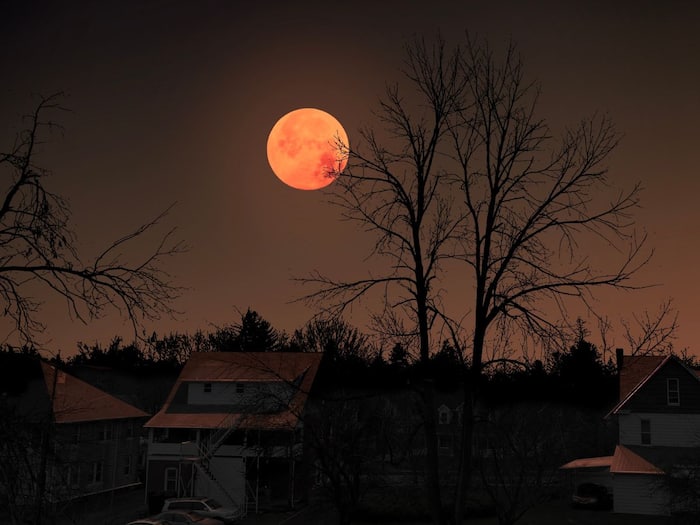
 Total Lunar Eclipse in India will be only in a few cities.


Written By Divya
The next lunar eclipse is all set to occur from March 2-4, which will be visible in several countries, such as Eastern Europe, Asia, Australia, North America, South America, Pacific, Atlantic, Arctic, Antarctica, as well as India. But it is not just the Lunar Eclipse for Indian, as it is set to coincide with the Holika Dahan on March 3rd. Interestingly, it will be the first Lunar Eclipse of the year, which is falling on a day which is auspicious for many.  Also Read: How to click perfect Lunar Eclipse photos with your phone
What exactly happens during the total lunar eclipse? It is also known as “Blood Moon,” which happens when Earth moves directly between the Sun and the Moon. During the process, the Earth casts its shadow completely on the Moon, which is known as a total lunar eclipse. However, not all the cities in India will witness it, as some will have to settle with partial lunar eclipse. How is it different from a total lunar eclipse? The only difference is in the alignment. When Earth passes between the Moon and the Sun but doesn’t align perfectly, then is cause a partial shadow. Also Read: ExoMiner++: NASA turns to AI to speed up the search for Earth-like exoplanets
As mentioned before, the Total Lunar Eclipse will occur on March 3rd, which is also the time when India will celebrate Holika Dahan. As per the timeanddate website, which keeps a track of Lunar and Solar Eclipse time, suggests that the total lunar eclipse will begin at 5:18 PM IST and will end by 7:53 PM IST. Also Read: Can electricity travel through air? Finland’s research offers a new clue
However, there are only a few cities which will witness the total Lunar Eclipse. The list includes:
The rest of the cities will witness a partial lunar eclipse.

You can witness the lunar eclipse livestream by Griffith Observatory in Los Angeles on YouTube here. Apart from this, Time and Date will also live-stream the Total Lunar Eclipse.

Don't Miss Out the Latest Updates. Subscribe to Our Newsletter Today!