
Written By Shubham Arora
Edited By: Shubham Arora | Published By: Shubham Arora | Published: Apr 25, 2026, 07:30 PM (IST)
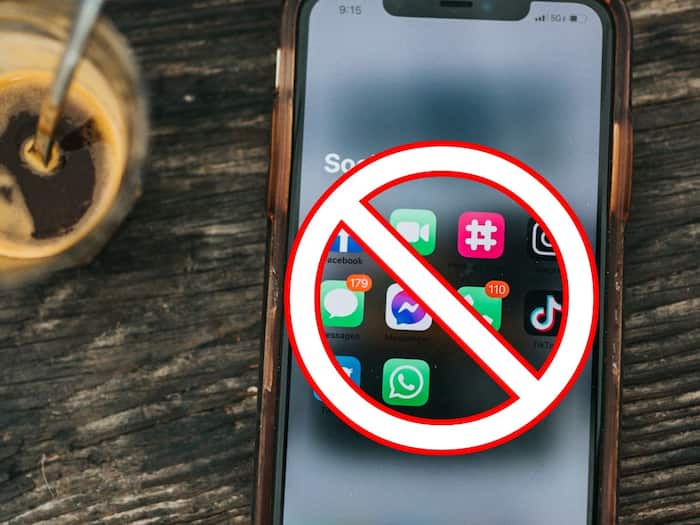
 Governments worldwide are introducing age limits and restrictions on children’s social media use.


Written By Shubham Arora
Social media use among children is now being looked at more seriously by governments across the world. What started as a conversation around screen time has now moved to actual rules and restrictions. Different countries are either banning access completely for a certain age group or putting limits around how these platforms can be used.  Also Read: Your Instagram chats are no longer fully private - Here’s why
The reasons are mostly the same everywhere. Concerns around addiction, online bullying, mental health, and exposure to harmful content are the main reasons why governments are stepping in now. At the same time, there are questions around how these rules will actually work, especially when it comes to verifying age. Even with that, more countries are moving ahead with some form of control. Also Read: Virat Kohli, Ronaldo, BLACKPINK see millions of Instagram followers vanish: Here’s what happened
Australia is the first to fully implement a strict rule. Children under 16 are not allowed to use platforms like TikTok, Instagram, Facebook, and YouTube. Companies are responsible for enforcing this, and there are penalties if they fail to do so. Also Read: Improve Your YouTube Experience with These 7 Simple Tricks
In France, a law has been cleared to block social media access for children under 15, mainly because of concerns around cyberbullying and its effect on mental health.
Spain and Denmark are also looking at similar limits, with the age being discussed somewhere between 15 and 16. In Greece, the government has said it plans to bring in a ban for children under 15 from 2027.
Not every country is going down the ban route. Some are trying to put checks in place instead of blocking access completely. In Germany, children between 13 and 16 can still use social media, but only if there is parental consent involved.
Italy follows a similar pattern, where users under 14 need permission before signing up. In Portugal, it’s along the same lines, with access between 13 and 16 depending on parental approval, and platforms can face fines if they don’t follow these rules.
China has taken a different route. Instead of a full ban, it uses a “minor mode” that restricts screen time and controls what younger users can access based on their age.
In Indonesia, children under 16 are being restricted from platforms like TikTok, Facebook, Instagram, and Roblox. Accounts on certain platforms are being phased out gradually.
Malaysia is also planning a ban for users under 16. In India, there is no nationwide rule yet, but states like Karnataka have already moved to restrict social media use for children under 16, and Goa and Andhra Pradesh are looking at similar steps.
Turkey has also passed a law to limit access for children under 15, with the idea of creating a more controlled online environment rather than leaving things completely open.
Countries like Austria and Poland are also working on laws to restrict access for younger users, mostly below 14 or 15.
In Brazil, the approach is slightly different. Children under 16 need to link their accounts to a guardian, and certain addictive features are being limited.
Britain and Norway are still in the discussion stage, looking at rules similar to Australia.
In the United States, there isn’t a full ban. But companies are not allowed to collect data from children under 13 unless a parent gives permission.
Slovenia is also working on a law to restrict social media access for children under 15. The proposal is still being drafted.
At a broader level, the European Parliament has already discussed setting a common age limit. While nothing is final yet, there has been a push to keep the minimum age around 13, with stricter controls going up to 16 depending on the platform.
Across countries, the same set of platforms keeps coming up. These include TikTok, Instagram, Facebook, and YouTube.
The discussion is not just about screen time anymore. A lot of it now comes down to how these apps are built and how they keep users engaged. Features like endless scrolling, autoplay, and algorithm-based feeds often come up in these discussions.
| Country | Age Limit | Type of Rule | Timeline / Status | Platforms Affected |
|---|---|---|---|---|
| Australia | Under 16 | Full ban | Active (since December 2025) | TikTok, Instagram, Facebook, YouTube |
| Indonesia | Under 16 | Restrictions, account removal | Active (since March 28) | TikTok, Facebook, Instagram, Roblox |
| Brazil | Under 16 | Guardian-linked accounts + feature limits | Active (since March 17) | Not specified |
| United States | Under 13 | Data restriction (COPPA) | Existing law | All platforms |
| China | Varies by age | Screen-time limits (minor mode) | Existing system | App-level restrictions |
| Germany | 13-16 | Parental consent required | Existing rule | All platforms |
| Italy | Under 14 | Parental consent required | Existing rule | All platforms |
| Portugal | 13-16 | Parental consent + fines | Approved February | All platforms |
| France | Under 15 | Ban (awaiting final approval) | Approved January (pending Senate) | Major platforms |
| Denmark | Under 15 | Planned ban | Announced November 2025 (expected mid-2026) | Not specified |
| Greece | Under 15 | Ban | From January 2027 | Not specified |
| Malaysia | Under 16 | Planned ban | Announced November 2025 (expected 2026 rollout) | Not specified |
| Austria | Under 14 | Planned ban | Announced March (law expected by June) | Not specified |
| Slovenia | Under 15 | Draft law | Announced February | Platforms like TikTok, Instagram |
| Poland | Under 15 | Planned ban | Announced February | Not specified |
| Spain | Under 16 | Proposed ban | Announced February | Major platforms |
| Britain (UK) | Under 16 (proposed) | Considering ban + testing | Discussions February-March | Not specified |
| Norway | Under 16 (proposed) | Planned ban | Proposal announced April | Not specified |
| Turkey | Under 15 | Restricted access | Bill passed April 23 (awaiting final approval) | Not specified |
| India | Under 16 (state-level) | Partial restrictions | Karnataka move in March | Not specified |
| European Union | 13-16 (discussion) | Proposed common framework | Resolution November 2025 | All platforms |
Most governments are linking these moves to rising concerns around mental health, sleep patterns, and online safety among younger users. There is also a growing view that children are spending too much time on these platforms without any real checks.

At the same time, there is still a lot of doubt around how well these rules will work in practice. Verifying someone’s age online isn’t always simple, and some people feel that restrictions like these may not be enough on their own.

Don't Miss Out the Latest Updates. Subscribe to Our Newsletter Today!