



Written By Shubham Arora
Written By Shubham Arora
Edited by Shubham Arora |Published: Apr 29, 2026, 12:05 AM (IST)
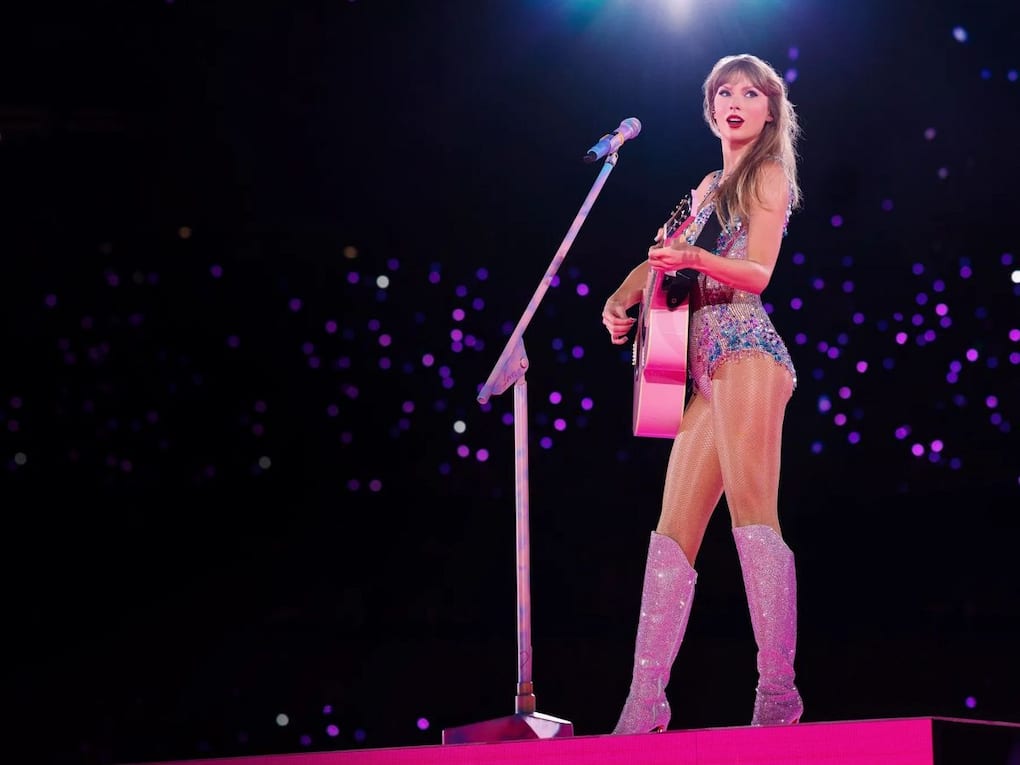
 Taylor Swift performs during her Eras Tour, an image now part of a trademark filing. (Source: Disney+)
Taylor Swift has reportedly filed new trademark applications to protect her voice and image. This comes at a time when AI-generated content is becoming more difficult to keep in check. The filings have been made through her company, TAS Rights Management, and are currently under review by the US Patent and Trademark Office, as reported by Reuters and Variety.  Also Read: Virat Kohli, Ronaldo, BLACKPINK see millions of Instagram followers vanish: Here’s what happened
This also shows how things are changing for artists right now. With AI tools becoming more accessible, voices and visuals can be recreated quite easily, which is starting to raise concerns across the industry. Also Read: New OTT Releases To Watch This Weekend On Netflix, JioHotstar, Sony LIV & More
The applications include two voice samples and one image. In the audio clips, Swift is heard introducing herself and promoting her music. These are being filed as sound trademarks, which is not very common and may take time to be evaluated.
Alongside that, there is also an image from her Eras Tour performance. The description includes her holding a pink guitar while standing on stage, wearing a multicoloured outfit. This particular image has become quite recognisable over time.
These filings are still being looked at, so it really depends on whether they are accepted for trademark protection or not.
The timing of this stands out. Over the past couple of years, there have been several cases where AI-generated content has used celebrity faces and voices without permission. Swift has also been part of that. Some AI-generated images and content featuring her have gone viral online, which has brought attention to how easily this can be misused.
The issue is not limited to images either. AI tools today can recreate voices and generate entirely new content that sounds like a real person.
The bigger issue here is that current laws don’t fully cover this space. Copyright mainly protects original recordings or fixed content, not someone’s voice or overall likeness.
That is where trademarks come into the picture. Unlike copyright, trademarks can be used to protect things people closely link to a person, like certain phrases, voice clips, or even specific visuals.
Legal experts say this could give artists a bit more control. So even if something isn’t copied word for word, it can still be questioned if it feels too similar or could make people think it’s actually them.
It is still a relatively new area, especially when it comes to voice trademarks. Reports suggest that cases like this may set a precedent, depending on how authorities respond.
This approach is not entirely new. Matthew McConaughey recently trademarked his well-known phrase “Alright, alright, alright” to prevent unauthorised use.

Swift herself already holds multiple trademarks related to her name, album titles, and even song lyrics. This latest move extends that strategy to her voice and image, which are now becoming equally important in an AI-driven environment.


