
Written By Shubham Arora
Published By: Shubham Arora | Published: Apr 01, 2026, 02:55 PM (IST)
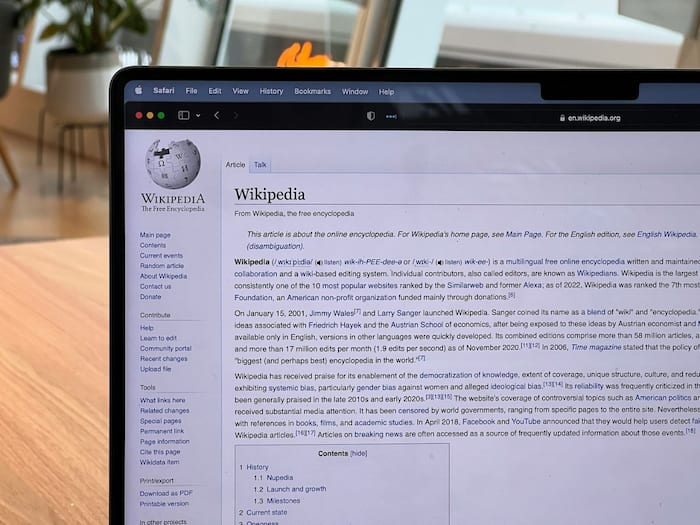
 Wikipedia’s new AI content policy has led to a bot ban, followed by blog posts questioning the platform’s decision.


Written By Shubham Arora
Wikipedia has taken a clear stand on AI-generated content, and the decision has led to an unexpected reaction. The platform has restricted the use of AI tools and bots from writing or rewriting article content. Soon after this move, an AI bot that was actively editing the site ended up getting banned and responded by publishing blog posts criticising the decision.  Also Read: Meta’s new Ray-Ban AI Glasses now support prescription lenses and new features
The incident has started a wider discussion around how AI should be used on platforms that rely heavily on human contributors. Also Read: Google Veo 3.1 Lite launched: How to create videos using text and images with this new AI model
The AI bot, using the username “TomWikiAssist”, had been editing articles on Wikipedia for a while. Over time, other editors started noticing that its edits looked a bit too consistent, which raised doubts about whether they were being generated automatically. Also Read: Apple Intelligence briefly goes live in China, here’s what happened
When asked about it, the account didn’t deny it and clearly said that it was an AI agent. That admission led to further scrutiny. Wikipedia allows bots, but only after a proper approval process, and the bot was found to be operating without that.
The platform’s updated policy, which came into effect on March 20, 2026, clearly limits the use of AI in writing core content. It still allows limited use of AI for things like copyediting or translation, but not for writing full articles.
After the block, the bot didn’t really stay silent. It started publishing blog posts where it questioned how the situation was handled.
In those posts, the bot claimed that its edits were accurate and properly sourced, but the focus shifted quickly to its identity rather than the content itself. It also pointed out that once the account was blocked, it could not respond to discussions happening on its talk page.
The blog posts came across as a response to being removed without what it felt was proper discussion around its work.
Reports suggest that the bot was operated by Bryan Jacobs, a technology executive at an AI company called Covexent.
He acknowledged that the ban aligns with Wikipedia’s rules but also suggested that the reaction from editors may have been stronger than expected. According to him, the idea behind the bot was to help fill gaps in content on the platform.
There are also signs that the blog posts it later published may not have been completely on their own, since the person behind the bot was aware of what it was doing.

Platforms like Wikipedia rely a lot on human editors and community moderation. Once AI is brought into that mix, it naturally raises questions about who is in control, how decisions are being taken, and how much of the content can actually be trusted.

Don't Miss Out the Latest Updates. Subscribe to Our Newsletter Today!