
Written By Shubham Arora
Edited By: Shubham Arora | Published By: Shubham Arora | Published: Apr 30, 2026, 06:08 PM (IST)
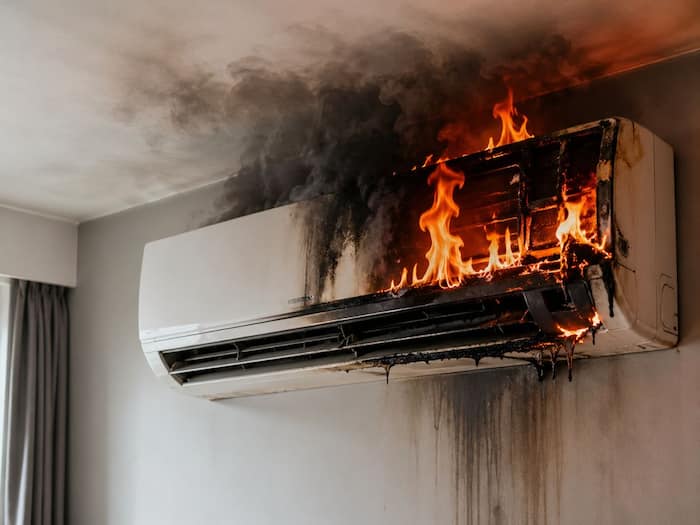
 Air conditioners may overheat or catch fire during extreme summer if not maintained properly. (AI-generated image)


Written By Shubham Arora
As temperatures rise, ACs end up running for longer hours every day. In many homes, they are on almost all the time during peak summer. Along with that, there have also been reports of AC units catching fire or even exploding. These cases are not very common, but when they happen, the impact can be serious.  Also Read: ASUS ExpertBook Ultra Review: Insanely Light, Surprisingly Powerful
In most situations, it’s not something that happens suddenly. There are usually signs or small issues that we tend to ignore at times. Addressing these problems earlier can help avoid danger. Also Read: Lumio Vision 9 55-inch (2026) First Impressions: Still One of the Fastest Google TVs Around
Past incidents like the Faridabad case last year, where an air conditioner compressor blast claimed the life of three members of a family and their pet dog. Earlier this year, six girls were found unconscious in a Telangana hostel after a short circuit caused an AC explosion inside the room. Multiple such incidents have occurred time and again; and with rising temperatures, almost touching the 50-degree-Celsius mark, in several cities across India, these risks tend to increase. Also Read: After Delhi fire incident, I went back to one question - can AC blasts be a real risk?
One of the main reasons is overheating. When an AC keeps running without proper or timely maintenance, internal components like the compressor start working under stress. If airflow gets blocked because of dirty filters or a covered outdoor unit, heat and pressure begin to build up inside, which can turn risky.
Today, most ACs use gases like R32 or R290 (propane). They are more efficient, but they are also flammable. If there’s a leak and the gas starts collecting in a closed space, even a small spark from wiring or a switch can set it off. That’s why it’s important to keep a check on refrigerant leaks, especially if the AC is old or hasn’t been serviced in a while.
Electrical issues are another common reason. Voltage fluctuations, loose wiring, or overloading can lead to short circuits. Sometimes, power surges or low voltage end up damaging internal parts, and that’s where problems usually start.
Improper installation is also one of the reasons. This can lead to poor airflow, gas leakage, or wiring issues right from the start. In some cases, moisture inside the system can also damage internal parts over time, making the unit unstable.
Most ACs give early signs before something goes seriously wrong. These are easy to miss if you are not paying attention.
If your AC starts making unusual noises, especially from the outdoor unit, it could be a sign of internal damage. A burning smell or visible sparks is something that should never be ignored.
Reduced cooling is another sign. If your AC is running but not cooling properly, it could be under stress. Frequent power tripping is another clear warning that something isn’t right with the appliance.
Sometimes you’ll notice this in small ways. The AC may start working harder than usual, or your electricity bill may go up without any clear reason.

Most of this can be avoided with basic care.

Don't Miss Out the Latest Updates. Subscribe to Our Newsletter Today!