Written By Divya
Published By: Divya | Published: Apr 03, 2026, 01:50 PM (IST)
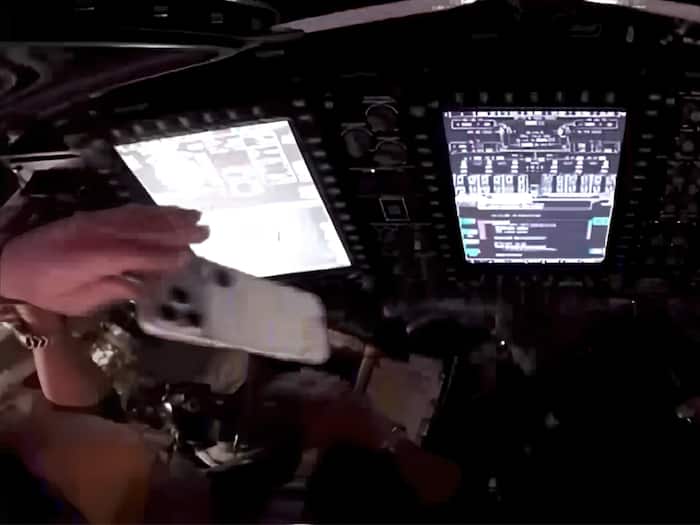
 From Pocket to Space: iPhone 17 Pro Max Joins Artemis II (Image Credits: NASA)


Written By Divya
To many surprises, NASA astronauts are carrying what looks like the iPhone 17 Pro Max during the Artemis II mission. This is a major upgrade from the traditional, specialised equipment to something far more familiar, which we use on a daily basis.  Also Read: Artemis II Mission begins! NASA’s FIRST crewed Moon Mission in 50 years
Talking about the Artemis II mission, it is NASA’s first crewed journey towards the Moon in over 50 years. Unlike earlier test flights, this one includes astronauts on board and is designed to test key systems for future lunar missions. It’s a 10-day mission that will take the crew around the Moon and back, setting the stage for future landings. Also Read: iPhone 17 Pro Max available at lowest price online: Here’s how to get the deal
So why bring a smartphone into space? The idea is the ease of use and better documentation. Astronauts can use the iPhone to capture high-quality photos/videos, record personal moments during the mission or document activities inside the spacecraft. Also Read: MacBook Neo 2 may get iPhone 17 Pro chip and touchscreen display
With modern smartphone cameras becoming more capable, they’re now good enough to support certain tasks that earlier required bulky equipment.
NASA astronauts are given silver iPhone 17 Pro Max for the Artemis II flight!
The same phone we use could be used to take pictures of the Moon
Look at how it’s floating in zero gravity, this could be the ultimate Shot on iPhone commercial 😭 pic.twitter.com/gQzrR6miDP
— Shishir (@ShishirShelke1) April 2, 2026
That said, these aren’t being used like regular phones on Earth. The devices are expected to run in Airplane Mode throughout the mission. This is important because smartphones emit signals that could interfere with spacecraft systems. By keeping connectivity off, the phone essentially works as a standalone camera and recording tool.
Even though it looks like a regular iPhone, the usage here is very controlled. NASA hasn’t shared full details on whether these units are modified or standard retail versions. But what’s clear is that this is part of a broader trend, using compact, powerful consumer tech in controlled space environments.

The inclusion of a device like the iPhone shows how far everyday technology has come. It also makes space missions feel a little more relatable. At the same time, this doesn’t mean your phone is space-ready. These devices are being used under strict conditions, with safety still being the priority.

Don't Miss Out the Latest Updates. Subscribe to Our Newsletter Today!