Written By Deepti Ratnam
Published By: Deepti Ratnam | Published: May 20, 2026, 11:54 AM (IST)
 Why Universal Cart Could Change How People Shop Online


Written By Deepti Ratnam
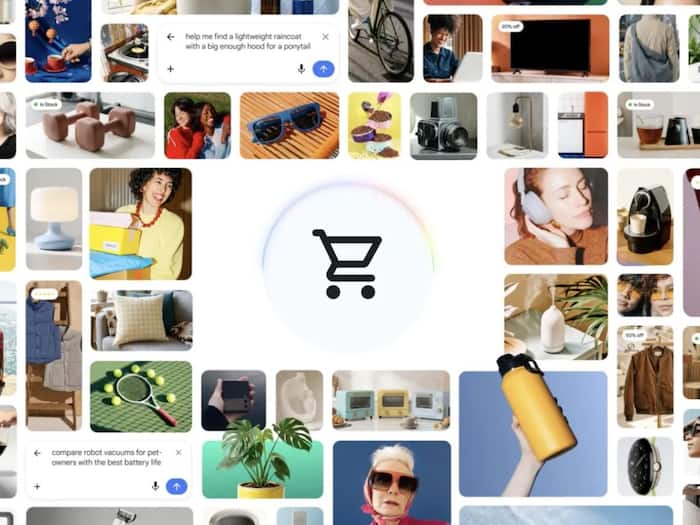
Google introduced several ambitious updates in its I/O 2026 and one of them is the launch of Universal Cart. This is a new AI-powered shopping system that is designed with an aim to unify the entire product discovery and checkout experience. This will be enabled across multiple Google platforms, including Gemini app, Google Search, Gmail, and YouTube.  Also Read: Gemini Omni to AI-powered Search: Everything Google announced at I/O 2026
At Google I/O 2026, we have seen a broader shift in company’s strategy toward agentic commerce. With this launch, Google is not just using AI to assist users in finding products, but it is also actively helping them to manage their decisions, checkout flows, comparisons, and pricing insights. Universal Cart is launched to reduce friction in online shopping by connecting all its products into a single intelligent ecosysetm. Also Read: Wear OS 7 announced with live updates, better battery and new widgets: Know what Google announced
Google launched Universal Cart at its I/O 2026 as a cross-platform shopping feature. This update will allow users to collect and manage products from different Google services. It will be tied into a one unified digital cart.
Traditionally, currently we shop in a fragmented ways, which includes:
Nevertheless, Universal Cart will remove all the fragmentation by allowing users to perform several tasks at once: It includes:
Google’s Universal Cart is deeply integrated with Gemini AI models. It will continuously browse user behavior, study product relevance, and process user intent. This will make the cart more intelligent over time.
Let’s understand how Universal Cart works in real time:
As soon as a user adds a product to Universal Cart, the system will not function like a static wishlist. Rather, it will become a dynamic AI-powered shopping assistant that will analyze the items in the background.
All these features together will make the Universal Cart into a decision making engine. It will not work just like a storage tool and helps in reducing the need for users to manually track deals. Additionally, it will also compare products across websites.
One of the most advanced capabilities that is demonstrated at Google I/O 2026 is Universal Cart’s contextual understanding of how shopping behavior works.
The system of Universal Cart will not analyze each item individually, rather, it will analyze the relationship between products inside the cart to better understand user intent.
Google has deeply integrated Universal Cart’s system with Google’s payment ecosystem via Google Wallet. The tech giant integrated this with an aim to simplify checkout by reducing multiple steps in the purchasing history.
The company has confirmed that Universal Cart is currently rolling out to users in the United States in a phased manner. It will be rollout with Google Search and the Gemini app.
The company has came up with the expansion roadmap that includes:
The company will integrate Universal Cart into YouTube, wherein buyers can save products directly from vides.
It will be integrated into Gmail and enable deal tracking from promotional emails.
Besides launching Universal Cart, Google is also expanding its Universal Commerce Protocol (UCP). This is a backend framework designed to support agent-based shopping and checkout experience.
This new UCP system will enable users to complete purchases across different platforms. Now, buyers will not have to visit individual retail websites.
The company has also announced major partnership with different global retailers, including:
Universal Cart is a major paradigm shift in online shopping environments. Google will create a system where AI handles much of the decision-making so that users don’t have to search, compare and buy from multiple platforms.
With Search, YouTube, Gmail and Gemini, it’s all in one place, where:
This change also empowers Google to be more competitive in the world of e-commerce, as commerce is integrated into its original products, making it more competitive with e-commerce platforms that are solely dedicated to shopping.


Don't Miss Out the Latest Updates. Subscribe to Our Newsletter Today!