
Written By Shubham Arora
Published By: Shubham Arora | Published: Jan 08, 2026, 05:35 PM (IST)


Written By Shubham Arora
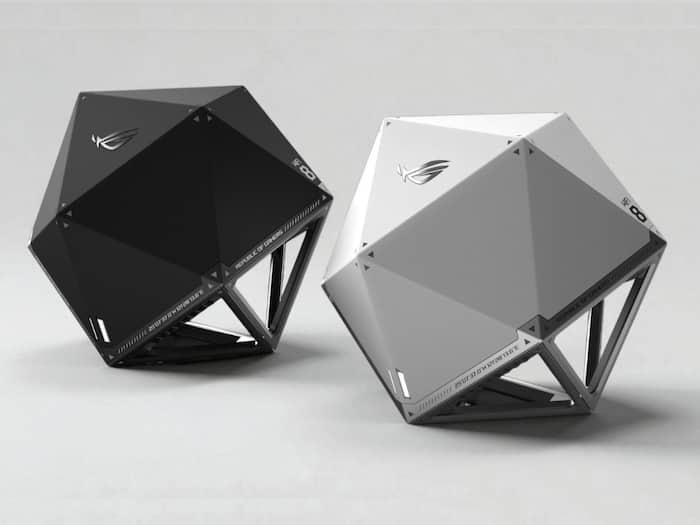
ASUS has taken its first public step into the Wi-Fi 8 era with the unveiling of the ROG NeoCore, a concept router that also serves as the company’s first real-world demonstration of the new wireless standard. Announced at CES 2026, the reveal signals that Wi-Fi 8 is moving beyond technical specifications and into practical testing, even though consumer-ready products are still some time away.  Also Read: ASUS ExpertBook Ultra Review: Insanely Light, Surprisingly Powerful
ASUS says its first Wi-Fi 8 home routers and mesh systems are planned for release in 2026, and will be built around the company’s existing AiMesh setup along with a new AI Network Engine. Also Read: ASUS Ascent QN10 mini PC debuts with Snapdragon X2 Elite and on-device AI capabilities
Unlike earlier Wi-Fi generations that were marketed mainly around peak speeds, ASUS is positioning Wi-Fi 8 as a reliability-focused upgrade. The company says the goal this time is to deliver more consistent performance in real-world conditions, where distance, walls, interference, and device load often matter more than headline speeds. Also Read: Computex 2026: Asus announces new Zenbook 14 and Vivobook AI laptops - check specifications
According to ASUS, Wi-Fi 8 is designed to slow down performance drops as users move farther away from the router. This could help keep Wi-Fi performance more even across larger homes or multi-floor layouts, instead of speeds dropping sharply in rooms farther from the router.
ASUS also highlighted improvements for low-power devices that connect only from time to time. Smart lights, sensors, and controllers often face connection issues on current networks, and Wi-Fi 8 is meant to reduce those problems. Wi-Fi 8 is meant to improve how these devices communicate with the router, helping reduce dropouts and making connections more stable.
Crowded wireless environments are also a key focus. In apartment buildings and dense neighbourhoods, overlapping Wi-Fi signals can severely affect performance. The company says Wi-Fi 8 uses smarter spectrum management to deal with interference from nearby routers, which should help keep connections stable in apartment buildings and other crowded areas.
Network congestion is another area being addressed. With better bandwidth management and smarter scheduling, the router should also handle multiple connected devices more smoothly during busy periods.
To back up its claims, ASUS compared Wi-Fi 8 against Wi-Fi 7 under practical conditions. While theoretical top speeds remain the same, the company says Wi-Fi 8 delivered up to twice the mid-range throughput, wider coverage for IoT devices, and significantly lower latency in demanding scenarios.

ASUS believes Wi-Fi 8 will be better suited for AI-driven services, cloud-based tasks, and setups where several devices are used at the same time, where stability and low latency matter more than peak speeds.

Don't Miss Out the Latest Updates. Subscribe to Our Newsletter Today!