Written By Divya
Published By: Divya | Published: May 14, 2026, 06:13 PM (IST)
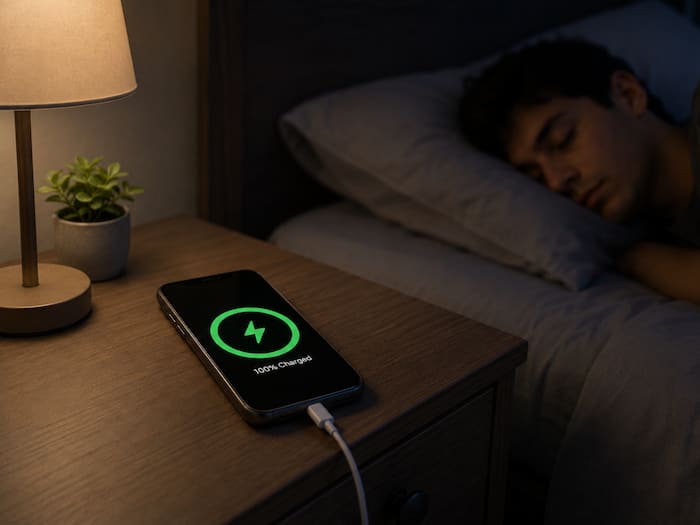
 That 100% Battery in the Morning Comes With a Hidden Cost! (Image: AI Generated)


Written By Divya
You, I, and someone from our family and friend group must be guilty of charging our phones throughout the night. Just plugging it in with the hope that we will wake up with a full battery life. And witnessing 100% battery surely gives a momentary relief but is it killing your battery health in the long term? I always end up asking my parents not to put their phones on charge overnight, but it turns out the answer is not as dramatic as many of us think.  Also Read: Why modern smartphone batteries wear out faster than many users expect
Undoubtedly, overnight charging can affect battery health over time but not exactly in the way social media warnings often describe it. Also Read: OnePlus 15R price hiked AGAIN in India; Is it still worth considering?
In today’s era of technological advancement, smartphones are way smarter than they used to be. Whether it is an iPhone, Samsung Galaxy, Xiaomi, or Pixel phone, most devices today stop charging once the battery reaches full capacity. Also Read: Not a 120W phone, yet iPhone 17 Pro just won the charging race
In fact, Apple itself says iPhones automatically pause charging at 100% and resume only when the battery level drops slightly. The company also uses something called “Optimized Battery Charging,” which learns your daily routine and delays charging beyond 80% until closer to the time you usually wake up.
So technically, your phone is not continuously “overcharging” all night. It just stops once reached 100%. But that does not mean battery stress disappears completely!
The issue is not about overcharging. It is that most of the smartphones today use lithium-ion batteries, which naturally degrade over time. Apple suggests that battery lifespan depends on factors such as charging habits, temperature, and overall chemical ageing.
The prolonged high charge levels and heat are the common issues that come with it. Keeping your phone battery near 100% for hours can create voltage stress. Plus, consider a mix of heat if the phone is inside a thick case or you are charging it while gaming. In all the cases – battery ages faster.
Even Xiaomi notes that while overnight charging does not cause immediate damage, “keeping the phone plugged in for extended periods can keep the battery in a high-stress state, which can accelerate degradation over time.”
This is probably the part most people ignore. Apple recommends keeping phones ideally between 16°C and 22°C while charging. Once temperatures rise too much, software may even limit charging automatically to protect the battery. That means charging your phone overnight in a hot room, under a blanket, or using cheap chargers can quietly damage battery health more than simply leaving it plugged in. Wireless charging can also create more heat than wired charging during long overnight sessions.
However, Apple as well as Android brands now include similar tools to reduce battery stress. Samsung offers “Battery Protect,” Google uses “Adaptive Charging,” and Xiaomi also includes optimised charging systems that slow down charging speeds based on your habits.
The idea behind all of them is simply to reduce the amount of time your battery stays pinned at 100%.
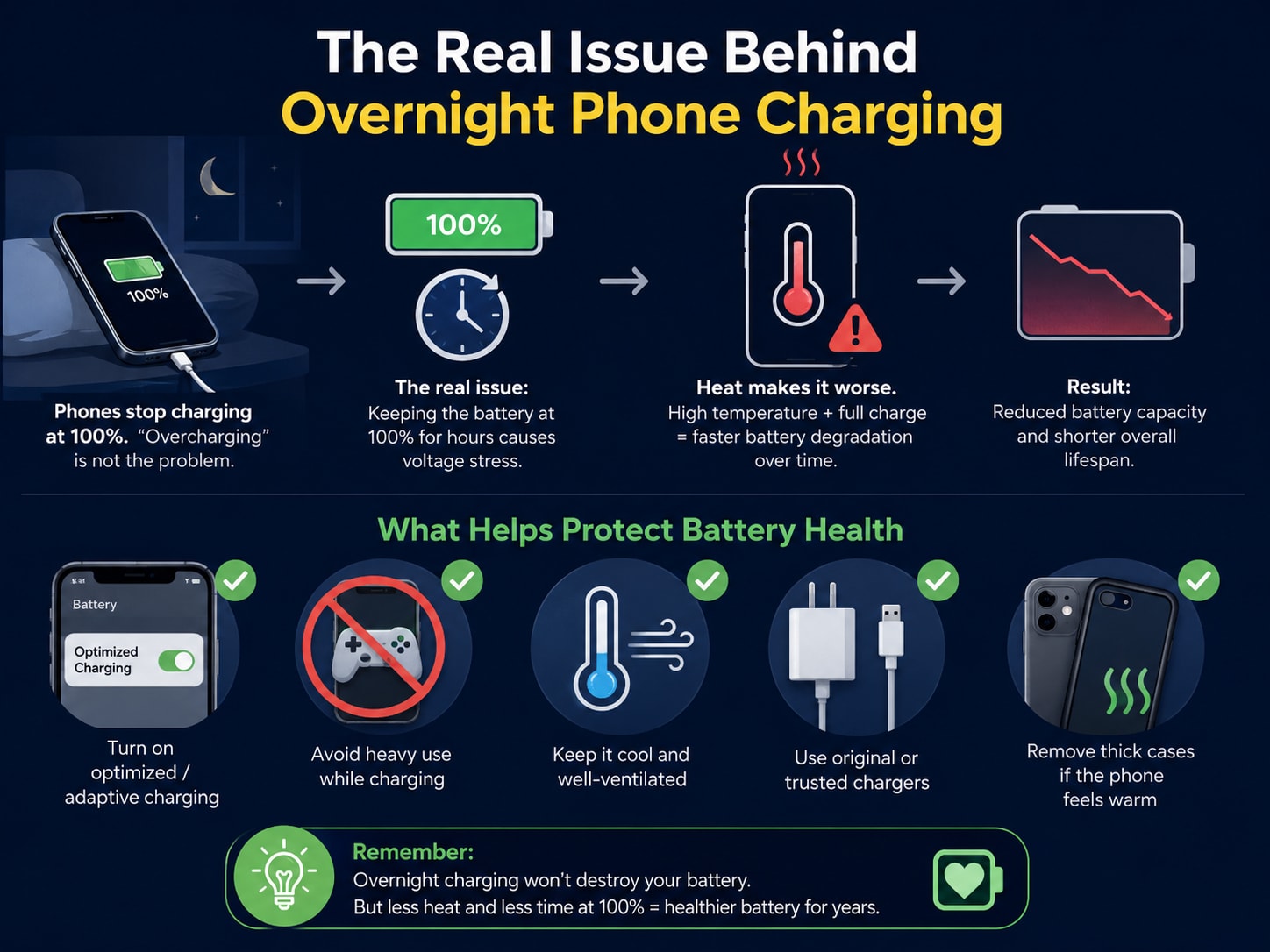
Honestly, probably not completely! Still, most people charge their phones overnight out of habit, well, it is practical too! And the latest smartphones are immune to this battery-killing habit, but there are some basics which can help you keep your phone’s battery health better.

Also, you do not always need to hit exactly 100%. Lithium-ion batteries actually prefer smaller top-ups instead of deep full cycles all the time. Leaving your phone plugged in overnight will not suddenly “destroy” the battery. But regularly exposing it to heat and keeping it at full charge for long periods can slowly reduce battery capacity over the years.

Don't Miss Out the Latest Updates. Subscribe to Our Newsletter Today!