
Written By Deepti Ratnam
Published By: Deepti Ratnam | Published: Mar 20, 2026, 01:50 PM (IST)
 GPS Jamming explained


Written By Deepti Ratnam
The ongoing conflict involving Iran, Israel, and the United States has brought a new kind of battlefield into focus. Other than airstrikes, the countries are involved in missile attacks and naval tensions, and hence, electronic war has also taken center stage and is playing a major role. One of the most serious concerns and tools that is being used in the recent war is GPS Jamming. This is an invisible attack that is majorly affecting ships and aircraft across the Middle East, especially near the Strait of Hormuz. In this article, we will delve into what GPS jamming is and how it is affecting the navigation systems of more than a thousand vessels.  Also Read: Looking for a Dash Cam? These are the best options available today
 Also Read: Always-On Phone Tracking? Apple, Google, Samsung Raises Red Flags
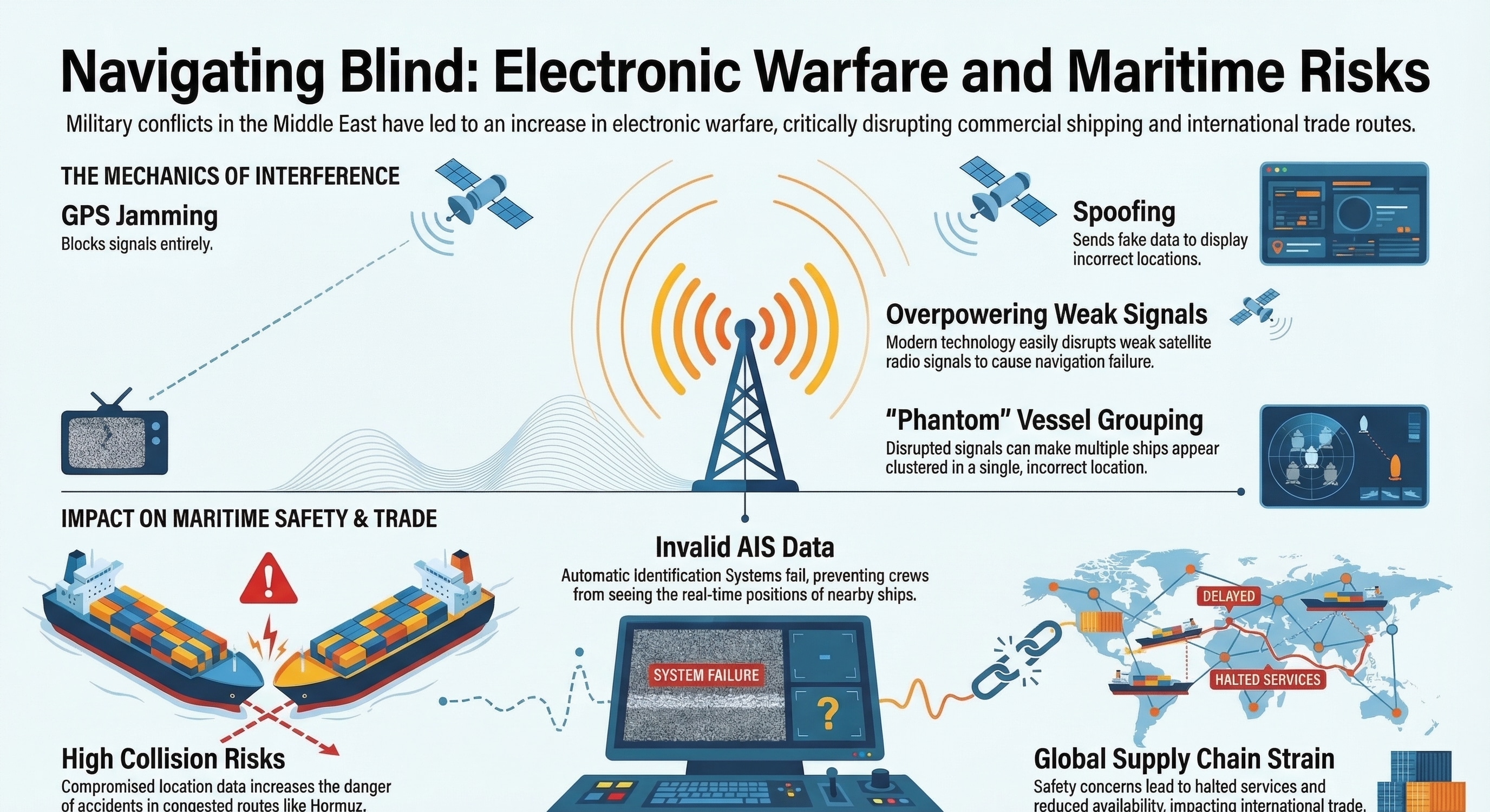
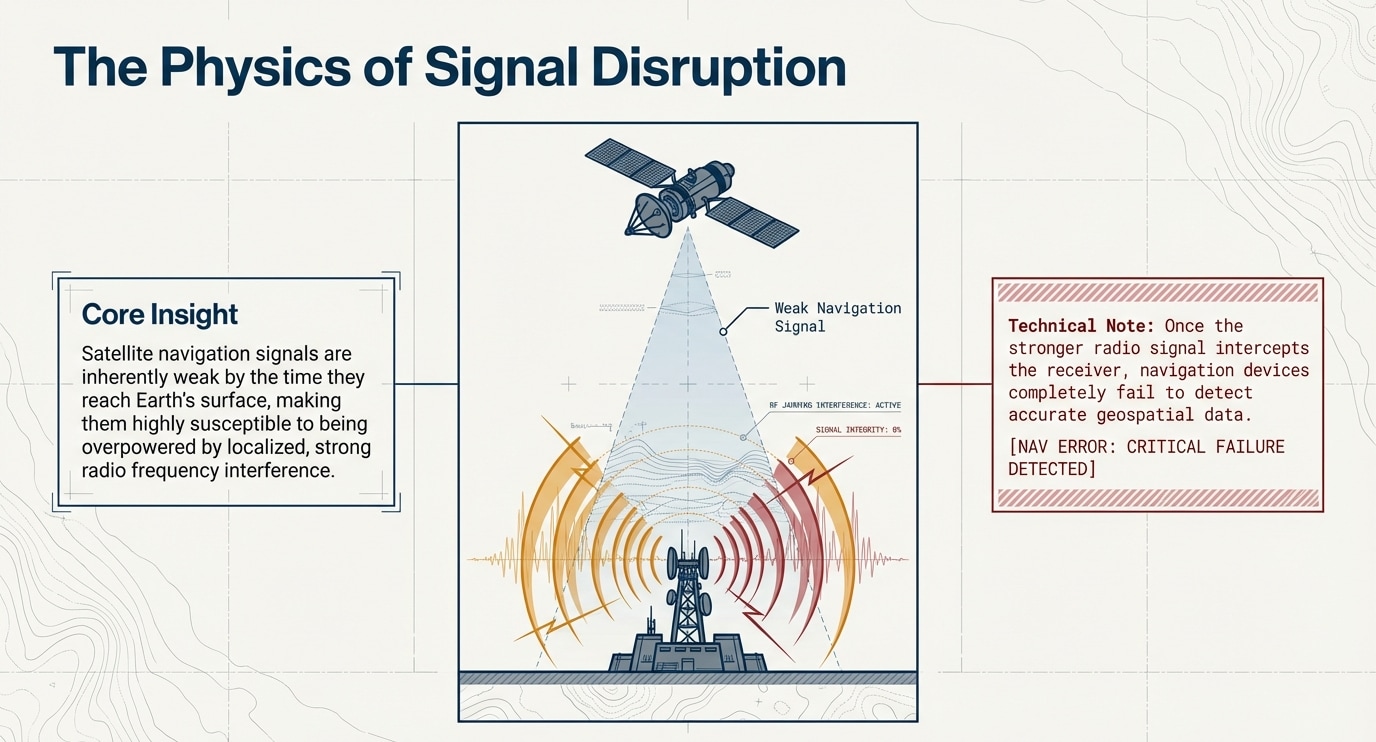
GPS Jamming is a modern technology that is being used to disrupt strong radio signals and blocks satellite signals used for navigation. Interestingly, these radio signals are usually weak so it becomes easy to overpower them. Once jamming occurs, the devices fail to detect accurate location data.
Another method is called spoofing, wherein fake signals are sent to mislead the system. Rather than losing signal, the device shows a wrong location. To better understand this imagine a ship may appear on land or at an airport even when it is at sea. Both the methods are prevelant and is used in conflict zones to confuse navigation systems.
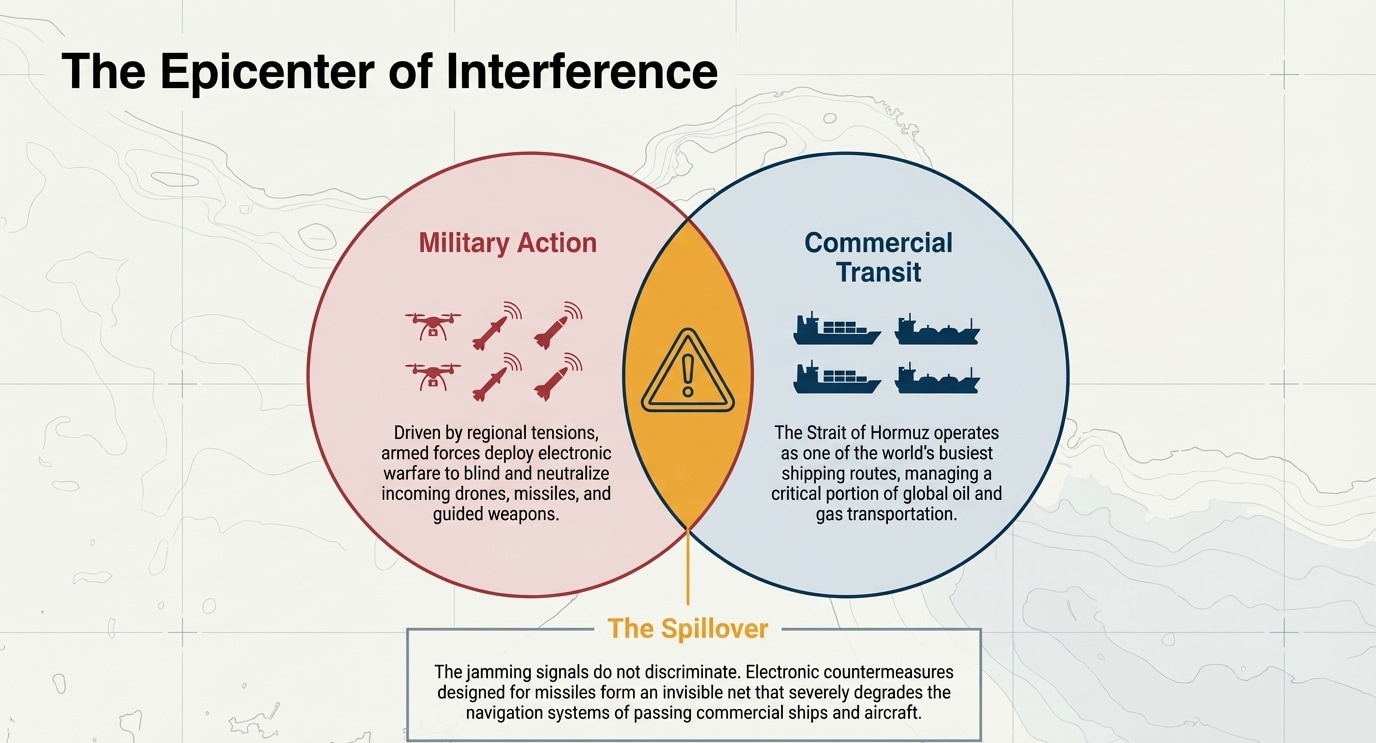
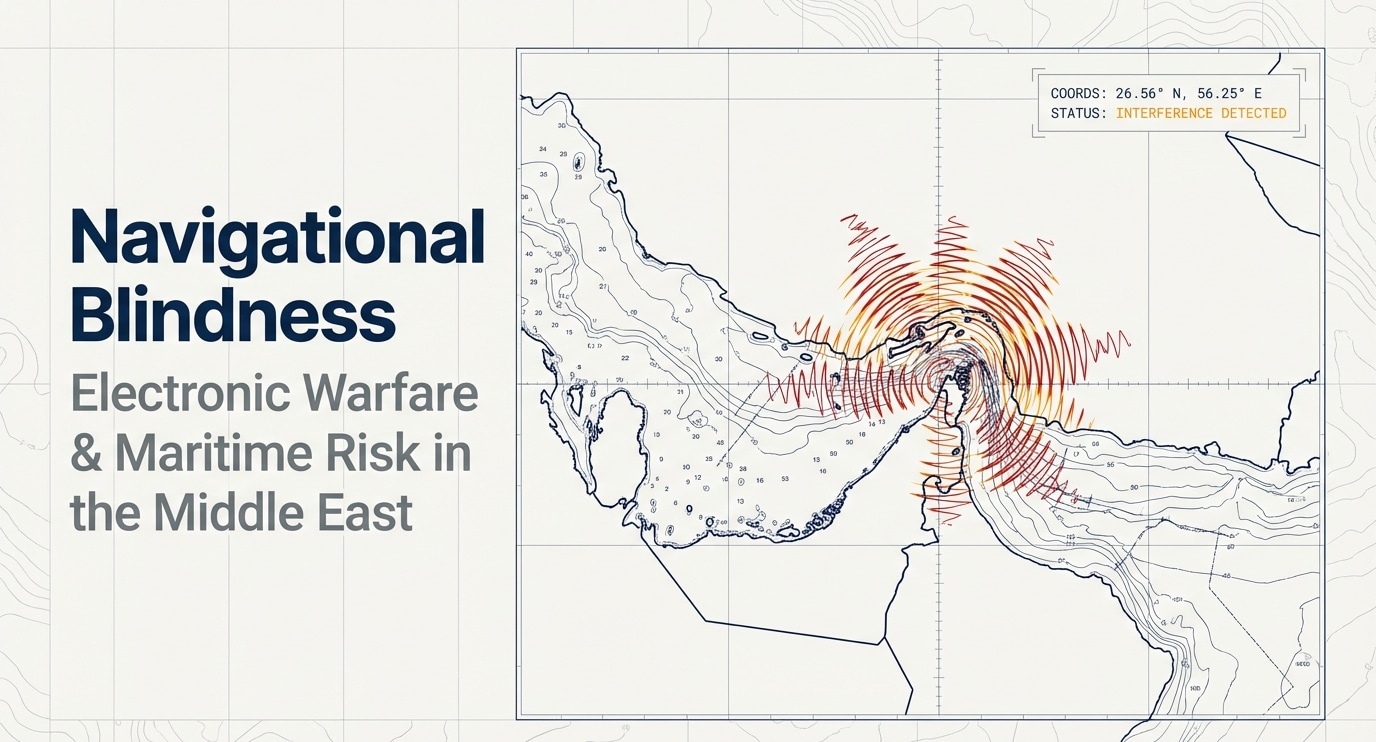
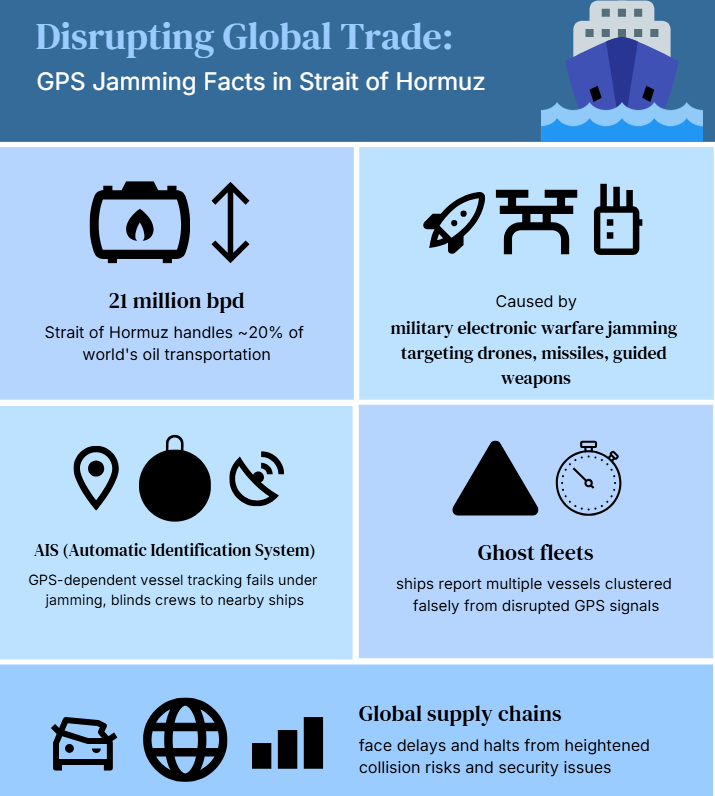
GPS interference has turned out to be a significant problem in the Middle East considering the current tensions and military action. Strait of Hormuz is considered to be one of the busiest shipping routes in the world. It manages a significant portion of oil and gas transportation in the world.
The recent wars in the area have complexified the utilization of electronic warfare. Jamming is used by military forces to prevent use of drones, missiles and guided weapons. Nevertheless, the commercial ships and aircrafts that are in operation are also affected by these signals.
In many cases, ships have reported strange patterns where multiple vessels appear grouped together in one place. These are not real positions but the result of disrupted GPS signals.
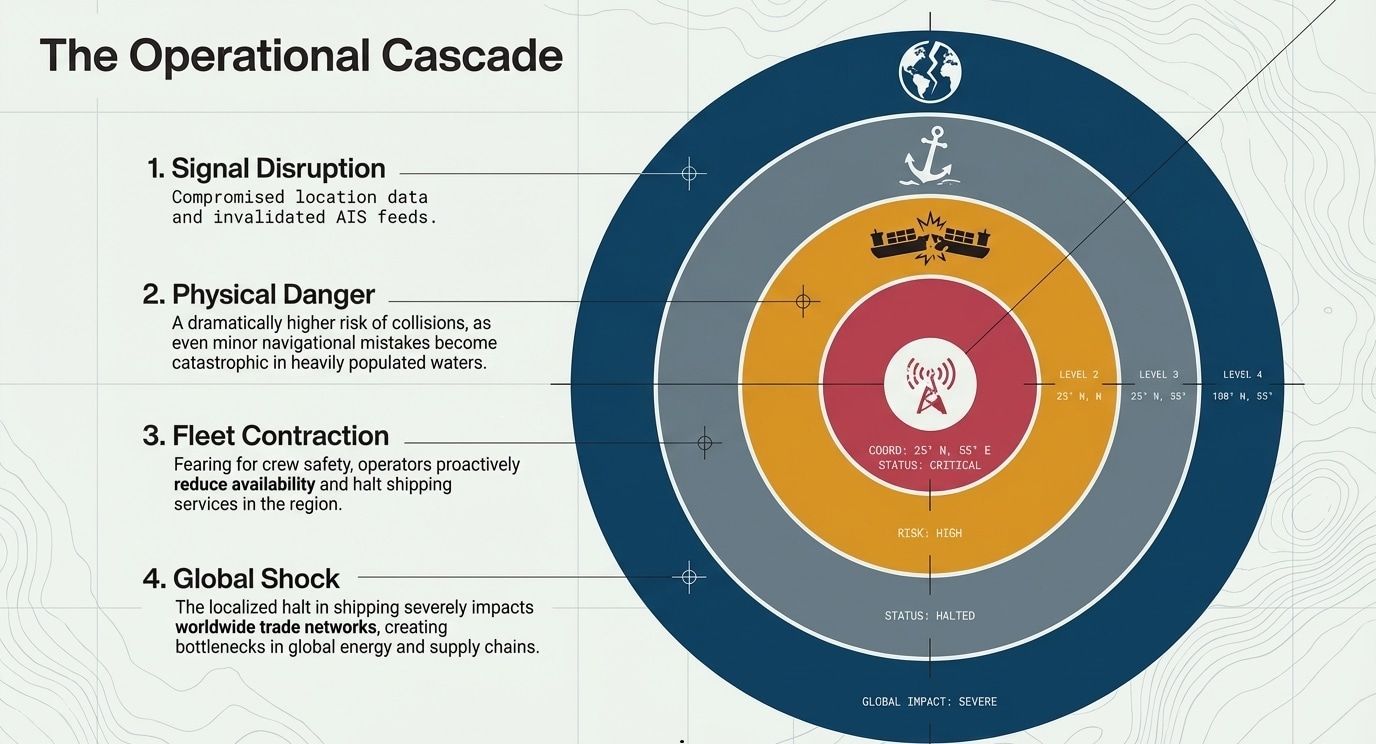
Ships have become exposed to some grave dangers due to GPS Jamming. Navigations are essential because large ships rely on them to navigate through congested routes. In case the location information is compromised, the chances of collision are higher.
Ships have technologies such as Automatic Identification System (AIS) to monitor other vessels around. The AIS data becomes invalid when GPS signals are disturbed. This complicates the situation of crews in knowing the whereabouts of other ships.
Even minor mistakes can cause accidents in highly populated regions such as the Strait of Hormuz. Ships also reduce their availability and halts their services because of security issues. This impacts on trade and supply chain all over the world.
Aircrafts are also heavily reliant on navigation using GPS and satellite systems. With the interference, the pilots can obtain faulty position data. This may cause a confusion particularly on landing or in poor weather.
Pilots, in such instances, depend on alternative mechanisms such as Inertial Navigation Systems (INS). Such systems monitor the movement according to the past location information. It is also supported by ground-based navigation systems.
However, repeated interference increases workload for pilots and may affect flight schedules.
GPS jamming is not regionally confined. It has been extensively reported in the Baltic Sea, black sea, and eastern Europe. Electronic warfare has also intensively been used in the conflict between Russia and Ukraine.
Incidents of GPS interference have also been experienced in India particularly in border regions and around airports. These incidents demonstrate that the issue is becoming more widespread and is impacting multiple regions.
GPS jamming disrupts the signal and does not allow the devices to obtain location information. This causes loss of navigation.
GPS spoofing, on the other hand transmits counterfeit signals. It deceives systems to indicate wrong locations. The spoofing is said to be more threatening as it results to false assurance.
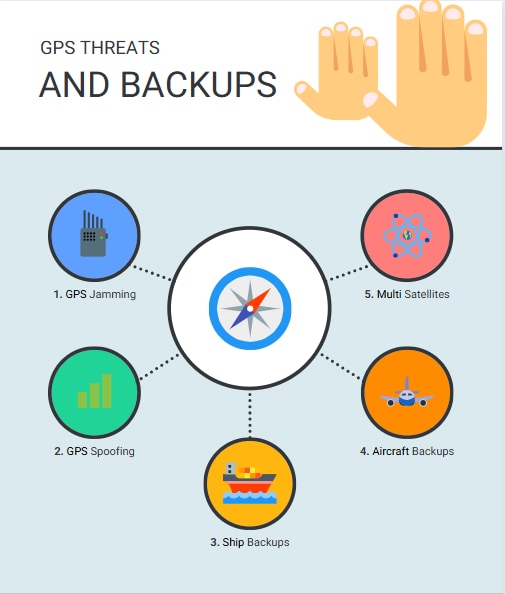
When GPS signals fail, ships and aircraft switch to backup methods. Radar, maps and manual navigation methods can be used by ships. Visual reference such as coastline and lighthouses can also be used by the crew members.
Aircrafts utilize INS and ground-based navigation support. In severe cases, the conventional means such as manual calculations can be adopted.
Shipping agencies are also moving towards the use of multiple satellite systems, as opposed to using a single network. This limits the effects of interference.
The increase in the use of GPS jamming demonstrates the transformation of modern warfare. Such attacks can be hard to detect and can attack military and civilian systems.
Since world trade and movement require precision in the navigation, the slightest disturbances may incur big impacts. The effects are far reaching, especially due to delayed deliveries and flight delays.

GPS jamming is the weapon of contemporary war that cannot be seen but it is mighty. Its effects in the Middle East emphasize the dangers it presents to shipping and aviation. The use of a better and more secure navigation system is growing as the technology grows and develops. To achieve safety and stability, governments and industries should pay attention to the enhancement of the backup systems and the decrease of reliance on one source of navigation.

Don't Miss Out the Latest Updates. Subscribe to Our Newsletter Today!