
Written By Deepti Ratnam
Edited By: Deepti Ratnam | Published By: Deepti Ratnam | Published: Jan 12, 2026, 11:36 AM (IST)


Written By Deepti Ratnam
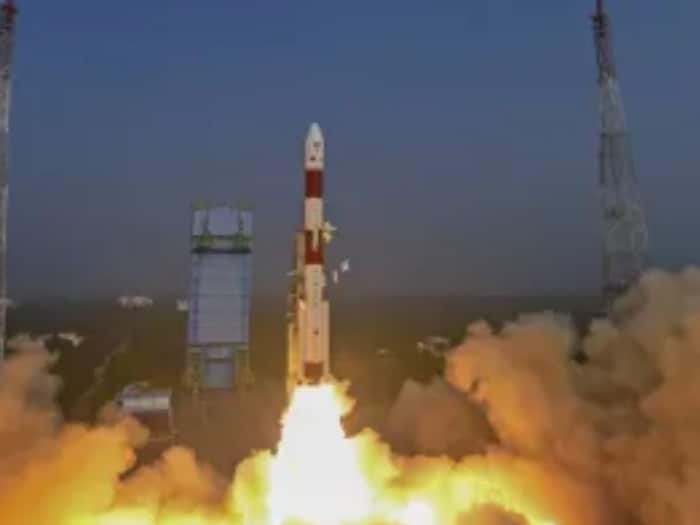
India’s space program faced a major blow today after its Indian Space Research Organization (ISRO) faced a critical failure during the PSLV-C62 mission. To recall, the rocket was carrying the Anvesha satellite along with 15 other satellites from India, Nepal, and Spain. The satellite failed to reach orbit due to technical anomaly at the end of the third-stage called the PS3 burn. ISRO confirmed the failure of the PSLV-C62 mission in a post-X, stating that a dedicated investigation has been launched to understand and determine the cause.
ISRO’s PSLV-C62 mission was intended to be India’s first major orbital launch of 2026 and this was going to be one of the most important missions for India. The rocket lifted off smoothy from the First Launch Pad at the Satish Dhawan Space Center in Sriharikota at 10:17 AM IST. Nevertheless, as soon as the satellite completed its third stage burn, the telemetry data showed a sudden deviation in the rocket’s roll rates and flight path. This prevented the vehicle to reach the velocity it required in order to place its payloads into orbit.
Anvesha, mission’s primary payload, developed by the Defence Research and Development Organisation (DRDO) was designed to provide advanced imagining capabilities. It was basically built to enhance India’s surveillance and mapping capabilities. Alongside Anvesha, 15 additional satellites from startups and international collaborators were also onboard. This include 7 satellites from Hyderabad-based Dhruva Space.
The PSLV-C62 mission encountered an anomaly during end of the PS3 stage. A detailed analysis has been initiated.
— ISRO (@isro) January 12, 2026
Engineers believe that due to the PS3 anomaly, the satellites may have been lost during the descent. This results into the significant loss for both strategic and commercial space assets.
Although the rocket liftoff was smooth, however, at the third stage, mission control quickly noted some major irregularities. The Telemetry data indicated a sudden disturbance in roll rates, as per engineers. Additionally, there was a deviations too in altitude and flight path. This resulted into affecting the fourth stage ignition and left engineers uncertain about satellite separation. The ISRO’s mission control centre fell silent and started accessing the situation, trying to retrieve critical and important data.
PSLV-C62 was the first instance, where a single Indian private company provided seven satellites for a government launch. Dhruva Space, a Hyderabada-based company also released four satellites, and hence, its partnership indicates the growing participation of the private sector in the expanding space system in India, despite a failure in this mission.
Anvesha was a DRDO project that was meant to offer high-quality imaging and reconnaissance systems to be used in defense situations. Its defeat is a strategic lapse in the surveillance of India. It was supposed to be the satellite that can provide real-time surveillance and mapping and its loss can postpone the defense planning and space-based intelligence projects.
The PSLV-C62 failure is far reaching to the Indian space program. First, it postpones the process of the strategic and business satellites, which influences defense, communications, and entrepreneurial projects. It also underlines the difficulties of multi-satellites missions that are complex, and a failure of one stage may invalidate a number of payloads.
The reputation of ISRO as a trusted launch provider comes into question and the foreign partners might also just rethink launch contracts until it recovers its confidence. The event highlights the importance of a tightened testing, effective mission design, and contingency planning. Nevertheless, subsequent missions should be made stronger as a result of lessons to be learnt during this failure to make the future launches more reliable.
After the mission failure, ISRO has embarked on a mission to give a thorough study of the telemetry and flight information. All the available data is being analyzed by engineers to identify the root cause of the anomaly. The agency has been asserting the public that measures will be put in place to avoid similar accidents in future missions.


Don't Miss Out the Latest Updates. Subscribe to Our Newsletter Today!