Written By Deepti Ratnam


Written By Deepti Ratnam
Edited by Deepti Ratnam |Published: May 11, 2026, 10:42 AM (IST)
 India advances hypersonic missile ambitions with new DRDO breakthrough
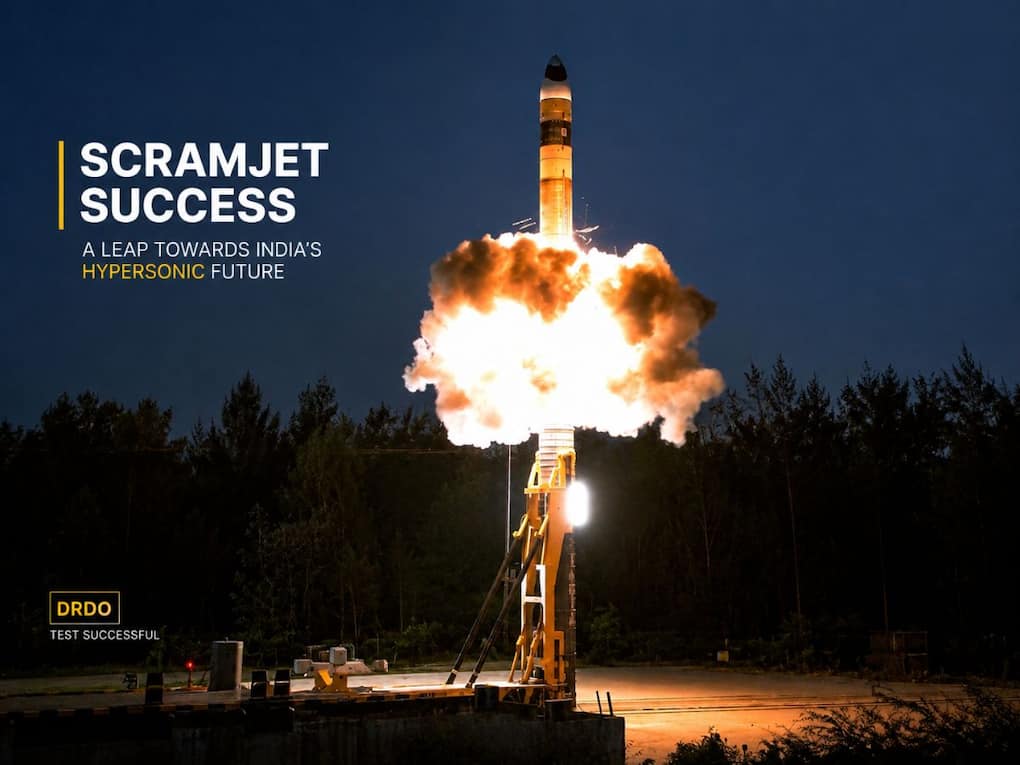
India has achieved a major breakthrough in Defence technology by successfully testing a hypersonic missile engine. The Defence Research and Development Organization (DRDO) has successfully conducted an important part of the hypersonic missile engine in Hyderabad. The test was demonstrated on 9 May and lasted for more than 1,200 seconds.
This is one of the biggest achievements for India because hypersonic missile technology is one of the most advanced defence technologies in the world, and hence, is handled by only a few countries in the world.
In a move to build India stronger in advanced defence system, DRDO tested a ‘scramjet combustor’, which is an important part of hypersonic missile technology and engine. To put it simply, this advanced system helps the missile to travel at extremely high speeds.
Reportedly, these missiles can travel faster than five times the speed of sound, which is
v>5×speed of sound
It means, the hypersonic missiles are faster than normal missiles and are extremely difficult to stop once launched.
This latest test was lasted for more than 1,200 seconds, which is once again a major improvements as compared to the last test conducted. The earlier test was conducted in January this year, which lasted for 700 seconds.
India conducted successful Flight trial of an Advanced Agni missile with MIRV (Multiple Independently Targeted Re-Entry Vehicle) system from Dr. APJ Abdul Kalam Island, Odisha on 08th May 2026. The missile was flight tested with Multiple payloads, targeted to different targets… pic.twitter.com/5zUP7WYivJ
— रक्षा मंत्री कार्यालय/ RMO India (@DefenceMinIndia) May 9, 2026
This successful test gives India a major boost toward hypersonic missile program. It showcases that Indian scientists are now making strong progress in developing advanced missile systems. These systems are built mostly by using indigenous technology.
The Ministry of Defence has stated that the engine used in the hypersonic missile is Indian-developed system that comes with special heat-resistant coatings and modern manufacturing technologies.
Hypersonic missiles are considered one of the important warfare systems as they can:
All these reasons contribute to the fact that all countries around the world are investing in hypersonic technologies.
Defence Minister Rajnath Sing congratulated DRDO scientists on this special moment. He also congratulated industry partners and researchers for successfully conducting the test. He called this moment a milestone and important step for India’s future in hypersonic missile program.
DRDO Chairman Samir V Kamat also congratulated and praised the teams involved in conducting this test.
The successful test of scramjet comes at a time when India is working on several advanced defence projects and systems to strengthen country’s national security and military.
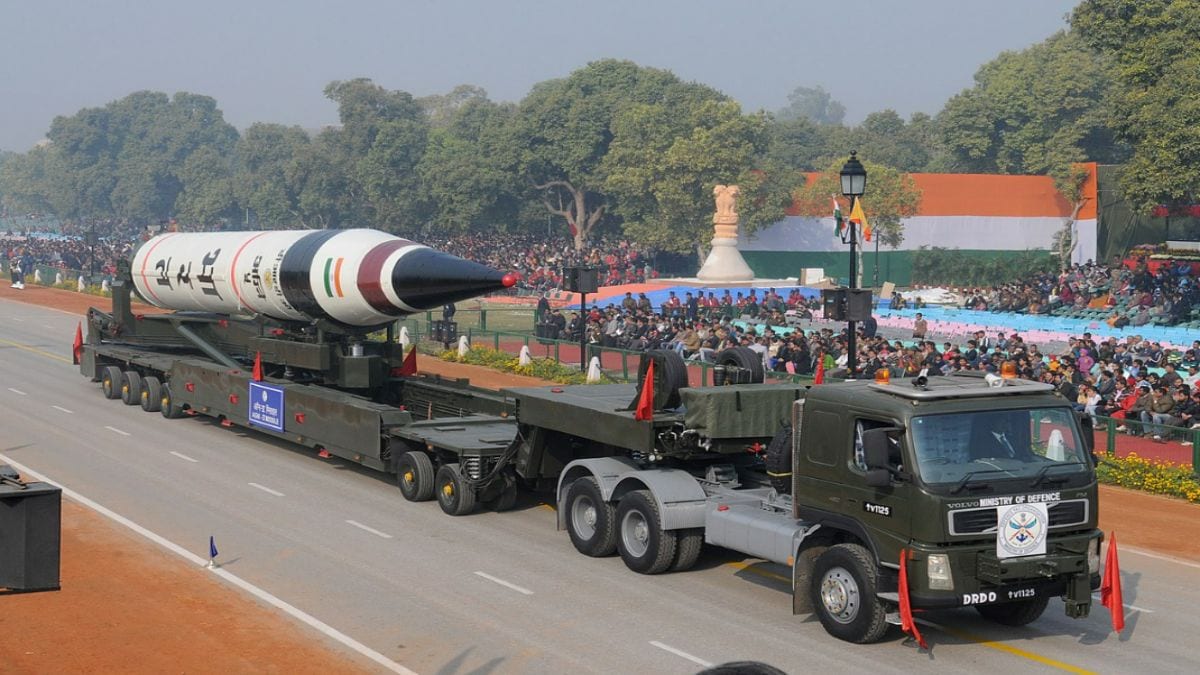
To recall, DRDO also successfully tested the Agni missile MIRV technology. This technology allows one missile to carry multiple warheads that are aimed at different targets with accurate precision.
Besides this, the country is also working and developing a new precision-guided weapon system. Additionally, the defence system is also advancing toward long-range missile technologies to strengthen its military technology and security infrastructure.
Normal missiles already travel very fast, but as far as hypersonic is considered, they are much more advanced and faster than normal missiles. Their biggest advantage is speed with manoeuvrability (the ability o missile to move easily and change direction quickly).
These missiles move at an extremely high speeds and that’s the reason they can change their direction mid-air. They are difficult for enemy defence systems to detect and intercept.
Countries like Russia, China, and the United States are already investing in these advanced and heavily hypersonic missiles and weapon systems.

The successful long-duration test is not only about missiles. It also demonstrates India’s capability in the field of aerospace engineering and advanced aircraft manufacturing and indigenous defence technology. The achievement is hoped to bolster the defence systems of India in the coming years and cut its reliance on foreign technologies in vital military areas.