
Written By Shubham Arora
Published By: Shubham Arora | Published: Feb 13, 2026, 12:47 AM (IST)


Written By Shubham Arora
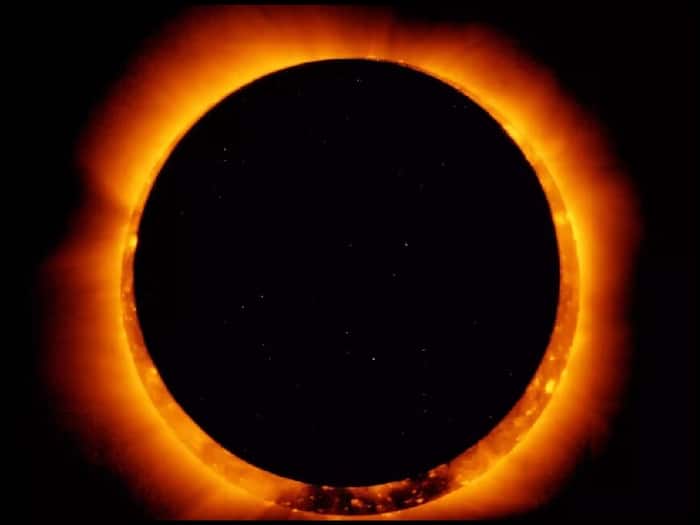
The first major sky event of 2026 will take place on February 17, when an annular solar eclipse occurs. Often called the “ring of fire,” this type of eclipse creates a bright ring of sunlight around the Moon. But the main question for many readers in India is simple: will it be visible here?  Also Read: Meet Athena: NASA’s new supercomputer is its most powerful yet
The short answer is no. This eclipse will not be visible from India. Also Read: ExoMiner++: NASA turns to AI to speed up the search for Earth-like exoplanets
As per reports citing NASA and international astronomy trackers, the annular solar eclipse will begin on February 17 at 07:01 UTC, which is 12:31 PM IST. The annular phase, where the ring is clearly visible, is expected to last for up to 2 minutes and 20 seconds. During this time, nearly 96 percent of the Sun’s centre will be covered. Also Read: Earth Has A Second Moon? Know All About Asteroid 2025 PN7
However, the path of this eclipse is extremely limited.
The annular phase will mainly pass over Antarctica. According to eclipse meteorologist Jay Anderson, quoted on Eclipsophile.com in earlier coverage, only a very small number of people are likely to witness the full ring effect because of the remote location.
Partial visibility is expected in parts of southern Africa and South America. Countries such as South Africa, Argentina, Chile, Zambia and Zimbabwe may see a partial eclipse, depending on location. Research stations in Antarctica, including Concordia and Mirny, are among the few inhabited places directly under the annular path.
India, along with most of Asia, will not see even a partial phase of this event.
As explained by NASA in previous guidance, an annular eclipse happens when the Moon moves between the Earth and the Sun while being near its farthest point from Earth. Because the Moon appears slightly smaller at that distance, it does not fully block the Sun. Instead, a bright ring remains visible around the Moon, which gives the “ring of fire” effect.
Even though this eclipse will not be visible from India, it is important to remember that looking directly at the Sun during any eclipse is unsafe. Experts recommend using ISO 12312-2 certified eclipse glasses or indirect viewing methods. Regular sunglasses do not provide enough protection.

For Indian skywatchers, this event may not be visible, but future eclipses will offer better opportunities.

Don't Miss Out the Latest Updates. Subscribe to Our Newsletter Today!