
Written By Shubham Arora
Published By: Shubham Arora | Published: Apr 06, 2026, 11:04 PM (IST)
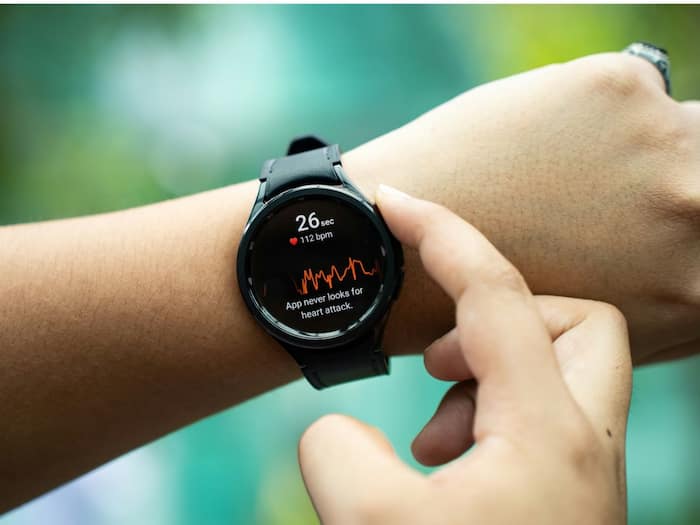
 Modern smartwatches track heart rate, activity, and health data throughout the day.


Written By Shubham Arora
#FitIndiaHitIndia: Today, we live in a world where people do not just wear watches to know what time it is anymore. Many people today have a smartwatch that they wear on their wrist all day, measuring their steps, heart rate and sleep data, as well as other things. The smartwatch started as a way to help people stay physically fit, but it has become much more than that; it has become an integral part of how people view their overall health and wellness.  Also Read: The rise of health apps: Can your smartphone really help you stay fit? #FitIndiaHitIndia
This makes perfect sense considering the prevalence of lifestyle diseases, along with the high levels of stress and sedentary living; therefore, individuals are becoming more aware of their daily routines. Smartwatches provide people with a means to obtain data passively, without having to write anything down or remember anything; you can access it right from the watch face. Also Read: Pebble HALO Smart Ring Launched in India with Digital Display, Health Tracking, and Gesture Controls
That being said, there are several features found on smartwatches that are more functional than others. Those that are functional provide assistance, while others simply provide an estimated result. Therefore, it may be more beneficial for individuals to concentrate on features that have proven to work, rather than considering all that’s offered. Also Read: Amazfit Helio Strap Launched With BioCharge Tracking Tech and 10-Day Battery
Heart rate monitoring is a core function of smartwatches that is both reliable and highly accurate; many current-day models tend to exhibit a small margin of variance when measuring heart rates — only a few beats per minute at most.
What makes this functionality useful is not just the actual number that you see on your device, but also the changes in numbers that you see over a period of time. When there has been a continued increase in resting heart rate (RHR), it could point to either stress, sleep deprivation, or possible infection.
This is one of the few features where the data is simple and actually helpful in daily life.
This is an area where a smartwatch goes beyond the realm of fitness monitoring.
Some smartwatches also utilise an IHB alert for identifying abnormal heart rhythms associated with certain medical conditions such as atrial fibrillation and can provide an early warning of potential stroke risks. Various studies conducted on these alerts have yielded high accuracy rates — generally greater than 90%. These alerts can identify patterns that may not have been apparent to you prior to wearing the watch.
It doesn’t confirm anything on its own, but it can give you a reason to get things checked early. And that’s where it becomes useful.
One of those things that you don’t think about until you need it, is fall detection. As people age, fall detection tends to be much more important, and can be beneficial for someone that lives on their own.
The watch uses its accelerometer to determine if you experience a hard fall, then senses if you are moving around again. If you do not move after a hard fall, the watch will automatically reach out to your designated emergency contacts by making a phone call for you. The SOS feature allows you to make an emergency call directly from the watch.
These are things that you may not use every day, but will be very beneficial during an emergency.
Blood oxygen (SpO2) monitoring is a common feature in most smart watches and provides an estimated level of oxygen in your blood using the built-in sensors.
In some cases, you can find changes in the way your blood oxygen levels change, such as being lower while you are asleep or being higher while you are at a higher elevation. However, the sensors are only a guideline. It is best to think of it as a general guide rather than relying on it as a medical diagnosis.
It gives you an idea and should not be considered a definitive answer.
Step tracking could sound simple, but it is also one of the most useful features on a smartwatch today. Many devices accurately track steps per day.
Instead, step tracking is primarily about changing behaviour. People realise how few steps they take throughout the day. These small behavioural changes lead to more steps, more movement and ultimately the development of improved habits over time.
This is consistent with the intention of the #FitIndiaHitIndia movement, which is about encouraging people to engage in activities that they can do every day rather than focusing on extreme levels of fitness.
VO2 max is a measurement of how well your body uses oxygen. Smartwatches use heart-rate and activity data to calculate an estimated VO2 max.
Although less reliable than laboratory testing, tracking your estimated VO2 max over time is effective for understanding change in your fitness level.
You will not check your estimated VO2 max every day. However, tracking this number on a weekly or monthly basis will provide a clear view of your overall progress.
Smartwatches do not always provide reliable data. Calorie tracking can be wildly inaccurate, while tracking your sleep stages isn’t always right either — but total sleep time is usually accurate.
Another problem is that many people overanalyse these numbers. Constantly watching them is completely pointless because they fluctuate constantly and cause unnecessary stress.
Yes. There have been many reports of people receiving alerts from their smartwatches before having heart issues, or were able to get medical assistance during emergencies. Each of these examples highlights the potential to save one’s life, provided that the user uses their smartwatch correctly.
However, smartwatches do not replace medical care; they provide a little more awareness of what is going on in your body.

Ultimately, how you use your smartwatch determines how valuable it will be to you; the smartwatch can indicate changes, but what you choose to do with that information is up to you.

Don't Miss Out the Latest Updates. Subscribe to Our Newsletter Today!