
Written By Shubham Arora
Edited By: Shubham Arora | Published By: Shubham Arora | Published: Jan 20, 2026, 11:54 AM (IST)


Written By Shubham Arora
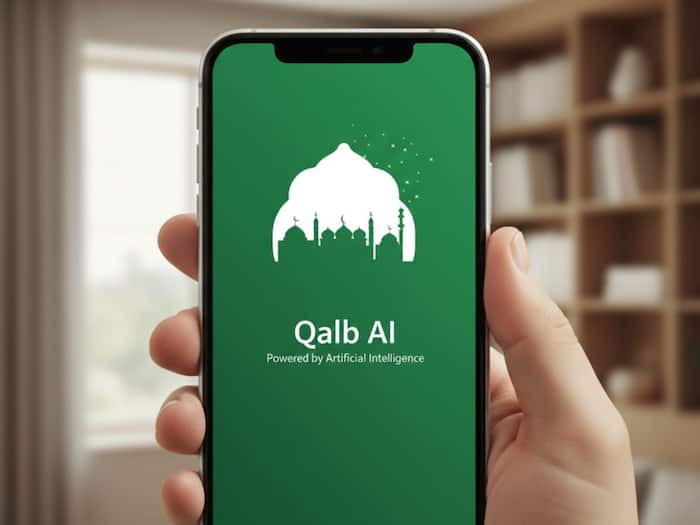
A Pakistani student currently studying in the United States has developed what is being described as the world’s largest AI model built specifically for the Urdu language. The project is called Qalb and focuses on improving AI support for Urdu, a language that is widely spoken but still poorly represented in most advanced AI tools.  Also Read: Using ChatGPT? Here’s What You Should Never Share
Qalb is an AI language model built entirely around Urdu. Unlike most existing models that are trained mainly on English and then adapted for other languages, Qalb has been trained with Urdu as its base language. Also Read: ‘Patil Effect’ and now Ghose: How Anthropic is building an Indian powerhouse to disrupt Big Tech
According to its developer, the model has been trained on a dataset of nearly two billion Urdu tokens. It has also been tested across multiple international evaluation frameworks to measure how well it performs in real-world tasks such as comprehension, response accuracy, and language flow.
Qalb has been developed by Taimoor Hassan, a Pakistani student currently pursuing a master’s degree in computer science and software engineering at Auburn University. Hassan completed his undergraduate studies in computer science at FAAST University, at its Peshawar campus.
He worked on the project along with his former university classmates Jawad Ahmed and Muhammad Awais, both of whom are now studying in Germany. The team has previously collaborated on technology projects and startups, and continues to work together on AI-focused research.
Urdu is spoken by more than 230 million people worldwide, including large populations in Pakistan, India, and overseas communities. Despite this, most advanced AI systems offer limited or inconsistent support for the language.
Because it is trained only on Urdu, Qalb is expected to deliver more accurate and context-aware responses. The team behind the project says such a model can be useful for local businesses, education platforms, customer support tools, and voice-based digital services that work better in native languages.

At the moment, Qalb is positioned as a development model. The team plans to launch web and mobile applications in the next phase, which would allow wider public access.

Don't Miss Out the Latest Updates. Subscribe to Our Newsletter Today!