Written By Madhav Malhotra
Published By: Madhav Malhotra | Published: Dec 04, 2025, 01:39 PM (IST)


Written By Madhav Malhotra
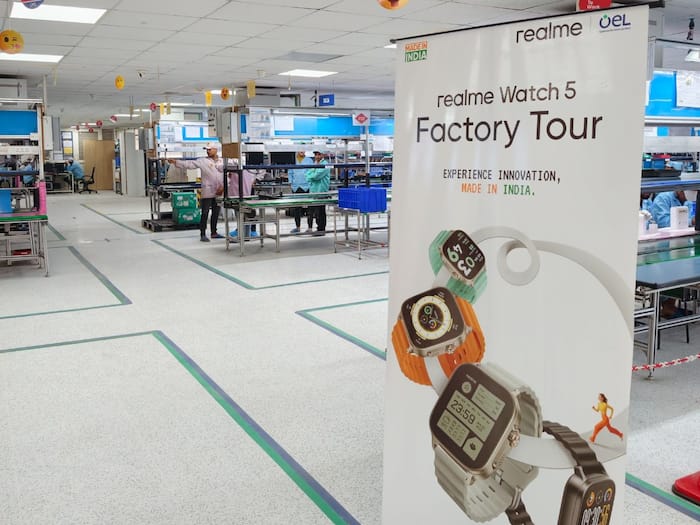
Realme has launched the new Watch 5, which is a really exciting budget wearable for all the fitness enthusiasts who are tight on budget. But before the launch, I got a chance to visit the factory where I saw how the Watch 5 was actually made and what type of tests the brand conducts on their smartwatches before they make their way to the consumer’s wrist.  Also Read: Realme Watch 5 Debuts In India With Bluetooth Calling, GPS, Up To 16 Days Battery Life
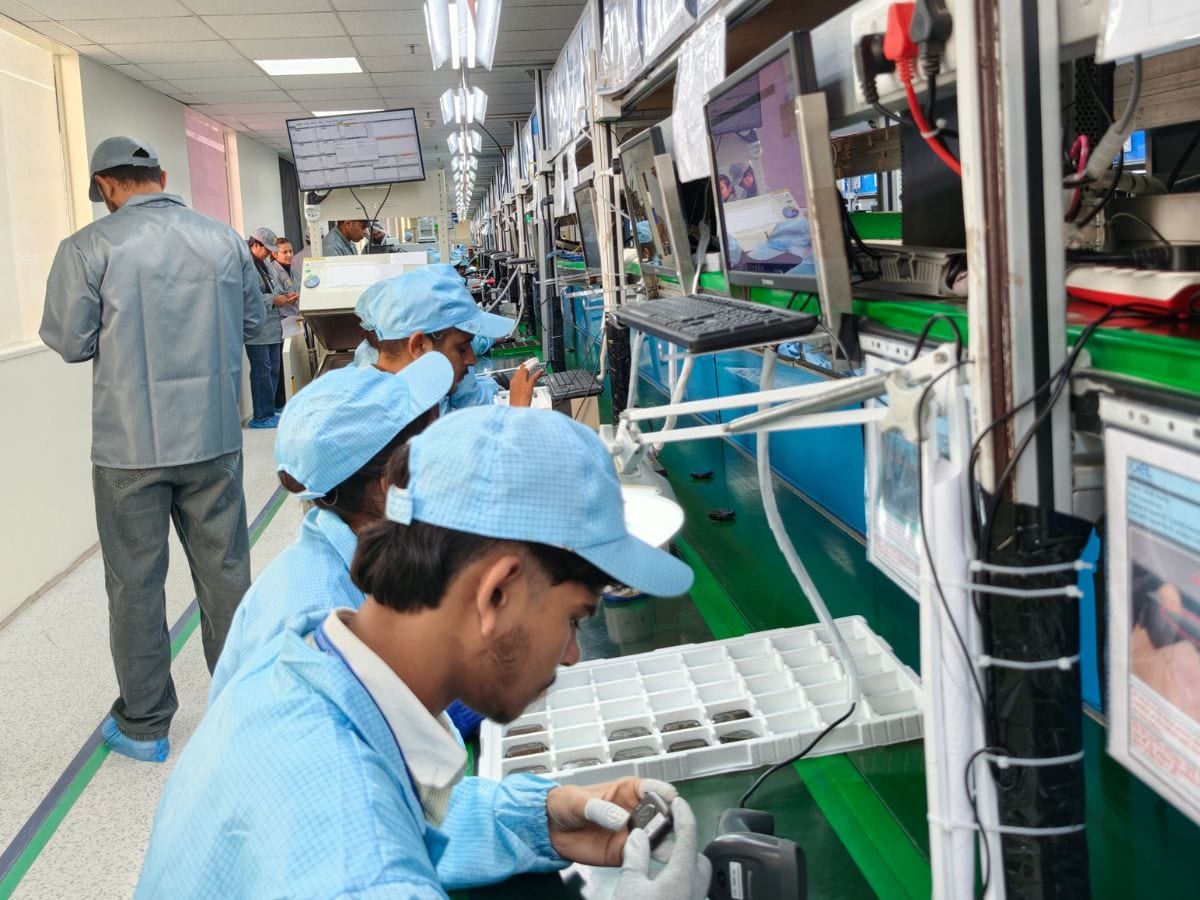
Starting with the entrance, the factory was really clean and the Watch 5 had a massive assembly line. It went through over 40 different workstations where different parts of the watch were tested and assembled. The assembly of the watch starts from coding the same serial number internally that also goes on the back cover of the watch to ensure consistency. The importance of this code is that they are able to trace the same manufactured device on the same day. Further, they also showed the intricate small components like the motherboard that houses all the sensors, and even that went through multiple tests. Then, the 460mAh battery gets soldered to the motherboard which gives juice to the watch. Just seeing how even a small device like a smartwatch goes through such rigorous tests was amazing. This shows how Realme is committed to serving the best to their customers.
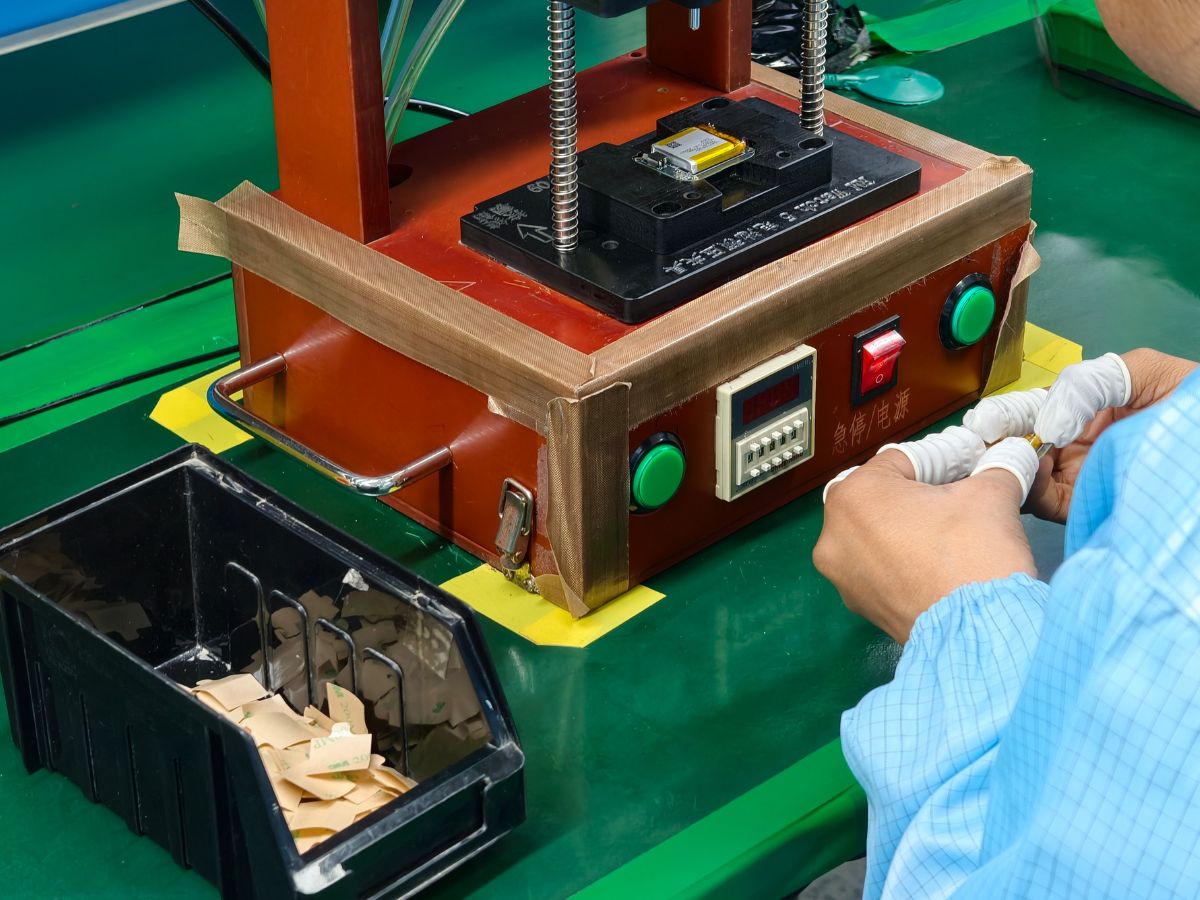
Another test that was really exciting to watch live was when the disassembled watch was kept under a small microscope to check all the soldered components on the PCB. The live feed of the microscope was being projected on a monitor where the tiny wires could be seen. This acts as a great way to check whether any wire is not connected properly or if there is any kind of malfunction.
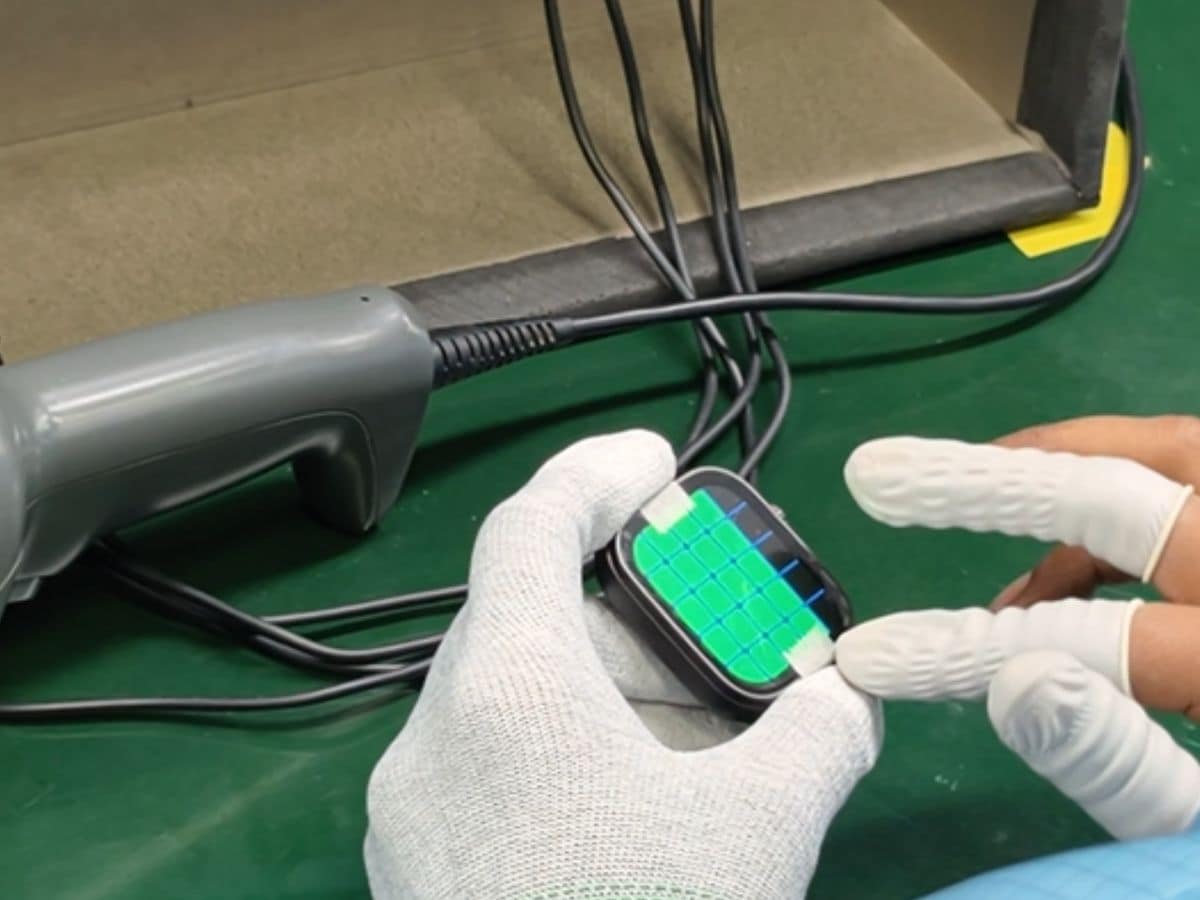
After the basic assembly of the PCB, battery, and sensors, the main display is attached, and it is tested to ensure that there are no issues. The worker at the station ran some RGB screens to check that the colours are tuned. In another test, the screen was sectioned into squares to check the touch response of the display. Then, the watch moves on to some essential stuff like adding the branding and printing the serial number on the watch’s back. This process is called fibre laser printing, which can print in millimetre precision as well. This looks really fun and futuristic at the same time.

Further to this, the watch goes through additional tests to check if all the functions work properly before being packed. The most surprising part was that the watch was packed by hand before being sealed and added to the stock that is shipped to the customers. Overall, it was a great experience to see how even the tiniest details play a huge role in the functioning of a smartwatch. Another interesting insight during the tour was that Realme is trying to aim to manufacture 100% of their AIoT portfolio in India within 3 years. This also shows the shift in focus toward products that are entirely ‘Made in India’.

Don't Miss Out the Latest Updates. Subscribe to Our Newsletter Today!