Written By Deepti Ratnam
Published By: Deepti Ratnam | Published: May 04, 2026, 01:29 PM (IST)
 Inside election tech: How evm data becomes live results online


Written By Deepti Ratnam
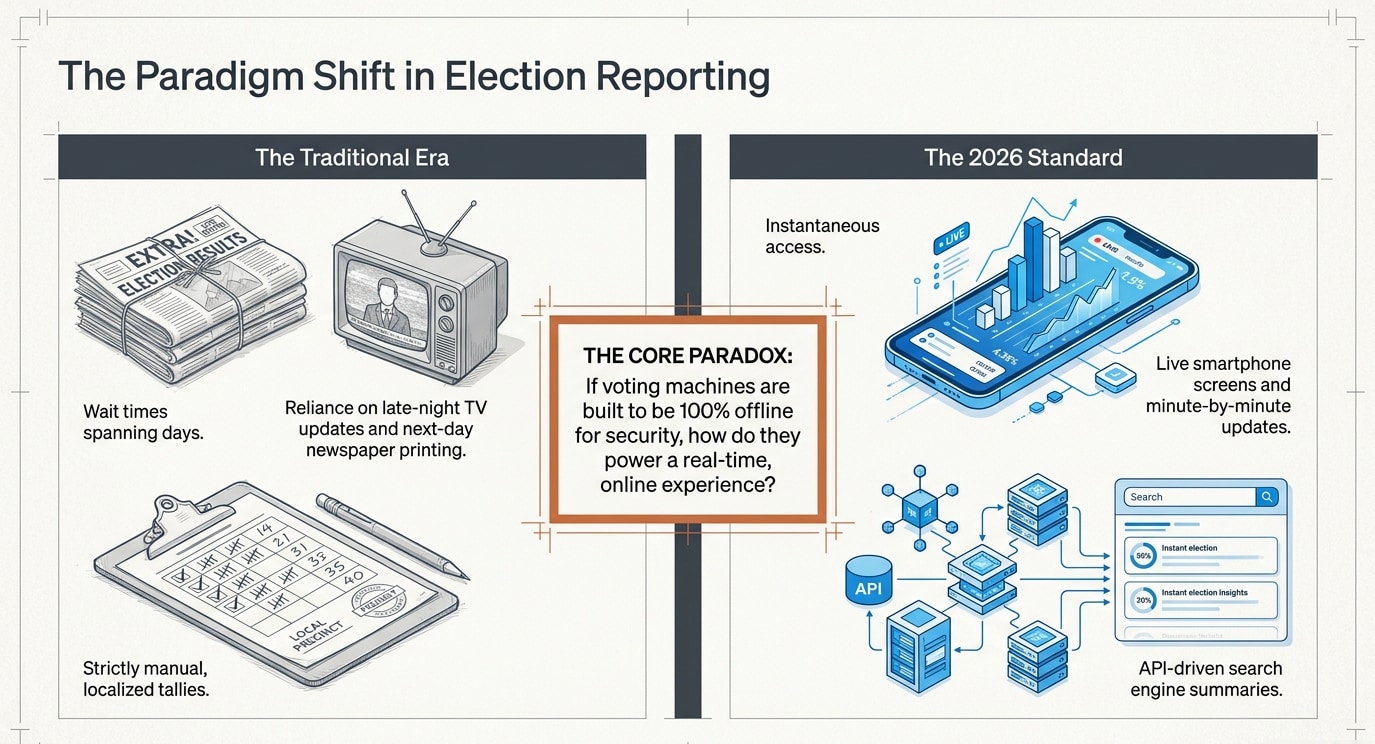
The Election Result process has now become fast and connected and the West Bengal Election Results 2026 clearly shows this change. People no longer wait for late-night TV updates and newspaper. Results now appear live on smartphone screens within minutes. Nevertheless, many still wonder how this system works. In today’s story we will delve into how EVM system works and how data move from voting machines to websites so quickly?
Let’s check out how this system works.
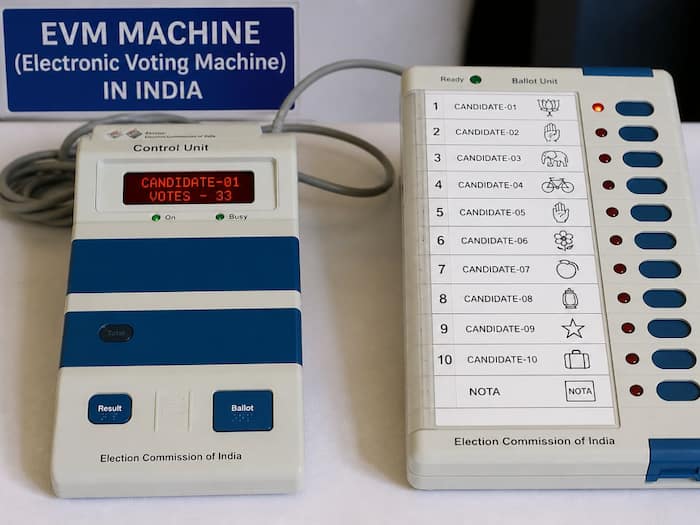
EVM or Electronic Voting Machine is a device used in India to record voting during elections. This machine has replaced traditional paper ballots and easily works electronically. It makes the voting faster and more accurate at the time of elections.
EVM comes with two main parts:
One is the control unit that is handled by election officials.
The second is the ballot unit which is used to select their choice.
Once the voter presses a button next to a candidate’s name, the vote is securely stored inside the machine. Interestingly, EVM’s are not connected to the internet and it helps protect them from hacking. EVM Machines are designed to ensure faster and safe voting across India during elections.
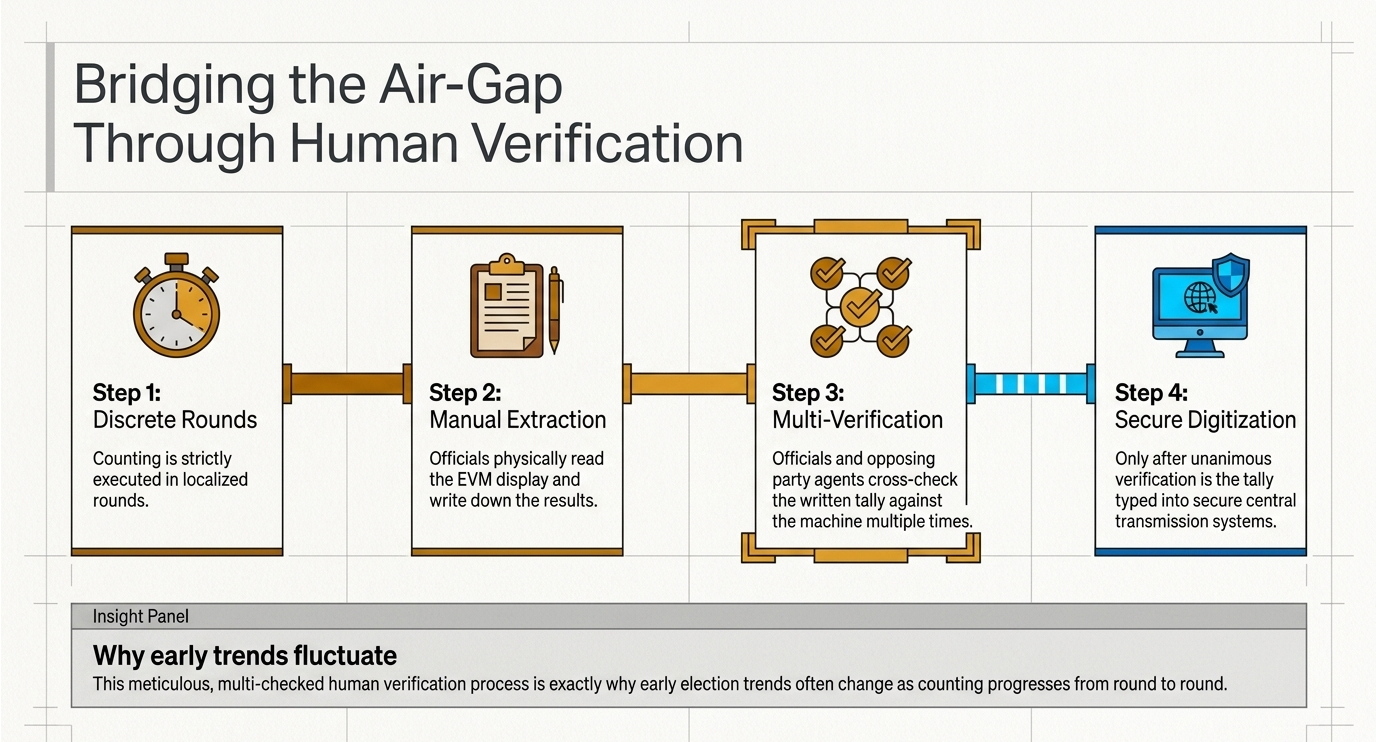
As said EVMs’ are not connected to the internet, which is important for security. This allows the data to be stored inside the machine and accessed only during counting. As soon as the round is completed, the results are written down and verified by officials. Going ahead, the data is then sent to central systems using secure methods. This system ensures accuracy along with preventing tampering.
The officials checked the data multiple times before sharing it publicly. This is the main reason why early trends may change as counting continues.
| Process Stage | Primary Function | Key Security Features | Data Transmission Method | Information Displayed to Public |
| Counting Center / Verification | Verification and recording of results after each round of counting. | Multiple checks by officials; presence of party representatives; CCTV monitoring. | Secure methods to send verified data to central systems. | Early trends (subject to change). |
| Central Server (Election Commission of India) | Collects updates from all counting centers and compiles real-time data. | Handles large volumes through a managed secure system. | Real-time updates sent to websites, apps, and news platforms. | Not in source |
| Live Dashboards / Official Portals | Displays election information and results to the public. | Data sourced directly from central servers; monitored and recorded steps. | Automatic refresh every few seconds to websites and apps. | Leading candidates, party-wise seat counts, and vote share trends/updates. |
| Control Unit | Handled by election officials to manage the voting process. | Not connected to the internet to prevent hacking; accessed only by authorized officials. | Manual recording and verification by officials after counting rounds. | Not in source |
| Ballot Unit | Used by voters to select their candidate choice. | Button-press storage; standalone operation (no internet connection). | Internal electronic recording. | Not in source |
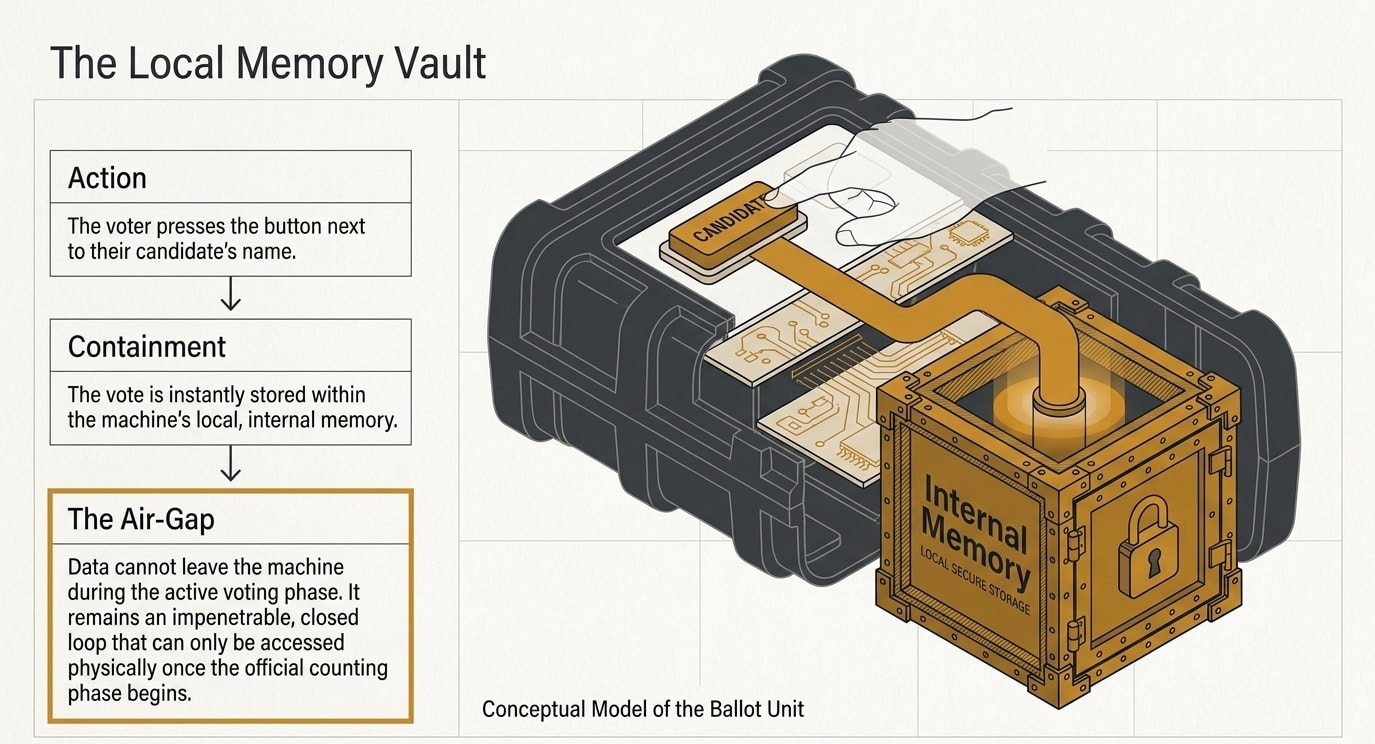
As soon as the verifications are done, the data is sent to systems managed by the Election Commission of India. Their system collects updates and information from all counting centers.
One of the key aspects of this data is that each constituency sends their results round by round. After this, the central server compiles this data and updates it in real time. This system handles large volume of data as these updates come from many centres at once.
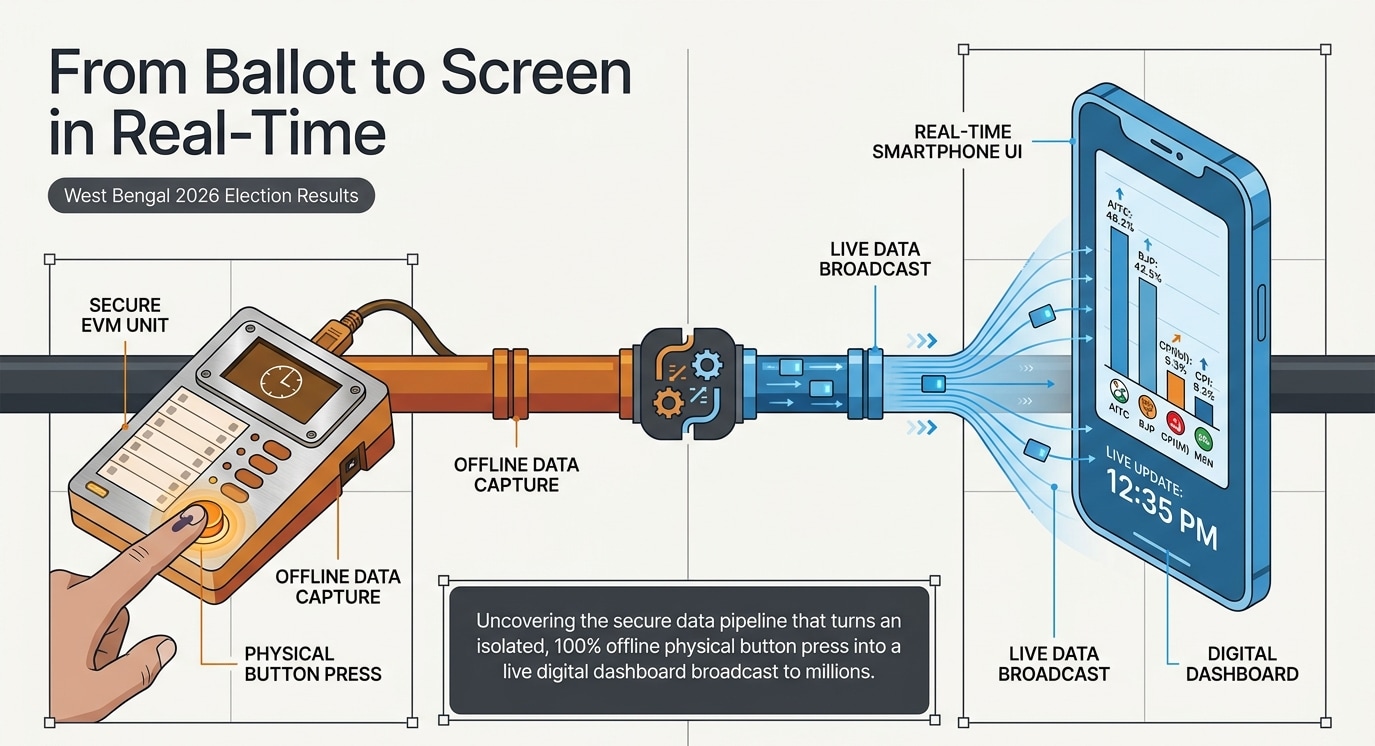
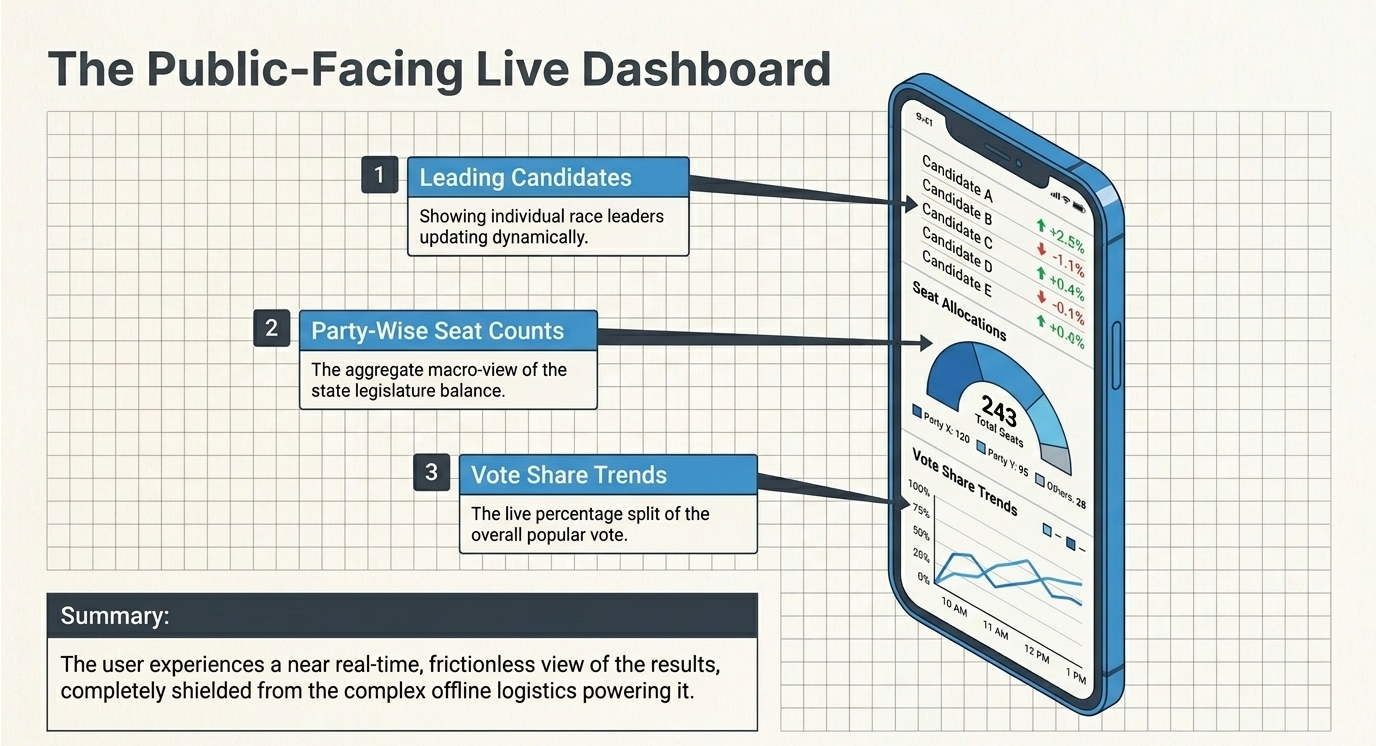
Once data is reaches central servers, it is then shared with websites and apps. Additionally, news platforms and official portals also displays this information as live dashboards.
These dashboard on news channels showcase:

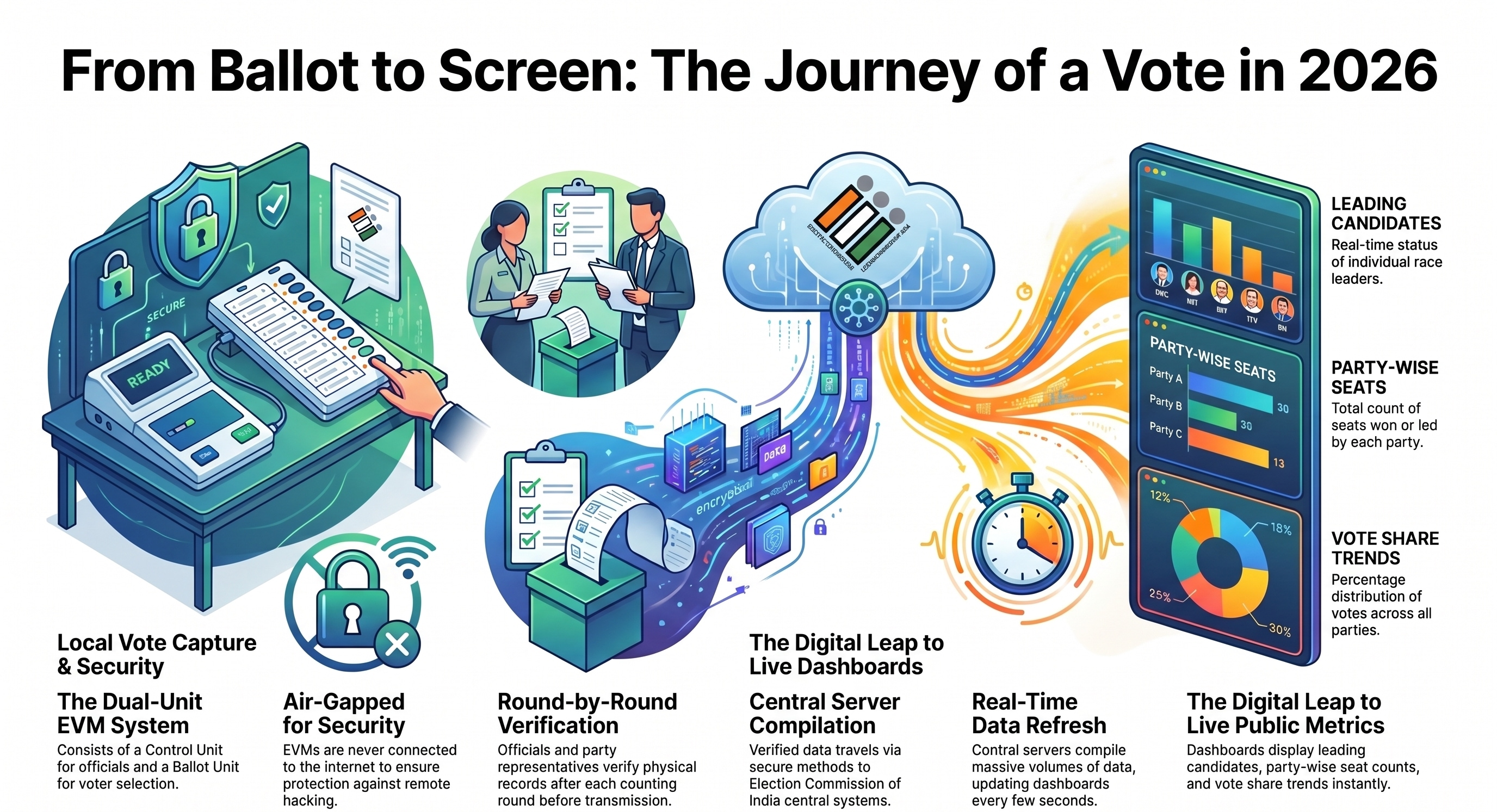
Security and transparency plays a major role in EVM voting. The VM machines can only be accessed by authorized officials. Their every step is monitored and recorded. Additionally, to make things even more accurate, officials from different parties are present during counting. CCTV cameras are installed and they track every activities inside the counting centres.

Don't Miss Out the Latest Updates. Subscribe to Our Newsletter Today!