
Written By Deepti Ratnam
Published By: Deepti Ratnam | Published: Feb 08, 2026, 10:39 AM (IST)
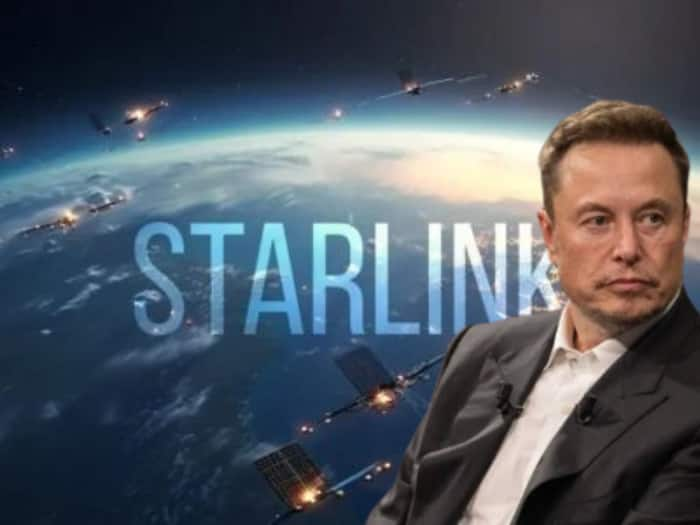
 Elon Musk Starlink


Written By Deepti Ratnam
The personal devices have not changed much over the years. The majority of users continue to use mobile networks when making calls, sending messages, and accessing the internet. However, Elon Musk’s SpaceX is currently trying a new solution to bring personal connectivity to a much greater extent. The concept has the potential to transform the way in which future gadgets remain connected to the internet.
SpaceX is reportedly testing a new type of smartphone that would be connected to its Starlink satellite system. This device would also use satellites to access the internet as opposed to utilizing mobile towers or Wi-Fi. This may render it helpful in far-flung locations where normal networks fail to perform. It might not be an ordinary smartphone, but it might still be able to fulfill some tasks that people want mobile phones to accomplish.
Elon Musk has already clarified that SpaceX is not producing an ordinary smartphone, and hence, the indications of developing a some form of hardware is still in the loop. As mentioned previously, the device would appear very different to the existing phones. It can be less app-oriented and more efficiency-oriented, battery life-oriented, and specialised.
Local artificial intelligence processing is one of the main concepts associated with this device. The device might also be able to perform AI tasks on the hardware instead of sending information to the cloud. This would be helpful to minimize delays and enhance privacy. Musk has already talked of gadgets aimed to achieve the highest performance of AI per watt which makes it appear that neural processing is heavily focused upon energy efficiency.
xAI, the Grok chatbot company is owned by SpaceX now. A special chip may serve as a direct platform of AI functionalities driven by Grok. This solution, together with Starlink internet connectivity, may provide AI solutions even in locations where there is no conventional connectivity. This would separate it from current phones that depend heavily on cloud services.
SpaceX already covers the limited satellite messaging in collaboration with mobile carriers. This concept would be extended with a SpaceX-built device. It would enable closer monitoring of hardware, software and network performance. It might lead to the increased reliability and more integration with the Starlink system.
Creating an alternative to smartphones is extremely challenging. Earlier efforts of AI-based devices have not been able to win the confidence or every-day usefulness of users. Nonetheless, SpaceX possesses a system and the drive to test ambitious concepts. It is yet to be seen that this device will be a replacement to a smartphone, or a niche product.


Don't Miss Out the Latest Updates. Subscribe to Our Newsletter Today!