Written By Divya
Published By: Divya | Published: Feb 07, 2026, 07:32 PM (IST)


Written By Divya
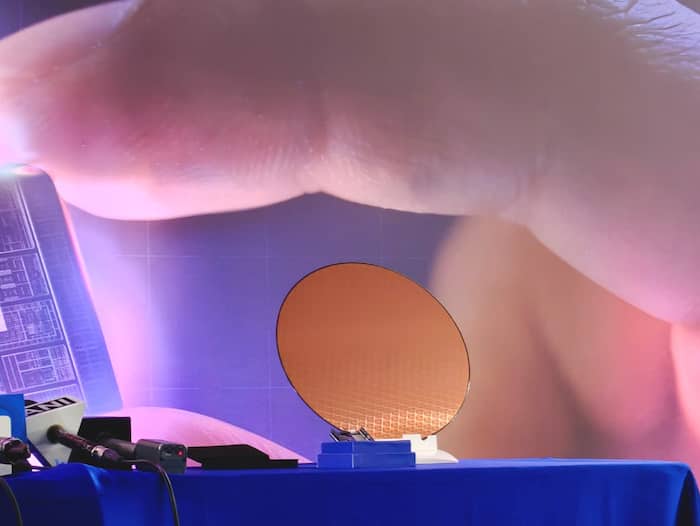
Qualcomm, the chipset maker, has successfully taped out its 2nm semiconductor design, which is one of the most advanced nodes currently being explored in the industry. What does it mean? The chipset’s design is finalised and tested successfully, and now it ready for the fabrication. During the announcement in Banglore, the event also talked about India’s growing role in the global semiconductor ecosystem. The development was recently showcased at Qualcomm’s Bengaluru facility during Union IT Minister Ashwini Vaishnaw’s visit. “India is increasingly at the center of how advanced semiconductor technologies are being designed for the future,” Vaishnaw said. “Seeing Qualcomm’s work here, its engineering strength, deep design capabilities, and long-standing commitment to India, is truly impressive.”  Also Read: MWC 2026: Qualcomm launches Snapdragon Wear Elite to focus on personal AI

Qualcomm’s teams spread across Bengaluru, Chennai, and Hyderabad form one of the company’s most critical development networks globally. In fact, this workforce is now Qualcomm’s largest engineering base outside the United States. The latest tape-out of 2nm chipset suggests how closely global operations are working alongside India-based engineers. This shift confirms that the country is gradually moving beyond backend support and becoming part of core semiconductor innovation! “India continues to be integral to our global engineering roadmap, and this milestone reflects the exceptional capability and impact of our engineering workforce here,” said Srini Maddali, Senior Vice President, Engineering, Qualcomm India Private Limited. Union Minister Ashwini Vaishnaw also said, “Gone are those days when most of the development, the back office development work was being done here… the entire right from customer product definition to designing the final silicon… is being done in India.” Qualcomm’s association with India is not something new, as it has been there with over 20 years. During this time, the company has built expertise across wireless technologies, computing platforms, artificial intelligence, and system-level engineering. “India today plays a key role in how we support the design, development, and delivery of next-generation technologies for the world,” said Savi Soin, President, Qualcomm India. “The innovation being developed here is helping shape the future of connectivity, computation, and intelligent systems globally.” Also Read: MWC 2026 Barcelona: Dates, venue, expected launches, how to attend or watch
Also Read: Ex-Google engineers accused of stealing Tensor chip trade secrets

Don't Miss Out the Latest Updates. Subscribe to Our Newsletter Today!