Written By Divya
Edited By: Divya | Published By: Divya | Published: Apr 03, 2026, 05:58 PM (IST)
 VitalID Explained: The Future of Login Without Passwords


Written By Divya
We’ve been logging in the same way for years – passwords, OTPs, and fingerprint scans. We’ve just accepted that logging in will always take a few steps. But now, researchers are trying to remove that step completely. A new system called VitalID, developed by a team led by Rutgers University researchers, is aiming to do something different. Instead of asking you to prove who you are, it quietly figures it out using your body itself.
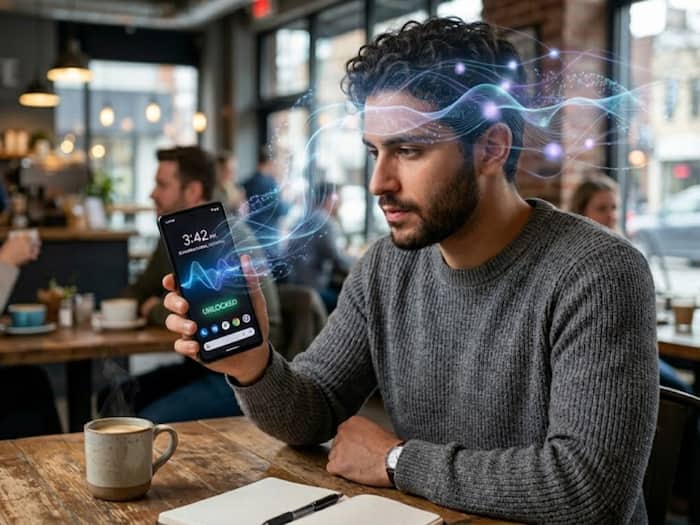
So what exactly is changing here? The idea sounds a bit strange at first. Research suggests that your body, even when you’re still, is always moving in tiny ways. Your breathing and heartbeat create small vibrations that travel up to your head. Now, because everyone’s skull structure and facial tissues are slightly different, these vibrations don’t behave the same way for everyone. And that pattern becomes your identity.
VitalID reads these signals using sensors already inside XR headsets and uses them like a biometric signature. What makes this interesting is not just the tech but it’s the experience. There’s no “login moment.” No typing. No scanning. No interruption. The system will keep checking in the background whether it’s still you. That’s it.
And honestly, if you’ve ever tried typing a password inside a VR environment, you’ll know why this matters. This is largely focused on Extended Reality (XR), where you’re not just browsing, but working, attending meetings, or even accessing sensitive data. As these platforms grow, the old login methods start feeling out of place. VitalID is trying to fix that by making authentication almost invisible.
In testing, the system performed quite well. It was able to recognise the right user most of the time and block others with high accuracy. Also, since these vibration patterns come from inside the body, copying them isn’t easy. You can fake a fingerprint or face scan to some extent, but replicating how someone’s skull carries vibrations? That’s much harder.
Still, it’s early. And like any biometric system, questions around privacy and misuse will follow.

It won’t be a high jump. But slowly, we’ve already moved from passwords to fingerprints to even face unlock. Now, VitalID feels like the next step. But it also raises a question – if systems start identifying us without asking… how much control do we really have over that process?

Don't Miss Out the Latest Updates. Subscribe to Our Newsletter Today!