Your phone may soon connect directly with satellites in India; But Apple and Google say it’s complicated
India is moving closer to bringing satellite connectivity to smartphones, especially for areas with poor network coverage. But Apple and Google reportedly have different opinions.
Published By: Divya | Published: May 18, 2026, 04:53 PM (IST)
Smartphone connectivity directly to satellites in India seems to be possible soon. It makes the connection possible via your phone when regular mobile networks are unavailable. This seems to be a perfect plan for India, especially for areas which are still deprived of mobile coverage signals.
However, the Economic Times report suggested that tech giants such as Apple and Google believe that the technology still has several hurdles before it becomes practical on a large scale.
What is smartphone satellite connectivity?
Here, we are talking about direct-to-device, or D2D, which is simply referred to as satellite communication. In simple terms, it could allow smartphones to send messages or connect for emergency communication even without a nearby mobile tower. This could become important during emergencies, natural disasters or in places like mountains, forests and border regions where regular network coverage is weak or completely unavailable.
And if this sounds familiar, this is because several premium smartphones (iPhone 14 and later versions) already support limited satellite features, especially for emergencies. But mostly they are limited to messaging. India is now exploring how such services could eventually work here as well.
So, why aren't Apple and Google in support?
According to the report, both Apple and Google have raised concerns during discussions with the Department of Telecommunications (DoT). They aren't against the idea, but the difficulties that the technology may face in India. One of the major issues is the battery consumption. The tech giants claim that connecting a phone directly to satellites requires more power in comparison to the normal mobile network.
Another challenge is said to be the hardware limitations. Smartphones today are designed to stay thin and compact, leaving very little room for larger antennas or additional components needed for stable satellite communication.
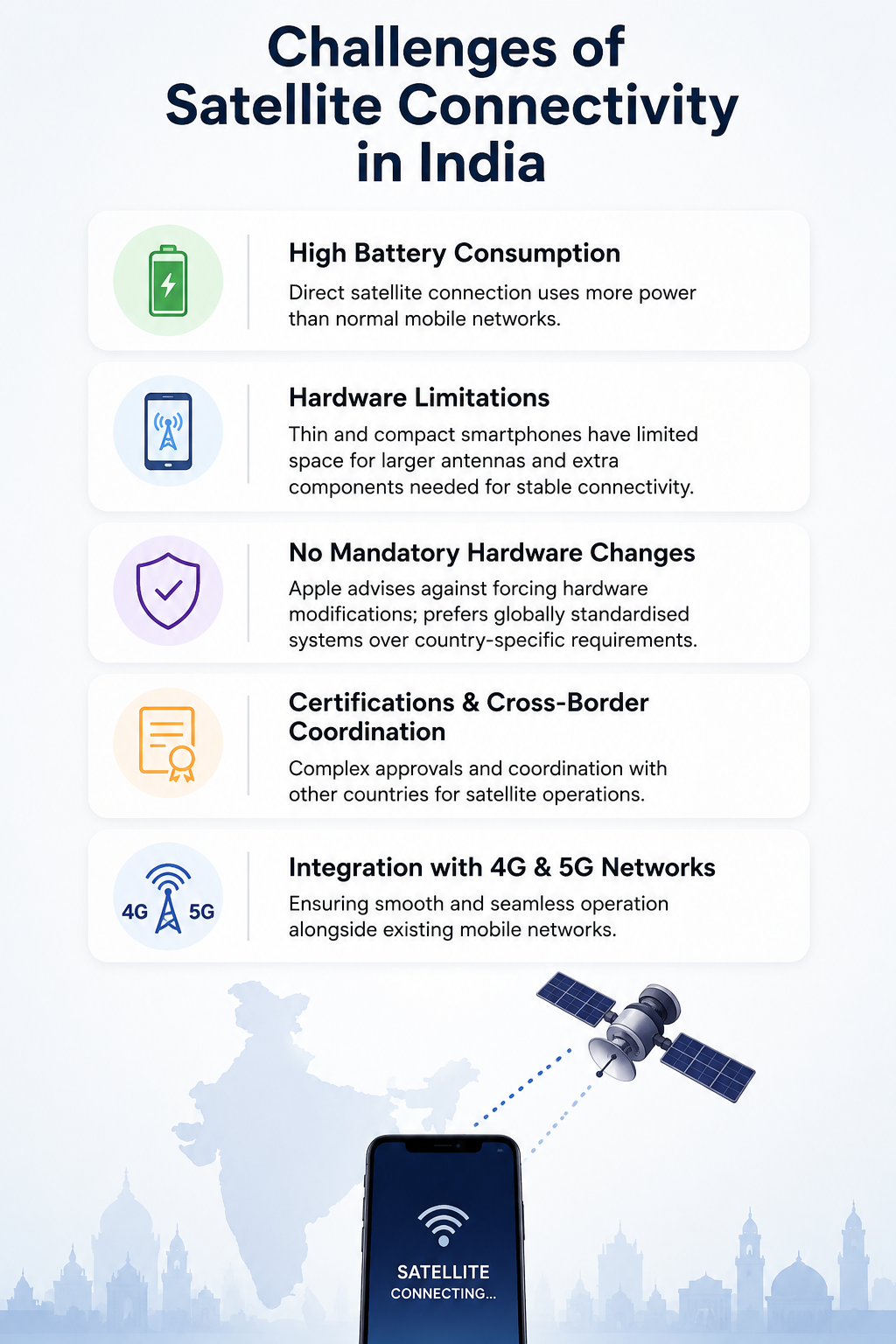
Apple has reportedly advised the Indian government against making hardware modifications mandatory for satellite communication support. The company is said to prefer globally standardised systems instead of country-specific requirements that may force brands to redesign devices for one market.
There are also concerns around certifications, cross-border satellite coordination and how satellite communication would work alongside existing 4G and 5G networks.
Note that countries like the US and Canada have already started testing similar services. In the US, companies like Starlink and T-Mobile are experimenting with direct satellite-to-phone connectivity for areas without regular coverage.
Get latest Tech and Auto news from Techlusive on our WhatsApp Channel, Facebook, X (Twitter), Instagram and YouTube.